

10:51:08 AM | 7/26/2025

At the 47th Session of the World Heritage Committee of the United Nations Educational, Scientific and Cultural Organization (UNESCO), Professor Nikolay Nenov, Chairman of the Session, officially recognized the Yen Tu-Vinh Nghiem-Con Son, Kiep Bac Complex of Monuments and Landscapes as a World Cultural Heritage site. The site lies in Quang Ninh province, Bac Ninh province and Hai Phong City.
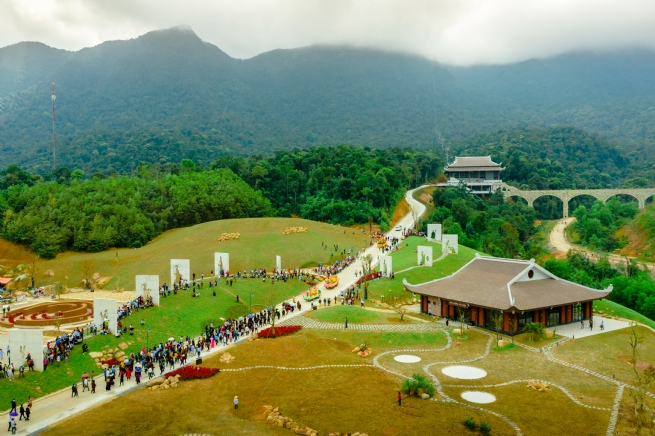
Yen Tu Pagoda – a renowned spiritual and cultural tourist destination
This is the 9th World Heritage Site in Vietnam recognized by UNESCO and the second interprovincial world heritage site, following the Ha Long Bay-Cat Ba Archipelago (spanning Quang Ninh province and Hai Phong City).
Unique testament to Truc Lam Zen Buddhism - A distinctive Vietnamese Zen tradition
Yen Tu-Vinh Nghiem-Con Son, Kiep Bac Complex of Monuments and Landscapes, rooted in Truc Lam Zen Buddhism founded in the 13th century by Tran emperors, especially Buddhist King Tran Nhan Tong, has created lasting values and made significant, enduring contributions to the cultural and spiritual heritage of humanity. Originating from the scenic, sacred Yen Tu Mountain, Truc Lam Zen Buddhism represents a philosophical system and spiritual tradition grounded in Buddhist tolerance and compassion. It also exemplifies the harmonious integration of Mahayana Buddhism with Confucian ethics, Taoist cosmology and Vietnamese indigenous beliefs. The ideological and cultural values of Truc Lam Zen Buddhism are fully aligned with UNESCO’s fundamental goals of preserving and enriching the shared values of humanity: Education, the promotion of a culture of peace, the spirit of self-mastery, harmonious coexistence between humans and the natural world, and respect for the laws of nature.
Through temples, hermitages, pilgrimage routes, stone steles, woodblocks and carefully preserved relics distributed across a vast area from Yen Tu to Vinh Nghiem and Con Son - Kiep Bac, the heritage fully portrays the development of Truc Lam Zen Buddhism: from its formation and institutionalization to revival and the continued spread of its humanistic and creative values. These relics, established centuries ago, have consistently illustrated a continuous process of development, serving as centers of religion and spiritual culture, and as pilgrimage destinations for millions of visitors each year.
The inscription of Yen Tu-Vinh Nghiem-Con Son, Kiep Bac Complex of Monuments and Landscapes as a UNESCO World Cultural Heritage Site stands as evidence of the unique synergy between the state, religion and the people in shaping Vietnam’s national identity. It also highlights a sacred landscape formed through continuous and intimate interaction with nature, and a moral system grounded in a love for peace, self-cultivation, tolerance, compassion and harmony between humans and the natural world.
Yen Tu-Vinh Nghiem-Con Son, Kiep Bac Complex of Monuments and Landscapes serves as a remarkable testament to Truc Lam Zen Buddhism, a distinctive Vietnamese Zen tradition founded in the 13th century by Tran emperors, royals and enlightened monks, most notably Buddhist King Tran Nhan Tong - the only known monarch in Asia to have renounced the throne to become a monk, founding a Zen school deeply rooted in humanistic philosophy and Vietnamese cultural identity. By integrating Mahayana Buddhism with Confucianism, Taoism and indigenous Vietnamese beliefs, Truc Lam Zen Buddhism helped establish the spiritual foundation of Dai Viet State, fueling the rise of a self-reliant and independent state while also promoting cultural dialogue and a spirit of peaceful friendship among peoples.
Over the centuries, the complex has played an essential role in practicing, preserving, and promoting cultural heritage. The tolerant and creative spirit of Truc Lam Zen Buddhism has inspired communities both domestically and internationally with its humanistic values.
Yen Tu-Vinh Nghiem-Con Son, Kiep Bac Complex of Monuments and Landscapes is directly associated with the origin and diffusion of the creative and humanistic values of Truc Lam Zen Buddhism. The continuous organization of rituals, festivals, Dharma propagation and pilgrimages to these heritage sites, both within Vietnam and by international Truc Lam Buddhist organizations, demonstrates the enduring global relevance of its humanistic philosophy, values of life, community spirit, harmony with nature, love of peace, and compassion.
The complex fully embodies the tradition of Truc Lam Zen Buddhism, from its founding in the sacred Yen Tu Mountain, evident in ancient temples and archaeological remains, to key sites such as Vinh Nghiem Pagoda and Con Son - Kiep Bac Relic Complex. The systematization of its philosophy is reflected in stone steles, related artifacts, and ritual practices. These heritage sites comprehensively represent the historical, spiritual, and geographical dimensions of Truc Lam Zen Buddhism, clearly illustrating its formation, evolution, and the lasting integration of tangible and intangible cultural values and documentary legacies within historical and cultural spaces.
The complex includes a system of relics designated as special national monuments by the Prime Minister (including Yen Tu Complex, Tran Dynasty relic site in Dong Trieu, Vinh Nghiem Pagoda, Bo Da Pagoda, Con Son - Kiep Bac relic site, and the historical and scenic relics of An Phu - Kinh Chu - Nham Duong), along with national relics recognized by the Ministry of Culture, Sports and Tourism (such as Thanh Mai Pagoda), artifacts, antiques, national treasures, intangible cultural heritages, and traditional festivals. The complex, encompassing the mountainous landscape and the cultural space of Yen Tu-Vinh Nghiem-Con Son, Kiep Bac, will be protected sustainably for a long time, with its values promoted in accordance with the Law on Cultural Heritage and the 1972 UNESCO Convention Concerning the Protection of the World Cultural and Natural Heritage.
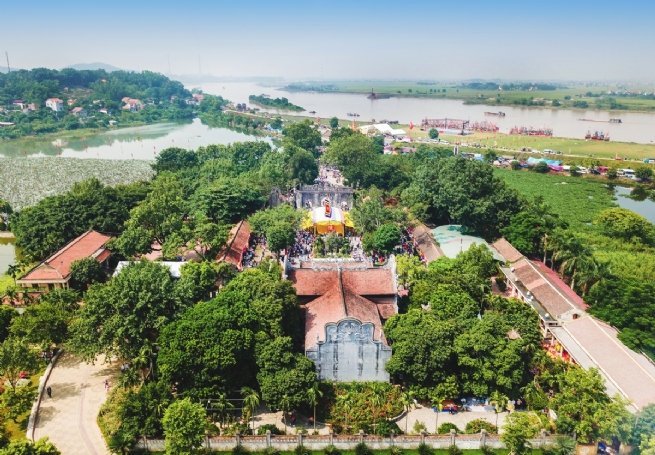
Kiep Bac Temple
Favorable conditions for heritage preservation and promotion
Expressing deep emotion at UNESCO's recognition of Yen Tu-Vinh Nghiem-Con Son, Kiep Bac Complex of Monuments and Landscapes, Ms. Nguyen Thi Hanh, Vice Chairwoman of the Quang Ninh Provincial People's Committee and Head of the Steering Committee for documentary dossier preparation for Yen Tu-Vinh Nghiem-Con Son, Kiep Bac Complex of Monuments and Landscapes, stated: The documentation was meticulously, systematically built with high quality under the leadership of Quang Ninh province. After many years of effort, the heritage has now gained international recognition. Quang Ninh will continue to develop and implement projects to conserve, restore and promote the heritage's value to ensure long-term sustainability and widespread appreciation of this world heritage. The inscription is a source of immense pride not only for the authorities and people of Quang Ninh, Bac Ninh and Hai Phong, but for the entire Vietnamese people. This is the first serial world heritage site and the second interprovincial heritage among Vietnam's nine world heritage sites recognized by UNESCO.
Standing Deputy Minister of Foreign Affairs Nguyen Minh Vu, Chairman of the Vietnam National Commission for UNESCO, emphasized that this inscription is not only a source of pride for the authorities and people of the three provinces of Quang Ninh, Hai Phong and Bac Ninh but also a shared joy for all of Vietnam. This recognition affirms the international community's high regard for the complex's value and the beautiful, humane and peaceful ideas of Truc Lam Zen Buddhism, founded by King Monk Tran Nhan Tong, as well as Vietnam's efforts in heritage preservation. This UNESCO recognition contributes to elevating the nation's standing on the international stage while also creating favorable conditions for the sustainable preservation and promotion of the heritage's value.
This inscription will also strengthen regional linkages between Quang Ninh, Hai Phong and Bac Ninh, helping to establish a unified heritage space that promotes the image of the land and people of Vietnam. It also contributes to UNESCO’s broader goals of safeguarding and celebrating cultural heritage worldwide. This honor and pride always come with responsibility, demanding that all levels, sectors and localities raise awareness and implement practical and effective measures to preserve and promote the heritage's value in line with the spirit of the World Heritage Convention, connected with sustainable development principles.
In his speech, Dr. Hoang Dao Cuong, Deputy Minister of Culture, Sports and Tourism, emphasized that this success was achieved because for many years, the Ministry of Culture, Sports and Tourism and the related provinces have given special attention to intangible cultural heritage systems and monuments in these localities by launching many projects for the preservation and restoration of relic sites, researching and identifying values to prepare nomination dossiers for domestic and international inscription, contributing to protecting the outstanding universal value of the heritage site, and enhancing the cultural and spiritual lives of local communities and people.
He also happily informed the Session that Vietnam will continue to implement activities to protect and promote the value of its World Heritage sites in a sustainable manner and adopt good management models for World Heritage sites in Vietnam. This spirit was demonstrated when, on November 23, 2024, the National Assembly of Vietnam passed the Law on Cultural Heritage 2024, along with guiding implementation documents. This new law incorporates the sustainable development principles of UNESCO in line with the World Heritage Convention, introduces regulations on heritage impact assessments within the context of World Heritage sites, mandates the creation of World Heritage management plans, and links the preservation of monuments with the protection of intangible cultural heritage at World Heritage sites, all with the goal of better serving local communities.
Source: Vietnam Business Forum


 Vietnamese





