

9:46:19 AM | 9/23/2025

Water is considered the lifeblood of the economy and society, sustaining agriculture, industry, daily life, and services. At the same time, clean water access is essential to achieving Sustainable Development Goals: SDG 6 (Clean Water), SDG 12 (Sustainable Consumption and Production), and SDG 13 (Climate Action).
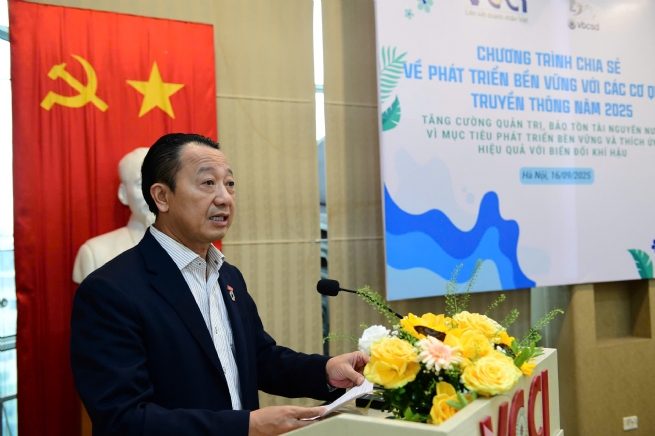
VCCI Vice President Nguyen Quang Vinh addresses program on water resource management and climate adaptation for sustainable development
urrently, Vietnam’s total surface water (river flow) is estimated at 830-840 billion cubic meters per year, while groundwater is about 47.5-63 billion cubic meters per year. However, only around 37% of this water originates within Vietnam’s territory, with more than 60% depending on surface water from outside the borders, making the country highly vulnerable to climate change impacts and transboundary influences.
Although the Law on Water Resources (2012, amended in 2023) and river basin planning have been issued, monitoring and inter-sectoral coordination remain limited. This underscores the urgent need for a comprehensive water resource governance system closely linked to economic security, energy security, and social stability.
Nguyen Quang Vinh - Vice President of the Vietnam Chamber of Commerce and Industry (VCCI) and Chairman of the Vietnam Business Council for Sustainable Development (VBCSD) - emphasized: “Water resource governance is a matter of survival for economic development, energy security, and even social stability. In this context, the role of enterprises in conserving and efficiently using water resources is becoming increasingly important. Many enterprises in Vietnam have pioneered sustainable water management initiatives, improved water-saving technologies, and implemented water reuse and regeneration in production activities. However, the challenge is that many small and medium-sized enterprises lack financial capacity, technology, and support mechanisms to keep up. Therefore, strong support is needed from policies, financial institutions, and especially the press to spread awareness, inspire action, and connect communities to act together.”
Nguyen Quang Vinh stressed that water resource governance is not only a matter of management but also a vital foundation of the nation. He said the press can help scale up successful models so that from one pioneering enterprise there could be hundreds or thousands of others following suit, turning the story of saving every liter of water into a national flow of water conservation across the country.
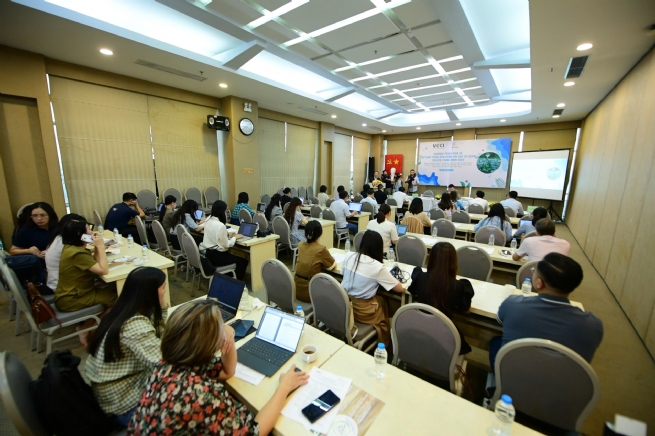
Overview of the event
Hoang Viet, Director of the Water Program at WWF-Vietnam, emphasized: “At both the global and national levels, water is not only a natural resource but also the foundation for food, energy, and the livelihoods of tens of millions of people. Under the pressures of climate change, overexploitation, and pollution from human activities, we are facing growing water scarcity, declining resources, and increasing risks to water security. This calls for a more comprehensive and scientific approach to managing this essential resource of life.
WWF believed that ensuring water security for today and the future requires the joint efforts of all stakeholders, including the State, businesses, communities, and the press. Tools such as the Water Risk Filter and the Water Stewardship framework have proven effective in helping businesses and localities in Vietnam identify risks, adapt proactively, and generate sustainable value from water, instead of treating it merely as an input cost.
Within the business community, many major enterprises have become pioneers in water governance. Nestlé Vietnam aims by 2025 to return to communities and the environment an amount of clean water equivalent to 100% of the water the company uses in production. BAT Vietnam and Samsung Vietnam have obtained the AWS Water Stewardship certification for all their manufacturing plants. Suntory PepsiCo Vietnam continues to maintain its Water of Life water conservation program into its 10th year. HEINEKEN Vietnam has implemented reforestation and biodiversity conservation models, replenishing more than 690 million liters of water annually in the Tien River basin.
“Water and nature conservation is one of the top priorities in HEINEKEN Vietnam’s sustainability strategy. Through multiple water conservation initiatives and strengthened multi-stakeholder cooperation, the company achieved water balance five years ahead of schedule in the Tien River basin - an area facing significant water stress. This achievement marks a milestone in our sustainable development journey ‘For a Better Vietnam,’ and is a clear testament to the power of joint action among businesses, government, social organizations, and communities in addressing environmental challenges,” said Nguyen Huu Hoang, Sustainability Manager at HEINEKEN Vietnam.
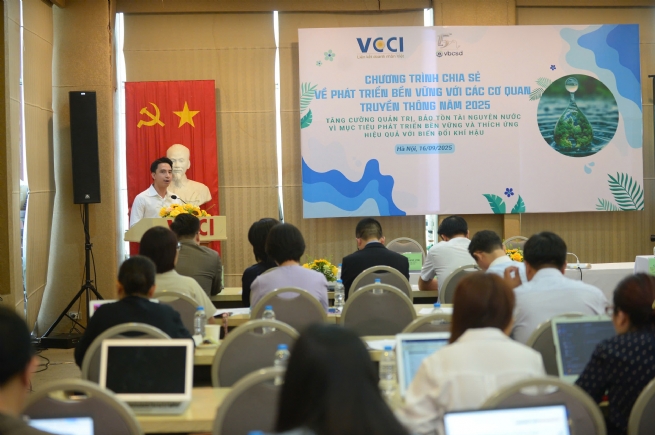
Delegates exchange insights on water resource management at the event
Several other enterprises in the food and beverage industry have achieved up to 30% water savings per unit of product within five years, while investing in technology to reuse 100% of treated wastewater for non-production activities. These models demonstrate that water conservation is not an added cost but a strategic investment that helps enterprises reduce risks, enhance reputation, access green finance, and meet global ESG standards.
For example, Coca-Cola has been present in Vietnam since 1994 with three plants in Hanoi, Da Nang, and Tay Ninh, along with a nationwide supply network. In July 2025, the company inaugurated a new plant in Tay Ninh with a total investment of US$136 million and a designed capacity of over 1 billion liters of beverages per year. The plant applies advanced automation technology, saving resources while minimizing environmental impacts, and meeting both international and Vietnamese food safety standards.
Coca-Cola Vietnam operates six distribution centers across seven regions, employing 4,000 workers directly and many more through its supply chain. In 2024, it invested over US$1 million in sustainability projects, from packaging waste treatment and water replenishment to clean water access and climate adaptation. Coca-Cola Vietnam is currently ranked among the Top 2 sustainable enterprises of 2024 at the Corporate Sustainability Index (CSI) announcement ceremony, and has been honored as a “Best Place to Work” for six consecutive years, as well as the No. 1 sustainable FDI enterprise for 2024-2025 at the Golden Dragon Awards.
| On September 16, VBCSD-VCCI held the 8th consecutive program “Sharing on Sustainable Development with Media Agencies,” with the theme: “Strengthening water resource governance and conservation for sustainable development goals and effective climate adaptation.” The program aimed to provide updated information on the policies and sustainable development orientations of the Party and Government, while also sharing practices and good business models from the business community. Through this, VBCSD-VCCI seeks to contribute to raising awareness, supporting media agencies in effective reporting, and encouraging the press to accompany businesses more closely on the sustainable development journey. |
By Huong Giang, Vietnam Business Forum


 Vietnamese




