

8:30:34 AM | 2/16/2026

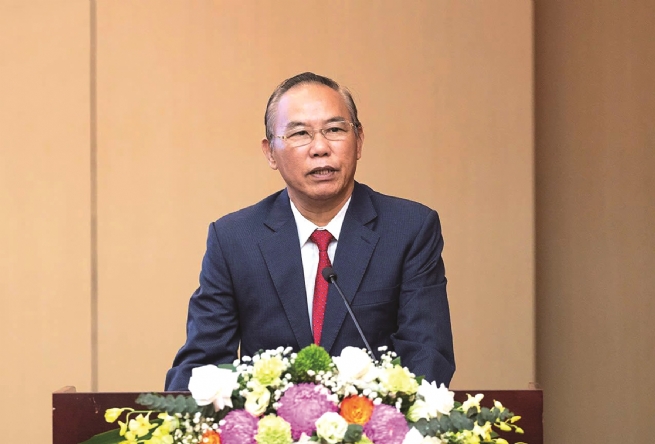
During the 2020-2025 term, amid major global and domestic challenges, Vietnam’s agriculture and environment sector consistently upheld its strategic role as a backbone of the economy, ensuring national food security, contributing to poverty reduction, and supporting social stability. Our reporter spoke with Deputy Minister of Agriculture and Environment Phung Duc Tien about key orientations, priority solutions, and expectations for the sector’s next stage of development.
 |
In 2025, the agriculture and environment sector overcame challenges, reinforced its backbone role, maintained production stability, and contributed to economic growth. What were its key achievements?
In 2025, the sector’s total export turnover reached US$70.09 billion, up 12% from 2024, officially surpassing the US$70 billion mark. Beyond export growth, the agricultural trade balance also posted a positive result, with a trade surplus exceeding US$20 billion. This outcome was not only a record figure but also reflected an agricultural restructuring process aligned with market demand.
Entering 2026, the Ministry of Agriculture and Environment set a target for total exports of agricultural, forestry, and fishery products at US$73-74 billion. Of this total, agricultural products are projected at around US$40 billion, fisheries at US$12 billion, and forestry products and wooden furniture at US$18.8 billion. The focus is not only on growth, but on quality-driven and sustainable expansion with resilience to global volatility. Accordingly, the sector will concentrate on synchronously implementing a chain of solutions spanning raw material areas and markets.
Regarding logistics cost reduction, the coming period will focus on developing cold storage, cold-chain systems, regional logistics centers, and digitalizing customs clearance processes. More importantly, Vietnamese agriculture is facing the requirement for a green transition. Measuring and reducing carbon emissions, applying circular economy models, and adopting low-emission production are no longer optional, but a “passport” for access to high-end markets.
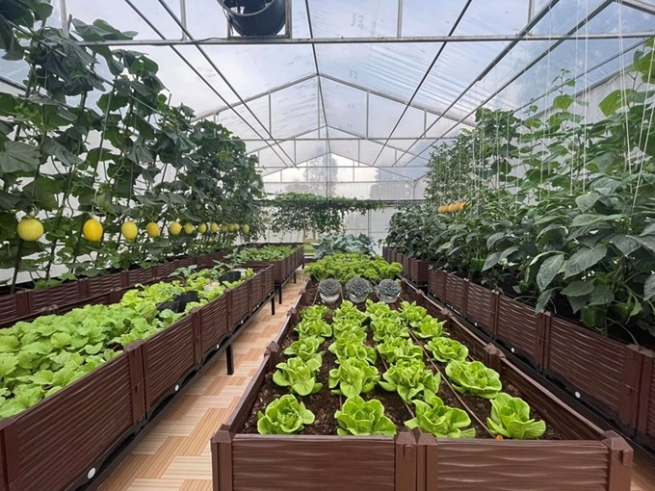
Green agriculture reduces pollution and enhances biodiversity while delivering safe agricultural products
For enterprises, the greatest challenge no longer lies simply in cultivation techniques or export markets, but in shifting to a new agricultural mindset. Once that foundation is in place, Vietnamese agricultural products will not only be able to enter global markets but will also have the capacity to expand further and remain competitive. The export target of US$73-74 billion in 2026 is not merely a turnover milestone, but a signal of the start of a new development phase, in which growth is assessed by output, value, and the long-term resilience of agriculture.
2025 saw extreme weather patterns and natural disasters. How do you assess the sector’s response capacity in terms of innovation, forecasting, early warning, disaster prevention, and climate change adaptation?
The leadership, management, and disaster response capacity of the sector, together with that of local authorities, improved markedly through proactive scenario development, effective implementation of the “four-on-the-spot” approach, and prioritization of the protection of lives and property. Continuous 24/7 monitoring and command systems were maintained, dike systems, reservoirs, and disaster prevention infrastructure were operated safely, and critical vulnerable points were addressed in a timely manner to prevent the risk of major disasters.
Meteorological and hydrological forecasting and warning continued to play a central role through timely and practical bulletins that supported evacuation, production protection, and damage reduction. At the same time, communication to raise community awareness was strengthened, encouraging coordinated participation across society.
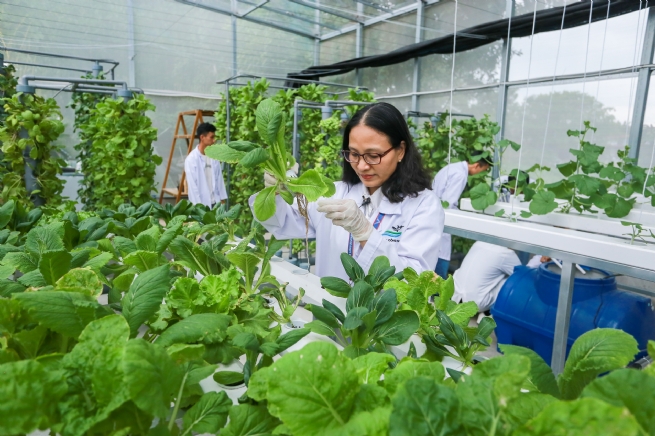
In the coming period, priority will be given to modernizing forecasting and warning systems; accelerating the application of digital technologies, artificial intelligence, and big data; and completing planning and investment in climate-resilient disaster prevention infrastructure, with a focus on frontline regions such as the Mekong Delta, the Central region, and the Northern mountainous areas. Disaster prevention will be linked with sustainable livelihood development and the construction of safe new rural areas, with people positioned as the central actors in prevention and response.
The guiding approach remains proactive adaptation, with prevention as the primary focus, aiming to minimize disaster-related losses, protect lives and property, and provide a secure foundation for sustainable agricultural and rural development amid increasingly severe climate change.
Could you outline the key objectives and strategic breakthroughs set for the agriculture and environment sector in the 2025-2030 period?
For the 2025-2030 term, we have identified this as a pivotal phase to firmly enter a new era, contribute to the country’s sustainable development, and move toward the 2045 vision. We have set six overarching objectives:
First, to build a commodity-based agricultural sector while developing agriculture in line with national comparative advantages in a modern direction, with high productivity, quality, efficiency, sustainability, and strong competitiveness, ranking among the leading group in Southeast Asia and within the world’s Top 15 by 2030.
Second, to proactively adapt to climate change, prevent natural disasters, and reduce greenhouse gas emissions; achieve fundamental progress in the rational, economical, efficient, and sustainable use of resources; curb the trend of rising environmental pollution and biodiversity loss; ensure environmental quality, maintain ecological balance, and move toward a green, environmentally friendly economy.
Third, to increase the contribution of science, technology, and innovation to sectoral growth through research, transfer, and application activities by public science and technology organizations and the private sector. By 2030, total factor productivity (TFP) is expected to account for over 50% of sectoral growth.
Fourth, to expand international cooperation and effectively mobilize international resources to achieve the sector’s objectives and targets; address non-traditional security issues such as food security, water resources, minerals, climate, and biodiversity; and safeguard Vietnam’s interests in the international arena.
Fifth, by 2030, to establish an agricultural and rural infrastructure system that is largely synchronized and modern. This includes basically resolving domestic water supply for inhabited islands; completing integrated systems for saltwater-freshwater regulation and water storage across major river basins; ensuring adequate water for daily life and socio-economic development; completing the repair and upgrading of damaged and degraded dams and reservoirs with limited flood-control capacity; and focusing on the prevention of riverbank and coastal erosion in key vulnerable areas.
Sixth, to fully tap the potential and value of marine resources and marine space; prioritize coastal resources and strengthen land-sea connectivity; build a foundation for rapid and sustainable marine economic development; contribute to the formation and growth of strong marine industries that provide stable livelihoods; ensure national defense, security, external relations, and international cooperation; safeguard independence, sovereignty, sovereign rights, jurisdiction, and national interests at sea; and gradually position Vietnam as a strong maritime nation with prosperity linked to the sea.
To achieve these objectives, what implementation orientations has the sector set?
First, to pursue determined reform and improvement of institutions and legislation, remove bottlenecks, and mobilize all resources for development; strengthen decentralization and delegation of authority; enhance local autonomy and accountability; and reform and streamline administrative procedures to ensure openness and transparency.
Second, to promote breakthroughs in science, technology, innovation, and digital transformation to support sectoral development.
Third, to create strong breakthroughs in developing synchronized and modern infrastructure for agriculture, rural areas, resources, and the environment, with a focus on strengthening forecasting and warning capacity; upgrading disaster prevention infrastructure; improving solutions to environmental pollution and climate change; developing multi-purpose irrigation systems; and investing in infrastructure serving agriculture, forestry, and fisheries, as well as forest protection and development.
Fourth, to prioritize the development of high-quality human resources; create clear shifts and breakthroughs in personnel management; and attract and effectively utilize talent.
Thank you very much!
Minh Ngoc (Vietnam Business Forum)
 April 24–25, 2026
 Kinh Bac Cultural Center, Bac Ninh Province


 Vietnamese





