

10:37:36 AM | 2/1/2026

The proactive, flexible, timely, and effective management of monetary policy, closely coordinated with an expansionary fiscal policy that has clear focus and priorities and aligned with other macroeconomic policies, contributes to maintaining macroeconomic stability, controlling inflation, restructuring compulsorily transferred banks, and supporting economic growth.
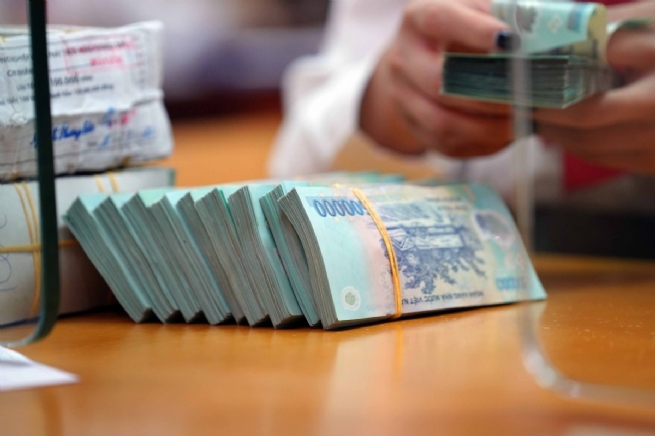
Vietnam’s credit growth is expected to reach around 15% in 2026
Tihese are the goals that the State Bank of Vietnam (SBV) will continue to pursue in 2026. In addition, the SBV plans credit growth of around 15%, with adjustments upward or downward in line with actual developments and conditions, ensuring inflation control, macroeconomic stability, support for economic growth, and the safety of credit institutions.
Banks post record profits on strong credit growth in 2025
Over the past year, credit was the brightest point of the banking sector. From the beginning of 2025, the sector set a target for early credit expansion when credit limits were allocated to all banks in a transparent manner and many measures to promote lending were introduced. As a result, credit accelerated strongly and reached a new high of VND18,400 trillion (US$736 billion), up 17.87% compared with the beginning of 2025 and up 19.41% over the same period of the previous year as of December 24, 2025. This was the highest growth rate in many years.
Many commercial banks achieved positive business results. In the Big 4 group, by the end of 2025, the Joint Stock Commercial Bank for Investment and Development of Vietnam (BIDV) had total assets of more than VND3,250 trillion (US$130 billion), up 20% compared with 2024, continuing to affirm its position as the bank with the largest total assets in Vietnam; outstanding credit reached more than VND2,300 trillion (US$92 billion), up 15.2%; capital mobilization reached more than VND2,400 trillion (US$96 billion), up 13.7%; credit quality was strictly controlled with the bad debt ratio at 1.2%; consolidated profit before tax reached more than VND36 trillion (US$1.44 billion), up more than 12%.
At the Vietnam Joint Stock Commercial Bank for Industry and Trade (VietinBank), by the end of 2025 total assets were estimated at VND2,800 trillion (US$112 billion), up about 18% compared with 2024; outstanding credit was estimated at nearly VND2000 trillion (US$80 billion), up about 16% compared with 2024. The bad debt ratio on outstanding credit was below 1.5%, while the bad debt coverage ratio continued to be maintained at a high level. Capital mobilization was estimated at nearly VND2,000 trillion (US$80 billion), up 13% compared with the end of 2024.
For the Vietnam Bank for Agriculture and Rural Development (Agribank), total assets reached more than VND2,500 trillion (US$100 billion), up 12.1% compared with the beginning of the year; outstanding credit reached nearly VND2 million billion (US$80 billion), up more than 16%; capital mobilization reached VND2,350 trillion (US$94 billion) and the bad debt ratio remained below 1.5%. Vietcombank had total assets of VND2,480 trillion (US$99.2 billion), up nearly 20% compared with the end of 2024. Outstanding credit to the economy reached about VND1,660 trillion (US$66.4 billion), up more than 15%; capital mobilization increased 10%, and the bad debt ratio was below 1%.
Among large joint stock commercial banks, many also announced encouraging business results. At the Military Commercial Joint Stock Bank (MB), profit before tax reached about VND33,700 billion (US$1.348 billion), up about 17% compared with consolidated profit in 2024; total assets reached nearly VND1,500 trillion (US$60 billion), up about 33% compared with the beginning of the year and far exceeding the target. Capital mobilization reached about VND1,050 trillion (US$42 billion). Nam A Commercial Joint Stock Bank recorded profit before tax of VND5,254 billion (US$210.16 million), equivalent to growth of 15.6% compared with 2024; total assets reached VND418,335 billion (US$16.73 billion), 1.7 times higher than at the beginning of the year, officially entering the Top 15 banks with the largest total assets in the system.
An Binh Commercial Joint Stock Bank reported profit before tax of VND3,522 billion (US$140.88 million), 4.7 times higher than the consolidated result in 2024 and achieving nearly 200% of the annual plan. Outstanding credit exceeded VND127,000 billion (US$5.08 billion), up 16% from 2024. The cost-to-income ratio (CIR) declined to 35.09%, while return on equity (ROE) reached 18%, approaching the leading group of joint stock commercial banks. The non-performing loan ratio also fell to below 1%.
Outlook for 2026: Strong differentiation, advantage for banks with solid foundations
Entering 2026, some banks disclosed business plans with high growth targets.
BIDV set a credit growth target of 15-16% in line with the limit assigned by the SBV, with bad debt controlled at no more than 1.5%; profit before tax targeted to increase about 10% while maintaining full compliance with operational safety ratios.
VietinBank set a target for total asset growth of 5-10%; credit growth according to the approved limit; capital mobilization to grow in line with credit expansion to ensure liquidity safety indicators; and the bad debt ratio to remain below 1.8%.
Vietcombank set a target for total assets to increase at least 11%; capital mobilization in market 1 to increase at least 14%; credit to grow safely and effectively at about 13%, focusing on production and business sectors, priority areas, and economic growth drivers; the bad debt ratio to be controlled below 1.5%; and profit before tax to increase at least 7%.
Southeast Asia Commercial Joint Stock Bank (SeABank) set a target for profit before tax of VND7,068 billion (US$282.72 million), up more than 9.4%; credit growth of about 17% while ensuring compliance with the maximum outstanding credit limit as regulated; capital mobilization expected to increase 23%; and total assets expected to grow 10%.
Results from the SBV survey on business trends of credit institutions in the first quarter of 2026 indicate that banks still view business prospects for 2026 positively, though with greater caution. Profit before tax is forecast to grow at a slower pace than in 2025, even as credit growth is expected to remain favorable and bad debt continues to be well controlled.
Analysts predict that the banking sector will show clearer differentiation in 2026, as profits will no longer rise uniformly as in previous years. Banks with strong capital bases, effective bad debt management, and ample credit room are likely to achieve breakthroughs, while those with weaker asset quality will continue to face pressure to improve operational efficiency.
In its latest banking sector outlook report, Vietcombank Securities projects profit before tax growth for the entire sector at around 20% in 2026. State-owned banks are expected to benefit from improving net interest margins from the second half of 2026 and better asset quality, leading to lower provisioning ratios. Meanwhile, dynamic private banks are likely to gain from policies supporting the private economy, maintaining robust profit growth through restructuring efforts, foreign strategic capital injections, and stronger debt recovery.
According to analysis by Rong Viet Securities, in previous years credit expansion combined with a favorable interest rate environment helped generate relatively even growth across the banking system. However, entering 2026, growth drivers have become more selective and increasingly dependent on the internal strength of each institution.
VPBank Securities forecasts that net interest margins in 2026 will move sideways or decline slightly compared with 2025, while differences among banks are expected to become more pronounced. Lenders with stable funding structures, high CASA (Current Account and Savings Account) ratios, low funding costs, and strong risk management capabilities are likely to have an advantage in maintaining profit margins above the industry average. In contrast, banks that rely heavily on long-term funding or engage in aggressive lending rate competition may continue to face pressure on their net interest margins.
By Quynh Chi, Vietnam Business Forum
 April 24–25, 2026
 Kinh Bac Cultural Center, Bac Ninh Province


 Vietnamese





