

11:13:41 AM | 12/12/2023

The endeavor to construct new rural areas in Tam Duong district, Lai Chau province, has transcended the mere transformation of the rural landscape; it has fundamentally elevated the well-being of the local populace.
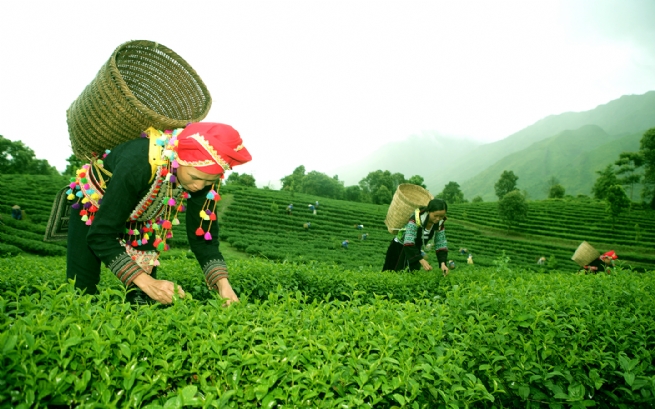
In Lai Chau province, tea cultivation serves as a key economic driver, aiding farmers in their quest to eradicate hunger and alleviate poverty
Ensuring safe production practices for sustainable development
To revolutionize production models and establish enduring livelihoods, Tam Duong district has widely adopted secure livestock farming and agricultural production models, significantly enhancing the economic stability of rural communities.
Mr. Chang A Thao's family in Chu Va 12 village, Son Binh commune, stands as a trailblazer in crop restructuring within the district. Transforming unproductive rice farming land into a 7,000 m2 passion fruit cultivation area, the family has implemented a meticulous production process, from variety selection to cultivation and harvest. This method has not only fostered robust growth in their passion fruit orchards but has also yielded an annual income exceeding VND100 million.
Similarly, Mr. Giang A Chia's fish farming model in Chu Va 8 village has delivered positive outcomes. Capitalizing on abundant cold-water resources, Mr. Chia's family has invested in ponds and tanks for fish farming, consistently raising around 8,000 sturgeon and salmon annually. This venture has proven lucrative, with his family's fish becoming increasingly prevalent in local restaurants and hotels. Mr. Chia said, "Currently, I manage six fish tanks, paying meticulous attention to nutrition, regular water source cleaning, and vigilant monitoring for timely intervention. Annually, we export over 10 tons of fish, generating nearly VND300 million."
Mr. Hoang Dinh Quan, Vice Chairman of the People’s Committee of Son Binh commune, emphasized the pivotal role of income criteria in the core foundation for constructing new rural areas. The commune has prioritized propagating and motivating enthusiastic production, with a focus on altering crop structures and introducing economically valuable plant varieties like canna, passion fruit, and cardamom, alongside livestock such as buffaloes and cows.
The commune's Steering Committee for New Rural Construction annually develops an extensive propaganda plan in diverse forms. Regular reviews, classifications, and task assignments to committee members for each criterion ensure effective steering, addressing challenges promptly, especially regarding criteria demanding substantial capital resources like income standards. Propaganda, advocacy, and supervision efforts have proven effective, fundamentally altering community awareness. Son Binh commune has already achieved 15 out of 19 criteria, and moving forward, it is committed to implementing robust solutions to meet the outstanding criteria, striving to reach the new rural development target by 2023, added Mr. Quan.
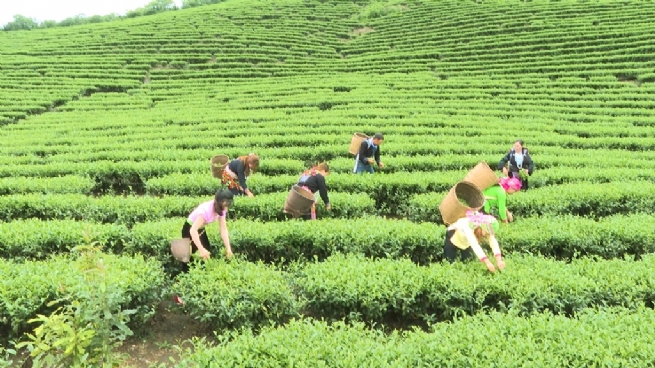
Promoting rural tourism development
Mr. Phong Vinh Cuong, Vice Chairman of the Tam Duong District People’s Committee, reported that to date, Tam Duong district has successfully attained new rural standards in 8 out of 12 communes. Upon recognition by the Provincial People’s Committee for meeting these standards, the district People’s Committee promptly directed the commune-level counterparts to devise specific plans and solutions aimed at sustaining and enhancing the quality of the criteria. In parallel, Tam Duong district has been actively implementing a project to develop new rural areas in conjunction with rural tourism for the 2020-2025 period, aligning with Resolution No. 41 of the Provincial People’s Council and Decision No. 30 of the People’s Committee of Lai Chau province, resulting in significant positive outcomes.
Noteworthy endeavors include Chu Va 6 village in Son Binh commune, Tam Duong district, which has invested in constructing 15 flower beds spanning 171 meters along both sides of a road, at the village gate, and has planted 400 trees to enhance the village's aesthetic appeal. Simultaneously, Son Binh commune has undertaken initiatives to encourage the removal of temporary houses and the relocation of barns to ensure environmental hygiene. Many households in Chu Va village have proactively enhanced their garden campuses and upgraded sanitation facilities. Si Thau Chai village in Ho Thau commune has emerged as a captivating destination, attracting visitors with its breathtaking mountain scenery and pristine beauty. Since 2015, the community in Si Thau Chai has embarked on the construction of a cultural tourism village, seamlessly integrating with the objectives of new rural development.
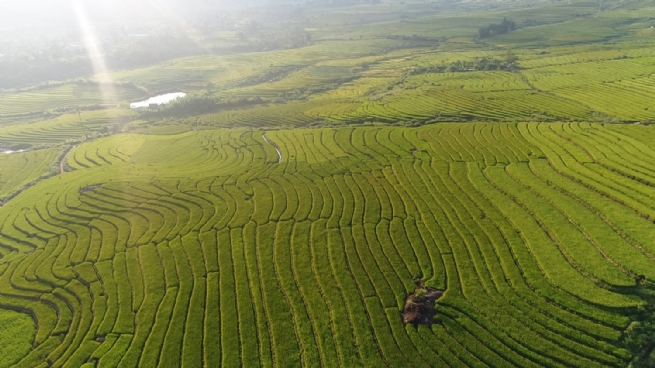
Recently, Ho Dau commune has provided support to 35 households in Si Thau Chai village to restore the cultural identity of Dao ethnic residential houses. This effort includes the establishment of a tourism development steering committee and a dedicated management board. Concurrently, the village has instituted environmental sanitation and service teams, focusing on the renovation of houses and the enhancement of the environmental landscape. Additionally, the village has diversified its tourism services and cultivated commodity agricultural products such as peaches, pears, plums, medlar, and wild honey.
Through the strategic integration of new rural construction with tourism development, Tam Duong district has achieved notable progress. The rural and mountainous landscapes have witnessed a positive transformation, accompanied by an enhancement in the quality of life for residents. The ongoing completion of infrastructure projects has contributed to the creation of a spacious and pristine new rural area. The preservation and development of cultural identities among ethnic groups makes the area a magnet for tourists seeking an authentic village experience.
By Bao Ngoc, Vietnam Business Forum





 Vietnamese





