

10:13:49 AM | 12/13/2023

2023 marked the first year of the post-pandemic era. There have been so many ups and downs with the economy, alongside different measures to sustain economic growth. Showing an improvement in the third quarter of 2023, Vietnam's economy this year still faced a number of obstacles to achieve its targets.
From a tax and legal perspective, we have witnessed some major changes locally and globally, which may permanently alter how business works. Within this single year, a number of new regulations and drafts resolutions have been proposed or passed. In light of those advancements, last November, PwC Vietnam successfully held the 2023 Tax and Legal Year-End Conferences in Hanoi and Ho Chi Minh City – an annual event to accompany businesses in keeping up with the latest legal and tax developments in Vietnam as well as relevant international practices.
The most important tax development this year is the introduction of Pillar 2, which establishes a minimum effective tax rate applied to profits of large multinational corporations across the world. Emerging economies like Vietnam will now face a big challenge on how to retain the taxing right and at the same time maintain the attractiveness to foreign investors, when tax incentives may no longer be an advantage there. Other issues, difficulties and possible solutions for businesses were also discussed during the conferences.
Shortly after the conferences, on 29 November, the National Assembly approved a resolution relating to corporate income taxes under Pillar 2. Under the resolution, the Global Minimum Tax (GMT) (including Qualified Domestic Minimum Tax and Income Inclusion Rule) will be officially applied in Vietnam from January 1, 2024. There will be a more detailed analysis of this matter on the Newsbrief section on PwC Vietnam’s website.
Furthermore, 2023 was the year of many important updates in terms of customs, legal and corporate taxes. Notably, the in-country import and export model in Vietnam is proposed to be abolished. In terms of legal, the introduction of personal data protection, alongside the update on foreign loans and environmental policy applied for manufacturers are the critical developments this year. Additionally, the proposed amendments of several tax laws including CIT, VAT and SST, together with the draft regulations on invoicing attracted special attention from businesses.
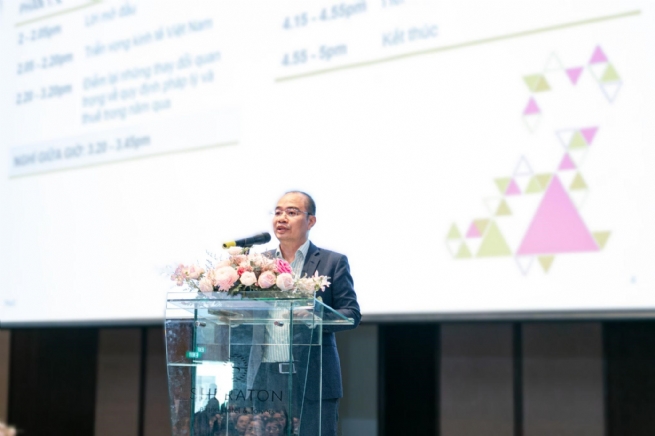
Mr. Nguyen Thanh Trung - Partner, Tax Leader of PwC Vietnam delivered a speech at the conference in Ho Chi Minh city.
“Those regulation updates demonstrate policies that promote transparency and broaden the tax bases, especially from new sources of revenue, which are in accordance with international practices.” Said Mr. Nguyen Thanh Trung, Tax Leader of PwC Vietnam. “This is also in accordance with the current tax trend worldwide, which is to ensure a fairer distribution of profits and taxing rights among countries, re-allocating tax rights to the markets where MNEs operate and generate income.”
Vietnam is an ever-changing compliance and regulatory environment. Through the two sessions, PwC Vietnam trusts that businesses are well informed of the latest tax and legal developments, which is vital for their management and daily operation.
Nguyen Mai ( Vietnam Business Forum)





 Vietnamese





