

2:11:20 PM | 9/28/2025

Amid global economic and political headwinds that threaten progress on climate and development goals, the Global Energy Alliance for People and Planet is showing how deep collaboration between governments, philanthropies, and the private sector works: transforming energy systems, creating millions of jobs and tackling climate change in emerging economies.
As showcased in its newly released 2025 impact report, the Global Energy Alliance’s public-private-philanthropy partnership model builds country-led coalitions and leverages catalytic finance and technical expertise to advance a sustainable energy future.
Since its inception at COP26 in 2021, the Global Energy Alliance has awarded US$503 million in catalytic funding, helping unlock US$7.8 billion in total investments and powering 137 projects in over 30 countries.
The Alliance’s partnership model is now on track to:
“The findings in this report prove the value of public, private, philanthropic partnerships and demonstrate that a just energy transition is a powerful engine for jobs and economic growth,” said Woochong Um, CEO of the Global Energy Alliance. “This report demonstrates that when governments, investors, innovators, and communities come together, we can drive systemic change, creating solutions that work locally and scale globally.”
|
|
Case studies from India, Africa, Latin America & the Caribbean, and Southeast Asia show how catalytic capital, technical expertise, and country-led coalitions are overcoming barriers: solar mini-grids in Nigeria and mesh-grids in Haiti are now powering some of the hardest to reach communities, a first of its kind battery energy storage project is providing reliable power to low-income customers in India, training and institutional capacity development is enabling a fast and fair energy transition in South Africa, and a floating solar project in Indonesia is showcasing how decentralized, climate-resilient systems can expand energy access in vulnerable geographies.
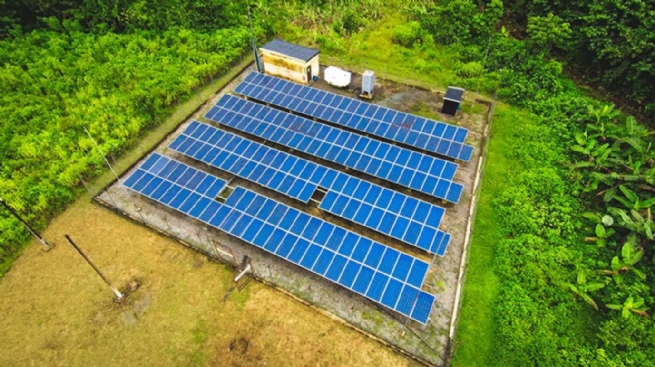
Solar mini-grids in Nigeria, one of the typical projects that The Alliance has been implementing

Mesh grid in Haiti consists of many small solar grids in residential areas, allowing households to share electricity with each other
The Impact Report also highlights lessons learned: pairing finance with technical expertise is critical to build strong project pipelines and speeding adoption. Solutions work best when they are country-led, market-based, and aligned with national priorities. Long-term alliances are essential to deliver systemic change. Adaptable timelines, contingency budgets, and strong local partnerships drive results. Financing should be tied to measurable outcomes, and data systems must be embedded to track progress, enable adaptation, and generate the proof points needed to influence the broader sector.
One of the key focus regions for the Energy Alliance since its inception has been Southeast Asia. With the increase in electrification in the region, the key challenges facing the clean energy transition are the dependency on traditional sources of energy, limited grid modernization, and hurdles in climate financing.
The Alliance has contributed to unlocking US$1.7bn in finance resulting in 37 projects deployed and ready for deployment in the region. These projects are slated to improve access for 4 million people, improve jobs and livelihoods for an additional 77,000 people, and reduce carbon emissions by an estimated 18 Mt.
To address the financing barriers for climate action in SEA, the Alliance has supported platforms such as the Financing Asia’s Transition Partnership (FAST-P). FAST-P is a blended finance initiative that brings together international public, private, and philanthropic partners to support Asia’s decarbonisation and climate resilience. The Alliance has also partnered with the Asian Development Bank to launch the Enhancing Access to BESS for Low-carbon Economies (ENABLE) platform, which will operationalize the BESS Consortium, mobilize funding and technical assistance for first-wave storage projects, and accelerate the sharing of best practices across the region.
Commenting on the progress, Kitty Bu, Vice President, Southeast Asia, Global Energy Alliance, stated, “The clean energy transition in Southeast Asia cannot be achieved in isolation; it demands collaborative, concerted action across governments, development banks, the private sector, and communities. At the Alliance, we are committed to building these partnerships to unlock climate finance, modernize grids, and accelerate the deployment of renewable energy solutions.”
Advancing Vietnam’s Energy Storage Future
In Vietnam, the Alliance is helping to chart a pathway for large-scale battery integration into the national grid. The Alliance has worked with national authorities to launch a BESS Task Force, which will guide technical standards, regulatory frameworks, and financing models to accelerate deployment toward Vietnam’s energy storage goal by 2030. These initiatives aim to build investor confidence while ensuring that the transition supports reliable power for households and industries alike.
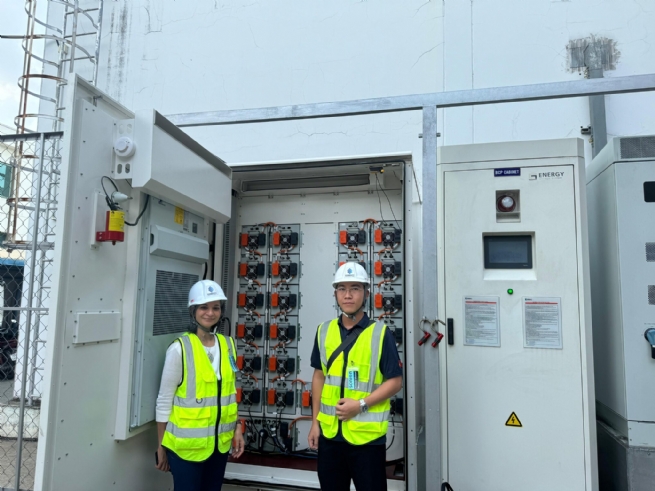
In Vietnam, the Alliance is supporting the development of a roadmap for integrating large-scale battery energy storage into the national grid.
“Vietnam is taking decisive steps to integrate storage into its energy system, showing that innovation and policy can go hand in hand. By establishing the Task Force, we are creating the building blocks for a stable, renewable-powered grid that supports both growth and resilience. These early moves will set the foundation for scaling storage solutions nationwide,” said Minh Nguyen, Country Manager, Vietnam, Global Energy Alliance.
Looking ahead, the focus will be on increased private sector engagement as energy transition accelerates and greater financial and technological requirements arise. Seeing the potential of the ASEAN Power Grid alliance, led by the ASEAN Secretariat with support from the Asian Development Bank and the World Bank Group, the Alliance is bringing catalytic support to Southeast Asian governments for energy transition. These efforts would enable the reduction of an additional 100Mt of CO2 emissions and adding over 13 GW of new RE generation.
To read the 2025 Impact Report, please see here.
Source: Vietnam Business Forum


 Vietnamese






