

10:02:21 AM | 12/9/2025

Resolution 57-NQ/TW, issued by the Politburo on December 22, 2024, continues to highlight science, technology, and innovation as key drivers for raising Vietnam’s economic value. In agriculture, science and technology contribute about 30% of the sector’s value-added. By applying these advances, Vietnam’s agriculture ensures national food security and strengthens its role in the global food supply chain. To learn more, our reporter interviewed Phung Duc Tien, Deputy Minister of Agriculture and Environment.
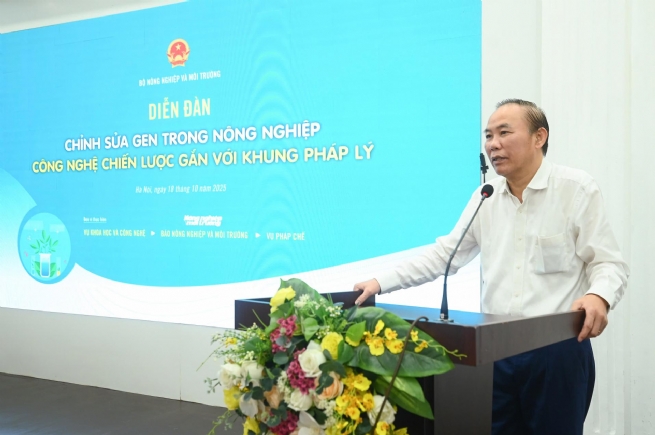
In the context of digital transformation and Industry 4.0, biotechnology is considered a “key” to modern agriculture. The Ministry of Agriculture and Environment is implementing major orientations and programs to promote research and the application of biotechnology in production?
The commitment to science and technology is clearly highlighted in Resolution 19 on the development of agriculture, farmers, and rural areas, especially regarding organic farming and a circular economy. More recently, Resolution 57-NQ/TW, issued by the Politburo on December 22, 2024, further emphasized that science, technology, and innovation are the main drivers for modernizing the production force and advancing Vietnam’s economy toward higher value-added growth.
In technological fields, biotechnology is considered a priority with breakthrough potential. Vietnam is applying various research directions, including gene transfer technology, molecular markers, tissue culture, embryo and cell techniques to develop crop and livestock varieties that adapt to climate change and improve productivity and product value.
So far, Vietnam has exported over 7 million tons of rice, reinforcing its role in the global food supply chain, with exports expected to reach a record US$67-70 billion in 2025. Beyond export volume, the sector’s structure has shifted significantly. Processing accounts for an increasing share, gradually replacing raw production, while green, circular, and digital agriculture are becoming more visible in many localities. In particular, preservation and processing technologies have reduced post-harvest losses by 5-10%, extended shelf life, improved product quality, and met strict international market standards.
Mechanization has also advanced strongly. Currently, more than 95% of land preparation is mechanized, and models using drones, IoT sensors, artificial intelligence, and agricultural robots are gradually being deployed in large-scale production areas. This has improved labor productivity, reduced production costs, and gradually increased farmers’ incomes.
Under Resolution 57-NQ/TW, the Ministry of Agriculture and Environment was assigned 188 tasks. To date, 55 tasks have been completed and 125 are in progress. Going forward, we will continue to expand the application of biotechnology in breeding, livestock, crop production, and agricultural processing. The government’s issuance of a decision on the development of the biotechnology industry is a strategic step, opening new growth opportunities for Vietnam. At the same time, policies are being refined to create a more favorable environment for scientists and businesses to invest.
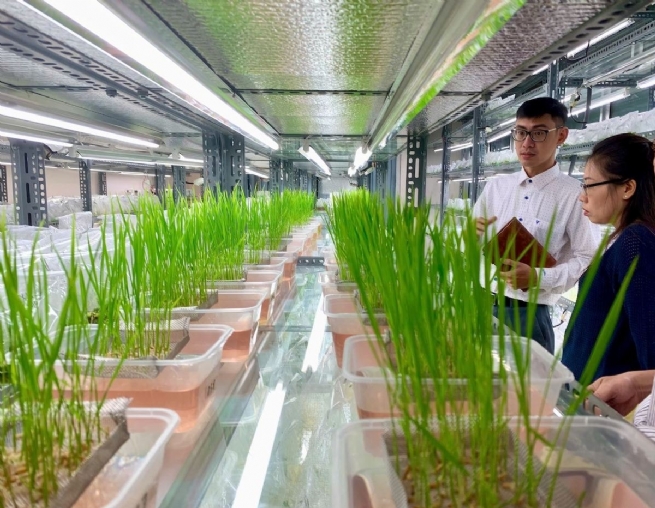
Gene editing research on crop varieties
One of the major challenges is the lack of incentive mechanisms and a high-quality workforce in agricultural biotechnology. What solutions do you have to address this and attract talent?
The Ministry of Agriculture and Environment has over 11,400 scientists, a network of 21 research institutions, and more than 16,000 ha of land, yet the utilization of these resources remains modest.
Despite strong digital transformation, institutional, financial, organizational, and managerial constraints continue to limit the full potential of existing resources. A core issue is the slow pace of institutional reform, particularly regulations related to talent retention. Currently, there is no sufficiently flexible legal framework to attract and retain highly qualified scientists or to build strong research teams, which are fundamental for any breakthrough development.
We are coordinating with relevant agencies to draft amendments to the Biodiversity Law, clarifying the concept of genetically modified organisms (GMO) and establishing management standards aligned with international practices. This aims not only to ensure biosafety and compliance with international commitments but also to provide a legal framework that facilitates research, testing, and the application of new scientific advances.
Although resources and policy directions exist, a complete legal framework is essential for science and technology to be effective. It is necessary to establish an environment and incentives that let scientists focus on their work without worrying about their livelihoods. This approach will help create a “new Khoan 10” (Contract 10, officially Resolution 10 of the Politburo) in science and technology, unlocking researchers’ potential, encouraging innovation, and fostering a proactive spirit within the scientific community.
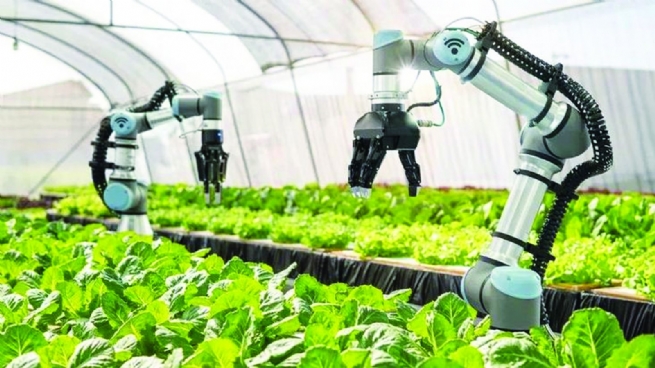
Agricultural mechanization has made significant advances
How do you see the agricultural sector evolving in the near future if breakthroughs in biotechnology, artificial intelligence, and digital transformation are fully utilized?
We view science and technology along with production restructuring as two key pillars in modernizing the agricultural sector. Both aspects are closely linked to digital transformation.
Looking ahead to 2030, digital transformation is expected to create a foundation for a digital agricultural ecosystem, establish supportive institutions, and shift the focus from “agricultural production” to an “agricultural economy.” The goal is to develop high-tech agriculture with an emphasis on smart and precision farming, increasing the share of digital agriculture in the overall economy.
Science and technology are not only a driving force but also a key element for sustainable agricultural development. We have outlined strategic priorities for the coming period. First, we will continue to improve institutions and policies to encourage investment in research and technology transfer. Regional agricultural innovation centers will be developed, fostering close links among research institutes, universities, and businesses. International cooperation will be expanded, particularly in deep processing, logistics, and smart mechanization.
At the same time, we will promote the socialization of scientific research, mobilizing resources beyond the state budget to further stimulate innovation. Building high-tech agricultural value chains with transparent traceability will provide the foundation to meet increasingly stringent domestic and international market requirements.
Thank you very much!
By Minh Ngoc, Vietnam Business Forum
 April 24–25, 2026
 Kinh Bac Cultural Center, Bac Ninh Province


 Vietnamese





