

1:09:52 PM | 2/14/2026

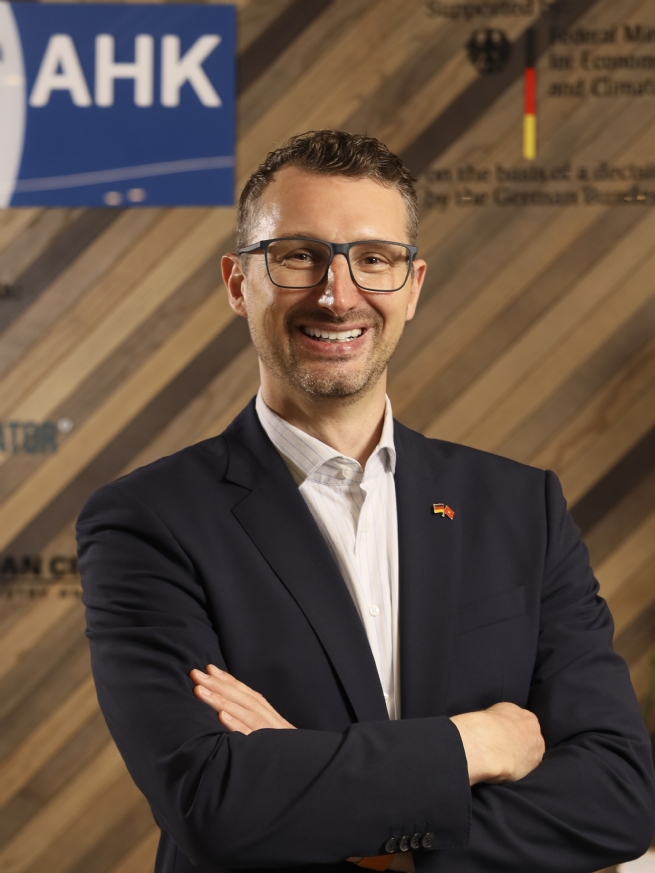
As Vietnam and Germany mark over fifty years of diplomatic relations, their economic partnership is entering a new phase of deeper industrial cooperation, sustainability-led investment, and stronger integration into global value chains. Against this backdrop, we interviewed Peter Kompalla, Chief Representative of the Delegation of German Industry and Commerce in Vietnam (AHK Vietnam), to learn more about Vietnam-Germany economic ties, growth sectors, and cooperation programs.
 |
How do you assess the economic and trade ties between Vietnam and Germany in recent years? Which sectors are performing the strongest?
Vietnam and Germany have developed an economic partnership that companies on both sides regard as stable, reliable, and long-term in nature. Fifty years of diplomatic relations provide a strong foundation of trust, while German enterprises are increasingly focused on translating this relationship into concrete and sustainable outcomes.
Bilateral trade has continued to develop positively. In the first ten months of 2025, trade between Vietnam and Germany exceeded US$20 billion, reflecting Vietnam’s strong demand for high-quality machinery and industrial solutions to support economic growth and infrastructure modernization.
Beyond trade figures, cooperation is becoming increasingly tangible through projects and initiatives in key industries. In infrastructure and mobility, German companies are engaged in dialogue and cooperation related to rail, urban mobility, and transport systems. Activities involving Siemens Mobility and VinSpeed highlight the relevance of German expertise in system integration, signaling, safety standards, and long-term operations for complex projects.
In the energy sector, cooperation is shaped by strategic dialogue and practical solutions. Building on Germany’s comprehensive experience with the energy transition, both countries are working closely to support Vietnam’s Net Zero pathway. This was reflected in many conferences, delegations, and initiatives in Germany and Vietnam, fostering exchange on energy efficiency, renewable integration, and industrial solutions that support decarbonization and long-term energy security.
At the same time, the partnership was further strengthened during the third Joint Committee on Economic and Trade Cooperation in Hanoi. The resulting action plan for 2025-2026 prioritizes structured cooperation through technical working groups, business matchmaking, and capacity building, supporting Vietnam’s energy transition and alignment with international standards.
From a strategic perspective, this framework reflects a long-term and integrated approach to Vietnam’s energy transition. By linking skills development, technology transfer, and industry needs, it contributes to a successful implementation of the Power Development Plan VIII (PDP8) and strengthens Vietnam’s attractiveness for sustainable energy investment. A case in point is the Hon Trau nearshore wind project by German firm PNE AG in Gia Lai Province. Reclassified under the 2024 Electricity Law, the US$4.6 billion project is now progressing through approval stages with strong provincial backing, aiming for a 2,000 MW capacity and operation by 2030. This example illustrates how regulatory clarity, local engagement, and long-term planning come together to advance large-scale renewable initiatives.
At the industrial level, German manufacturers continue to expand their presence in Vietnam through production, technology transfer, and supplier development, underlining Germany’s sustained commitment to Vietnam as a manufacturing and innovation location.
We see strong growth in manufacturing, machinery, renewable energy, infrastructure, logistics, and services, driven by German expertise and Vietnam’s rapid industrial development.
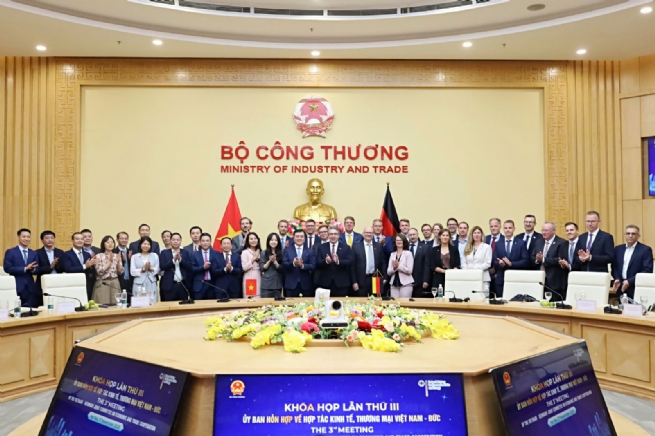
The third meeting of the Vietnam - Germany Joint Committee on Economic and Commercial Cooperation, November 2025
What major programs are you currently implementing to promote investment, trade, and the exchange of expertise?
Our activities are guided by the practical needs of companies operating between Vietnam and Germany. As the official representation of the German economy in Vietnam, AHK Vietnam serves as a bridge, not only supporting German investment but also promoting Vietnam as a reliable sourcing, production, and innovation partner within global value chains.
A key focus of our work is facilitating dialogue between German buyers and Vietnamese suppliers. This reflects Vietnam’s growing role beyond a manufacturing location, toward higher value-added participation in international supply chains.
Experience shows that companies entering a new market often face challenges related to regulatory understanding, partner identification, and local implementation practices. Through market orientation services, networking platforms, and structured dialogue with authorities and business associations, we help companies better understand local conditions and connect with relevant stakeholders. These activities also contribute to strengthening Vietnam’s integration into global supply chains.
Platforms such as the Supply Chain & Logistics Summit 2025, co-organized with partners, bring together Vietnamese and international companies, policymakers, and experts to discuss supply chain resilience, efficiency, and international standards, topics that are increasingly important for Vietnam’s export-oriented economy.
Skills development is another core pillar of our work. Together with companies, training institutions, and authorities, we support vocational training and upskilling programs aligned with real labor market needs. This is closely linked to fair and transparent migration initiatives, which aim to create sustainable workforce pathways that benefit both Vietnam and Germany.
In addition, knowledge exchange on sustainability and digital transformation plays a growing role. Through information events and structured dialogue, we support Vietnamese and German companies in understanding ESG requirements, digital standards, and international best practices, helping to ensure long-term, responsible, and competitive business cooperation.
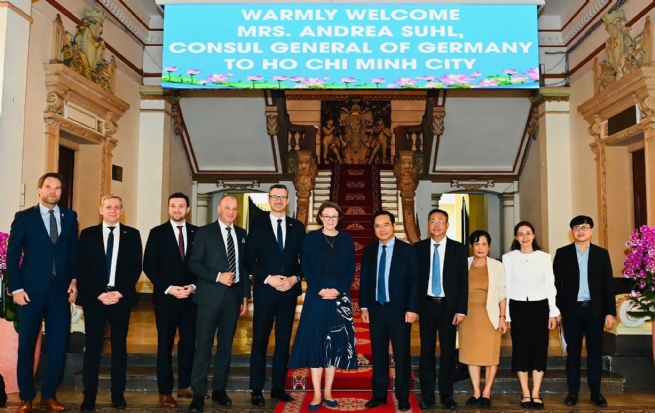
AHK Vietnam accompanied German Consul General Andrea Sühl and a German delegation during a visit to Ho Chi Minh City People’s Committee, November 2025
According to your observations, what challenges are German and Vietnamese enterprises currently facing in advancing partnership? What are the key solutions to strengthen the partnership?
German companies widely recognize Vietnam’s recent administrative reforms. Streamlined structures, clearer responsibilities, and faster decision-making have sent positive signals to the business community and contributed to improved investor confidence.
Some aspects of the business environment need ongoing attention, especially for large-scale, technology-driven projects with long planning cycles. Renewable energy developers may face questions about power purchase agreements, grid connection timelines, and regulatory interpretation, while infrastructure and mobility projects can be slowed by complex processes. In advanced manufacturing, issues with incentives, customs, and equipment certification may cause delays.
For long-term investments, clear and consistent regulations are essential. Improving predictability, fostering early dialogue between authorities and businesses, and better coordination across administrative levels can lead to smoother project execution. Transparent operational procedures aligned with policy objectives also enhance reliability.
Practical tools and early support are equally important. Clarifying licensing, certification, or incentives from the outset can reduce delays, particularly for projects spanning multiple provinces. AHK Vietnam’s monthly Law & Taxes Newsletter provides concise legal and tax updates, while dialogue with authorities is supported through the German Business Association (GBA). With strong local insight and partner networks, we help connect companies with relevant stakeholders and facilitate informed decision-making.
Which industries or trends does AHK expect to drive Vietnam-Germany cooperation, especially amidst the green transition and digital transformation?
The strong development of bilateral trade should be seen not as an endpoint, but as a foundation for the next phase of cooperation, reflecting mutual confidence and deepening economic integration.
A key driver for 2026 is sustainable infrastructure and connectivity. Projects such as the Hanoi-Ha Long and Ho Chi Minh City-Can Gio rail corridors illustrate where Vietnam’s development priorities intersect with German technological expertise. This presents an opportunity for German firms to engage with Vietnamese partners and authorities by contributing expertise in integrated system design, digital control, safety standards, or long-term operations, key components for delivering modern, efficient transport systems.
Industrial modernization and digitalization are also gaining momentum, particularly in automation, industrial software, and supply-chain integration. AHK Vietnam initiatives such as the “Factory Automation - Made in Germany 2.0” symposium and the Vietnam Cement Delegation to Germany support exchange on efficiency, digitalization, and environmental technologies.
The energy transition remains central, especially in renewables, grid integration, and system stability under PDP8. As Vietnam invests in infrastructure and grows economically, demand is increasing for both technology and expertise in planning and skills. Programs like “Talents - Partnerships for Skilled Workforce” help by creating lasting training and recruitment channels between Vietnam and Germany, ensuring the skilled workforce needed for complex industrial and infrastructure projects.
Thank you very much!
By Thu Ha, Vietnam Business Forum
 April 24–25, 2026
 Kinh Bac Cultural Center, Bac Ninh Province


 Vietnamese





