

9:15:57 AM | 3/30/2026

The customs authority is completing preparations to implement the centralized clearance project immediately after it receives approval from the Ministry of Finance. The model is expected to advance customs procedure reform, streamline dossier processing, improve government management efficiency, and support businesses’ trade activities.
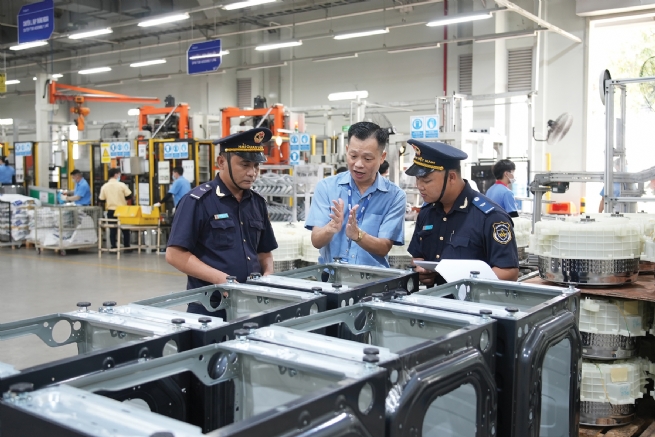
Customs officers inspect export-import commodity codes
On March 4, a working delegation led by Nguyen Van Tho, Director General of the Department of Vietnam Customs, met with Regional Customs Sub-Department III to gather feedback and refine the centralized clearance project before submitting it to the Ministry of Finance for review and approval.
During the meeting, representatives from the Customs Supervision and Management Board and Regional Customs Sub-Department III reported on the progress of developing the project while clarifying key issues related to implementation plans. Discussions focused on information technology infrastructure, personnel arrangements, operational procedures, and coordination mechanisms among units during the rollout of the model.
According to the units responsible for developing the project, implementing centralized clearance requires synchronized preparation in organizational structure, operational procedures, and technical infrastructure. During the development process, the units conducted a comprehensive review of related operational stages to ensure the model can operate smoothly once implemented, limiting potential obstacles.
At the meeting, participants discussed and provided specific recommendations to complete the project’s content. Key areas of discussion included methods for organizing dossier processing, mechanisms for assigning responsibilities among operational units, and anticipating situations that may arise during practical implementation.
The feedback also stressed the need to build closely coordinated procedures across operational stages to ensure administrative processing is carried out quickly and transparently while still meeting government management requirements in the customs sector.
Concluding the meeting, Director General Nguyen Van Tho requested that units fully incorporate the feedback and promptly finalize the project for submission to the Ministry of Finance for review and approval as soon as possible. Customs leadership also called for careful preparation of the necessary conditions to ensure implementation can begin immediately after the project receives approval.
Under the plan, the centralized clearance model will first be piloted at Regional Customs Sub-Department III. The pilot phase aims to assess the model’s operational effectiveness while continuing to refine procedures and coordination mechanisms before considering expansion across the entire customs system.
As part of the working program, the delegation also conducted a field survey of the proposed location for the centralized clearance model while reviewing facility and technical infrastructure conditions to ensure readiness for operation as soon as the project is approved.
The implementation of the centralized clearance project is expected to mark an important step in the modernization of the customs sector. By concentrating procedural processing points, the model will help improve management efficiency while creating more favorable conditions for the business community in import-export activities, thereby facilitating goods circulation and supporting trade growth in the coming period.
By Duy Hung, Vietnam Business Forum


 Vietnamese





