

10:04:37 AM | 4/2/2026

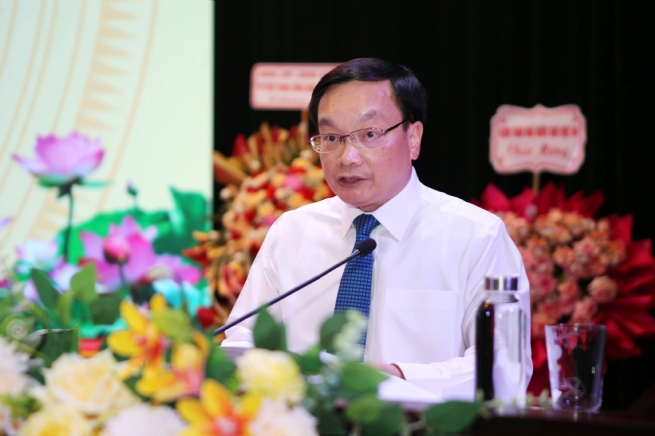
As Lao Cai enters a new stage of development with an expanded economic space and new growth drivers, improving the quality of investment attraction and enterprise development has become a key priority for the province. To learn more, our reporter interviewed Do Duc Minh, Director of Lao Cai Department of Finance, about the province’s investment potential, remaining development space, priority sectors, and the reforms in investment promotion and business support that aim to build a foundation for sustainable local growth.
How do you assess the province’s potential and investment attraction capacity at present, particularly from the advantages of geo-economic location, infrastructure, and regional linkages?
Lao Cai is bringing together strong advantages to become an important growth pole of the Northern Midlands and Mountainous region.
First, its geo-economic location is a clear advantage. As a border province adjacent to Yunnan (China), Lao Cai serves as a gateway linking Vietnam with the Southwest China market and further to the Asia-Europe region. The province lies on the Kunming-Lao Cai-Hanoi-Hai Phong-Quang Ninh economic corridor, an important international trade route that provides a foundation for the development of the border-gate economy, cross-border trade, logistics, and import-export activities.
At the same time, connectivity infrastructure is receiving strong investment. The Noi Bai-Lao Cai Expressway has shortened transport time, reduced logistics costs, and improved competitiveness. Together with interregional transport projects, the Lao Cai-Hanoi-Hai Phong railway line and the orientation to develop Sa Pa Airport, Lao Cai is forming a multimodal transport network that connects directly with the Capital region ( Hanoi and its neighbouring provinces) and major economic centers. This creates an important platform for attracting strategic investors.
In terms of development space, Lao Cai still has significant potential in the border-gate economy, processing industries linked with logistics, deep processing of minerals and agricultural-forestry products, as well as tourism and high-quality services. Investment attraction is expanding from the border-gate economic zone to industrial parks and clusters, new urban areas, and key tourism centers such as Sa Pa, Mu Cang Chai, and Thac Ba Lake.
Lao Cai is also strengthening regional linkages and international cooperation, especially with provinces in the Northern Midlands and Mountainous region, the Hanoi Capital region, and localities in China. This helps expand markets, share infrastructure, and improve competitiveness.
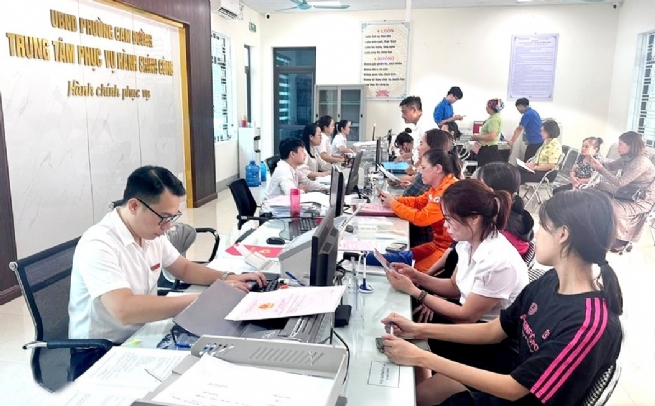
Lao Cai Province focuses on promoting administrative reform to improve the investment and business environment
With these advantages and strong efforts to improve the investment environment, Lao Cai has a strong opportunity to accelerate development and become an attractive destination for investors in the new development stage.
Based on the province’s development planning and orientation for the 2025-2030 period, which sectors will Lao Cai prioritize in attracting investment?
The province directs investment attraction in a focused and targeted manner, linked with key growth areas to generate development momentum and support sustainable spillover effects.
First, border-gate economy, logistics, and international trade remain the top priorities, concentrated in the Lao Cai Border Gate Economic Zone and areas such as Lao Cai Ward, Bat Xat Commune, and Bao Thang Commune. The province also plans to expand transit and logistics functions to southern localities including Van Yen, Tran Yen, and Yen Binh, forming a seamless logistics chain from the border to inland areas.
Second, green industry, deep processing, and high technology are planned for development in industrial parks and clusters in Vo Lao, Bao Thang, Van Ban, Bac Ha, Tran Yen, and Yen Binh, making use of land availability, infrastructure, and raw materials to form new industrial growth centers.
Third, high-quality tourism and services continue as spearhead sectors, with key tourism areas such as Sa Pa, Y Ty, Bac Ha, Bat Xat, and Si Ma Cai, while also developing promising destinations including Mu Cang Chai, Tram Tau, Nghia Lo, and Thac Ba Lake.
Fourth, commodity agriculture, high-tech agriculture, and the green economy are prioritized in areas with strong advantages such as Bac Ha, Muong Khuong, Van Ban, Van Chan, Luc Yen, and Van Yen, linked with the development of concentrated raw-material zones, deep processing, and the building of distinctive agricultural brands.
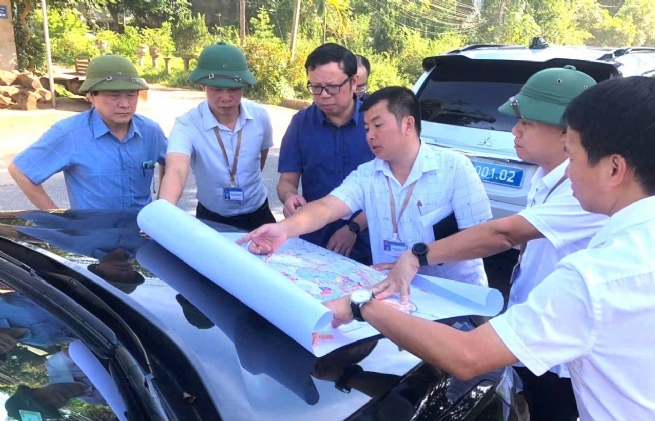
Inspecting key development projects in Lao Cai province
Fifth, urban development and social infrastructure will focus along the Red River corridor and central urban areas such as Lao Cai Ward, Sa Pa Ward, Yen Bai Ward, and Nghia Lo Ward, with the goal of forming a coordinated system of green and smart urban zones.
Overall for the 2025-2030 period, Lao Cai directs investment attraction toward an expanded development space, focusing on key growth areas such as Lao Cai, Sa Pa, Bao Thang, Yen Bai, Nghia Lo, and economic corridors along major transport routes.
In the context of implementing Resolution 68, which key mechanisms, policies, and solutions is the province prioritizing to develop endogenous enterprises and domestic enterprises as the foundation for long-term growth?
By the end of 2025, Lao Cai had 12,630 registered enterprises with total charter capital of approximately VND168 trillion, including 9,279 limited liability companies, 2,608 joint-stock companies, and 743 private enterprises.
Of these, 12,616 non-state enterprises account for 99.9% of the total, including foreign direct investment (FDI) enterprises implementing 67 projects with registered capital exceeding US$1 billion. Most are domestic direct investment (DDI) enterprises and small- and medium-sized businesses operating across different sectors, mainly in trade-services and industry, though their capital scale and management capacity remain limited.
The province currently has 14 state-owned enterprises under the ownership representation of the provincial People’s Committee, accounting for about 0.1% of the total number of enterprises.
In implementing Resolution 68, the province identifies endogenous enterprises and DDI enterprises as the core force for long-term growth. The Standing Board of the Provincial Party Committee issued Plan 12-KH/TU, and the provincial People’s Committee issued Plan 58/KH-UBND to specify tasks for private economic development.
The province is focusing on several key solution groups: improving institutions and the investment environment; removing bottlenecks in land and infrastructure; strengthening enterprise capacity through technological innovation and digital transformation; attracting FDI selectively while increasing linkages with domestic enterprises; supporting businesses in accessing capital, markets, and human resources; and maintaining regular dialogue with enterprises to promptly address difficulties. Through these efforts, Lao Cai aims to gradually build a solid foundation for long-term growth of the local economy.
Amid the requirement to improve the quality of investment attraction and provide more support for businesses, how are investment promotion and business support activities being renewed?
The province considers business success as a measure of government effectiveness. Accordingly, investment promotion and business support are being renewed in a more practical, professional, and effective direction.
Investment promotion activities are being organized in a more systematic way, focusing on building databases, preparing materials that introduce the investment environment, promoting local potential, conducting market research, and strengthening support for investors.
At the same time, the province is implementing three breakthrough solution groups: improving institutions and ensuring a transparent investment environment; developing regional transport and logistics infrastructure; and prioritizing projects that apply high technology and are environmentally friendly.
A major focus is accelerating digital transformation in administrative procedures, particularly through the “Digital Border Gate” model, which helps shorten customs clearance time and reduce logistics costs for businesses.
At the same time, the province is shifting its approach from “management” to “service” for businesses through the DDCI index, creating reform pressure from the grassroots level and strengthening the accountability of administrative agencies.
Mechanisms for dialogue with enterprises are maintained regularly, including business meetings, periodic dialogues, the “Weekend with Businesses” program, and special task forces led by the Chairman of the provincial People’s Committee.
With the guiding principle “Businesses prosper - Lao Cai develops,” the province commits to long-term partnership with investors and to building a transparent, favorable, and sustainable investment environment.
Thank you very much!
Song Uyen (Vietnam Business Forum)


 Vietnamese





