

1:00:20 PM | 4/29/2026

In response to urgent government direction to strengthen control of the fuel market, Vietnam’s customs forces have been implementing coordinated patrol and monitoring measures at border gates and seaports, enabling timely detection and prevention of smuggling and trade fraud, helping stabilize supply and maintain market discipline.
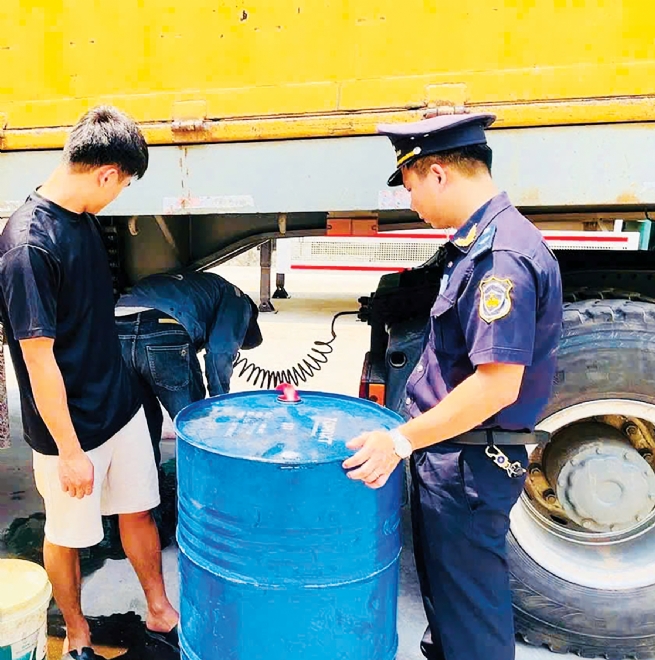
The customs sector steps up patrols to prevent illegal fuel transportation
Firm implementation of government direction
Following direction in Official Dispatch 2389/VPCP-V.I on tightening the fight against smuggling and trade fraud in the fuel sector, the Anti-Smuggling Investigation Department under Vietnam Customs quickly instructed the entire force to step up patrol and monitoring across all routes.
Specifically, on March 23, 2026, it issued Official Dispatch 211/DTCBL-P1, requiring regional customs departments to carry out coordinated measures in line with direction from the Government and the Deputy Prime Minister on combating fuel smuggling.
Regional customs departments are required to continue strictly implementing Official Telegram 22/CD-TTg of the Prime Minister on ensuring fuel supply for production, business, and consumption. This goes beyond securing supply, requiring proactive control and effective prevention of smuggling and illegal cross-border transport that can disrupt the market.
As the fuel market still carries potential risks, decisive actions by customs forces are seen as a necessary step to strengthen discipline in state management and support a fair competitive environment for businesses.
Tightened controls across all routes, identifying new tactics
Under the directive, control efforts focus on land border gates, inland waterways, and seaports, which are considered high-risk areas for fuel smuggling.
Customs forces are inspecting inbound and outbound vehicles that show signs of modified tanks or containers used to conceal fuel. This is one of the more sophisticated methods seen recently, as smugglers alter vehicles to increase fuel capacity for illegal transport across borders.
At the same time, controls on foreign vehicles are being tightened. Authorities are working to prevent the misuse of standard fuel allowances in vehicle tanks to collect and transport fuel illegally in cans, drums, or improvised containers before exit.
Monitoring at anchorage and vehicle staging areas is also being strengthened. Verification and cross-checking of declared fuel volumes against supplied quantities are being carried out more strictly to detect irregularities and fraud.
Notably, the Anti-Smuggling Investigation Department requires customs forces to closely monitor their areas and coordinate with local authorities and relevant forces such as police, border guards, coast guard, and market surveillance to promptly identify new smuggling methods.
Accurate analysis and forecasting of violation trends will provide a basis for appropriate control plans and effective resource deployment, reducing the risk of being caught off guard.
Beyond customs forces, Official Dispatch 2389/VPCP-V.I also requires ministries, sectors, localities, and relevant forces to strengthen patrol and control of the fuel market.
The Ministry of Finance, in its role as Standing Deputy Head of the National Steering Committee against smuggling, trade fraud, and counterfeit goods, is assigned to lead and coordinate with relevant forces to implement strong control measures and ensure market stability.
Forces including police, border guards, coast guard, market surveillance, and tax authorities are required to strengthen coordination and strictly handle smuggling, trade fraud, hoarding, profiteering, and violations of fuel business and pricing regulations.
Experts say that tightening controls from border areas to the domestic market will help curb profiteering, supporting transparency and stability in the fuel market in the coming period.
Over the longer term, these measures not only address immediate violations but also help build confidence among businesses and consumers, creating a foundation for the fuel market to operate under fair competition and in compliance with the law.
By Le Hien, Vietnam Business Forum


 Vietnamese





