10:21:12 AM | 9/7/2026

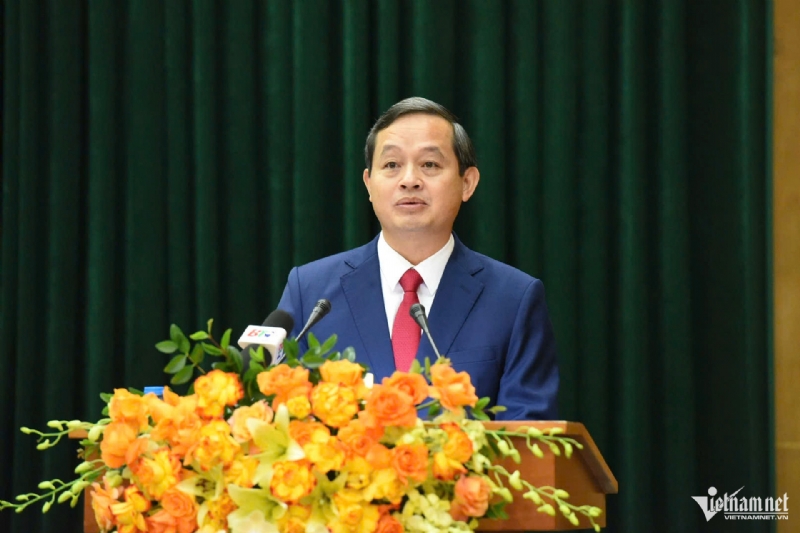
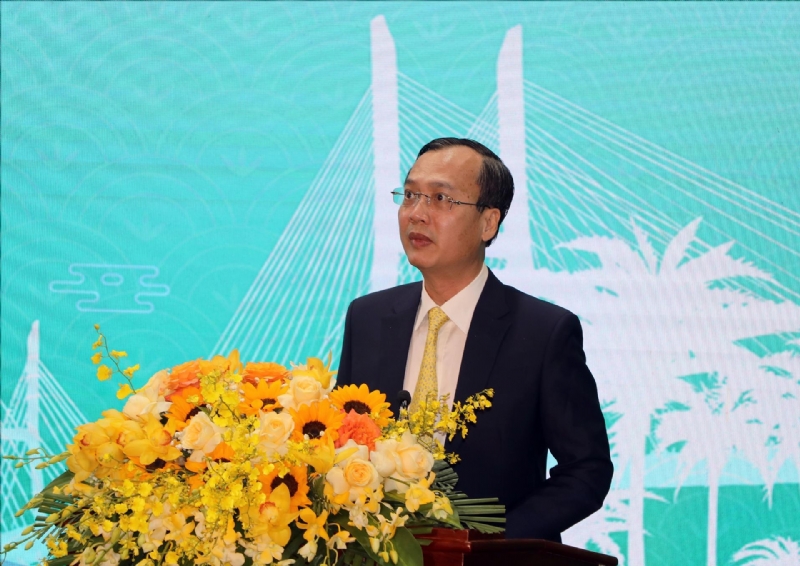
To implement the three breakthrough areas set out in the Provincial Party Congress Resolution and put the adjusted Provincial Planning into practice, Vinh Long is focusing on stronger implementation to improve the business environment. According to Chairman of the Provincial People's Committee Tran Tri Quang, governance quality should be measured not by the number of policies and initiatives, but by their effectiveness and concrete results for businesses and investors.
 |
What bottlenecks is Vinh Long focusing on removing to improve the investment environment?
In implementing the three breakthrough areas of innovation and the private sector, infrastructure, and human resources under the Provincial Party Congress Resolution, Vinh Long is focusing on removing key bottlenecks and creating a transparent and favorable investment environment where it is “easy to enter and easy to get things done.”
In innovation and the private sector, the province prioritizes reducing input and logistics costs and addressing administrative procedure bottlenecks. In infrastructure, the focus is on accelerating site clearance and completing coordinated technical and logistics infrastructure. In human resources, the province is improving workforce quality for high-tech industries, energy, and modern services, while addressing the avoidance of responsibility, passing the buck, and repeated requests for additional documents in public services.
Businesses and investors are clearly seeing the changes from this new approach. In land access, the province is accelerating site clearance and completing infrastructure at 20 industrial clusters and the Dong Binh, Binh Tan, Hoa Phu expansion, and Phu Thuan industrial parks, proactively creating clean land reserves ready for projects.
In administrative reform, Vinh Long aims to cut procedure processing time by 50% in 2026 compared with 2024 and reduce investment licensing time by at least 30%, while providing fully online public services without administrative boundary constraints. After licensing, the province is coordinating procedures for land allocation, planning, fire prevention and firefighting, and environmental requirements, while using digital tools to monitor application processing progress.
Which key growth drivers and leading sectors has Vinh Long identified to achieve its 10% growth target from 2026?
To achieve its 10% growth target from 2026 and maintain it throughout the term, Vinh Long plans to shift from an “agriculture-focused, domestic economy” model to a multi-pillar model, leveraging its new advantages to become a regional center for the marine economy and renewable energy in the Mekong Delta.
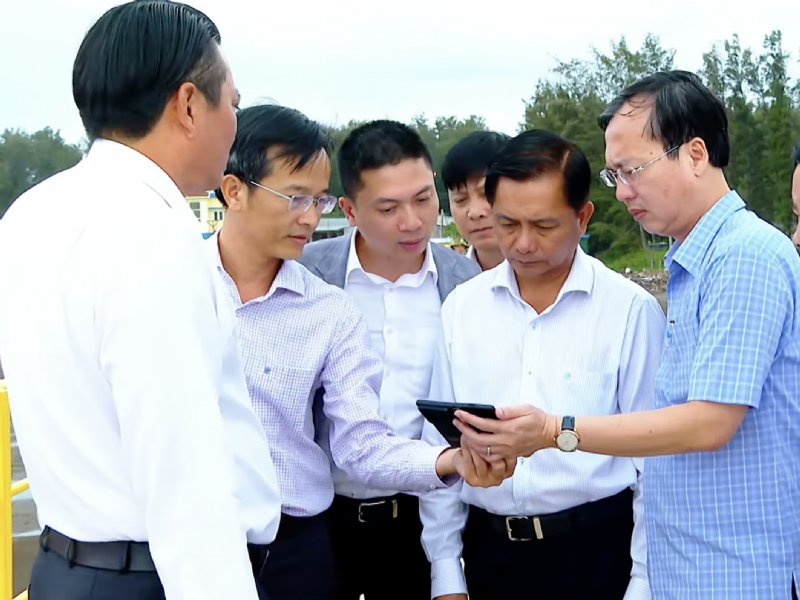
Vinh Long Province’s leaders conduct an on-site inspection of critical infrastructure at the Dinh An Economic Zone
The province has identified four key growth drivers: accelerating public investment to complete infrastructure; promoting the private sector while attracting high-quality FDI; expanding development space through integration and external relations; and making effective use of its new scale, with an area of more than 6,200 square kilometers and a population of about 3.3 million.
On this foundation, Vinh Long aims to achieve a per capita GRDP of VND169.46 million (US$6,518) by 2030, with the digital economy accounting for 30% of GRDP and total social investment capital of about VND480 trillion (US$18.46 billion) during 2026-2030.
To create momentum and broader spillover effects, the province has selected the marine economy, renewable energy, industry, logistics, and high-value agriculture as leading sectors. In 2026, the province aims to bring at least 300MW of wind power into operation while promoting solar power and green hydrogen.
Vinh Long is focusing on developing key infrastructure such as Dinh An Economic Zone, 20 industrial clusters, and key industrial parks, while prioritizing high-tech, supporting industries, and modern logistics projects linked to the marine economy. In agriculture, the province is promoting ecological models, digital transformation of high-quality, low-emission rice value chains, and upgrading One Commune One Product (OCOP) offerings for export.
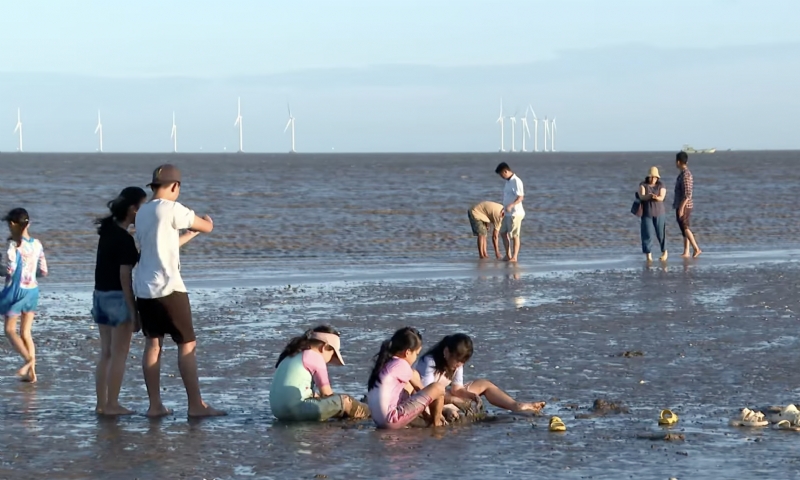
Dinh An EZ is developing into a hub for renewable energy
By linking industry, services, the marine economy, energy, and high-value agriculture, Vinh Long aims to build a faster, more balanced, and sustainable growth model.
What are the biggest bottlenecks in implementing growth drivers and priority projects, and what solutions will the province adopt to address them?
In implementing growth drivers and priority projects, Vinh Long's biggest challenge is the stage of “creating advantages,” as technical and logistics infrastructure remains incomplete, large clean land reserves are not yet available, and workforce quality has not kept pace with the requirements of high-tech industries and modern energy.
In addition, public investment disbursement in the first six months of 2026 remained low at 26.7% due to site clearance and construction material supply issues. Rising input costs, business difficulties, foreign investors using Vietnamese intermediaries to invest in agricultural products, and some officials' reluctance to take responsibility or act decisively are also bottlenecks that require focused action.
To improve implementation, Vinh Long is tightening administrative discipline, strengthening the responsibility of agency heads, and linking planning implementation with actual results.
The province is accelerating public investment disbursement, concentrating capital, reducing small-scale projects by at least 30%, addressing construction material bottlenecks, and striving to complete the capital plan. Investment promotion is also being renewed with a more focused approach, greater use of digitalization, interconnected procedures, and stronger cross-sector monitoring to ensure project progress.
The adjusted Provincial Planning has clearly defined Vinh Long's new development space and economic pillars. What will the province do to turn the planning into concrete projects and real growth drivers?
The adjusted Vinh Long Provincial Planning, announced on March 20, 2026, reorganizes development space into three socioeconomic regions, five economic corridors, four growth-driver areas, and five functional zones, shifting from fragmented development to a model of linked growth drivers and expanding development space toward the sea.
To turn the planning into a real growth driver, Vinh Long has identified implementation as the decisive step, focusing on translating development orientations into project lists, land reserves, and specific implementation mechanisms. First, the province will standardize and publicly release a list of key projects to attract off-budget investment during 2025-2030, linked to its development pillars to support proactive investment promotion.
The province is also accelerating the completion of zoning plans and industrial park development planning for 2025-2030 and adjusting the Dinh An Economic Zone Planning under Decision 455/QD-TTg to create the legal basis, land reserves, and conditions for attracting strategic investors. Priority will be given to transport and logistics infrastructure to realize the economic corridors set out in the planning. At the same time, the province will continue working with international partners to turn memorandums of understanding into specific projects and facilities.
Which areas will Vinh Long focus on reforming to improve governance quality and provide more effective support for businesses?
Based on the 2025 Provincial Competitiveness Index (PCI), Vinh Long has identified improving governance quality as an ongoing task, focusing on comprehensive reform from institutions and the administrative apparatus to the way businesses are served. Priorities include further simplifying administrative procedures, increasing transparency, reducing compliance and informal costs, and building a safe and fair investment environment.
The province is shifting from a “management” mindset to one of “working alongside businesses” by accelerating digital transformation, improving investor support services, and maintaining regular dialogue to address difficulties facing the private sector.
The “6 clarities” principle: clear person, clear task, clear timeline, clear responsibility, clear authority, and clear results, is being put into practice by assigning responsibility to each individual and unit in processing applications and linking it to the role of the head of each agency.
At the same time, the province is using digital technology to make application processing progress public, monitor progress, and ensure accountability. The “6 clarities” principle is also linked to building a workforce, addressing avoidance and fear of responsibility, creating a more open and transparent business environment, and promoting private-sector development.
Thank you very much!
Ngo Khuyen (Vietnam Business Forum)