

2:43:04 PM | 12/3/2025

In recent years, Vietnam has introduced key policies to advance green economic growth and promote ESG (Environmental, Social, Governance) practices, aiming for sustainable development and net-zero emissions by 2050.
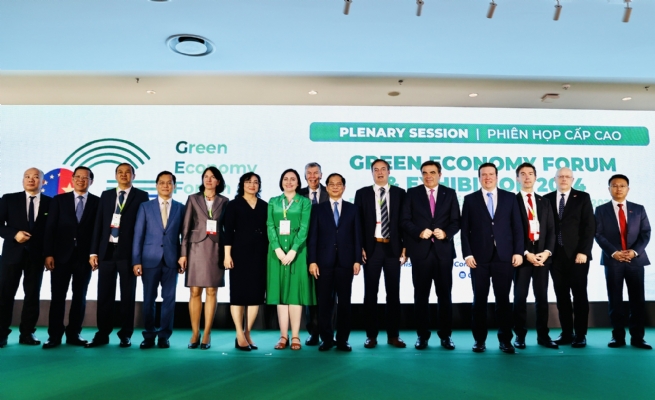
Deputy Prime Minister Bui Thanh Son and other delegates attend the Green Economy Forum and Exhibition, which helps Vietnamese businesses access initiatives and solutions for advancing the green transition
The foundation for this process was laid by Prime Minister’s Decision 1393/QD-TTg on September 25, 2012, which approved the “National Strategy on Green Growth for 2011-2020 with a Vision to 2050.” The strategy positioned green growth as central to sustainable development, aiming for rapid, efficient, and lasting economic growth while supporting the National Strategy on Climate Change. It marked a shift from a “brown” to a “green” growth model, emphasizing that green growth must be “for people and by people,” creating jobs, reducing poverty, and improving both material and spiritual well-being. The strategy also set targets for a “low-carbon economy,” focusing on enhancing natural capital, reducing greenhouse gas emissions, and improving environmental quality.
Prime Minister’s Decision 622/QD-TTg, issued on May 10, 2017, approved the “National Action Plan for Implementing the United Nations 2030 Agenda for Sustainable Development.” This was Vietnam’s first document to translate the 17 global Sustainable Development Goals (SDGs) into 115 national targets suited to local conditions. The plan emphasized poverty reduction, social welfare, gender equality, inclusive economic growth, sustainable resource use, and climate change adaptation. It required ministries, sectors, and provinces to integrate the SDGs into 10-year development strategies and five-year plans, and to develop a national framework for sustainable development statistics. The decision also underscored the importance of the private sector, social organizations, and international cooperation in mobilizing resources to achieve these goals, viewing them as key drivers of fast yet sustainable growth without compromising the environment.
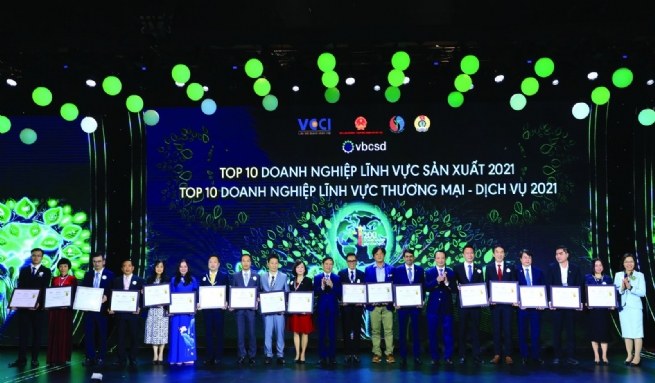
Companies certified as sustainable businesses are exemplary in driving the green transition
Resolution 36-NQ/TW, issued on October 22, 2018, on the “Strategy for Sustainable Development of Vietnam’s Marine Economy to 2030 with a Vision to 2045,” recognizes the marine economy as a key driver of national growth. By 2030, offshore sectors are expected to contribute about 10% of GDP, while coastal economies will account for 65 to 70% of national GDP. The resolution highlights three breakthrough areas: strengthening institutions for sustainable marine economic development and creating unified sea and island management; developing marine science, technology, and skilled human resources; and building multi-purpose, interconnected infrastructure linking offshore, coastal, and inland areas. It also emphasizes conserving marine ecosystems, preventing degradation, pollution, and coastal erosion, adapting to climate change, and promoting a marine ecological culture, with the goal of making Vietnam a strong maritime nation that prospers from the sea.
Regarding energy, a key sector in the green transition, Resolution 55-NQ/TW, issued on February 11, 2020, on the national energy development strategy to 2030 with a vision to 2045, prioritizes renewable energy, improving energy efficiency, gradually reducing dependence on fossil fuels, and developing a sustainable energy ecosystem.
Additionally, Government Resolution 136/NQ-CP, issued on September 25, 2020, on sustainable development, provides a framework for implementing the SDGs in Vietnam by 2030. It requires ministries, sectors, and localities to integrate the SDGs into economic and social development strategies, plans, and zoning; improve institutions, policies, and coordination mechanisms; and mobilize resources from the state, private sector, and international cooperation.
In finance and capital markets, the Ministry of Finance issued Circular 96/2020/TT-BTC on November 16, 2020, replacing Circular 155/2015/TT-BTC. This circular regulates disclosure on the securities market, requiring public companies, listed enterprises, and issuers to report financial and non-financial information transparently. Over time, this forms the basis for sustainable development reporting and ESG reporting aligned with international standards.
The Law on Environmental Protection 72/2020/QH14, passed by the National Assembly on November 17, 2020, and effective from January 1, 2022, established a modern legal framework for environmental management. It reinforces the “polluter pays” principle, broadens the scope of environmental impact assessments, and offers incentives for green projects, such as green credit and green bonds. The law also enhances public access to information, requiring businesses and organizations to operate transparently in environmental protection and take responsibility for their impacts. This law forms an essential foundation for the “E” in ESG, supporting sustainable development and green growth in Vietnam.
On October 1, 2021, the government issued Decision 1658/QD-TTg approving the “National Strategy on Green Growth for 2021-2030 with a Vision to 2050,” a key roadmap for Vietnam’s transition to a green economy and a core part of sustainable development and ESG practices. The strategy sets four main goals: reducing greenhouse gas emission intensity, greening economic sectors, promoting sustainable consumption, and ensuring social equity during the transition. It also introduces incentives for green credit, green bonds, and green public procurement, and calls for developing a national system for green growth statistics and reporting.
Regarding greenhouse gas mitigation, the Government, Prime Minister, and Ministry of Agriculture and Environment have issued several regulations to guide businesses, organizations, and individuals in reducing emissions. These include Decree 06/2022/ND-CP dated January 7, 2022, on greenhouse gas mitigation and ozone layer protection; Decision 01/2022/QD-TTg dated January 18, 2022, listing sectors and facilities required to conduct greenhouse gas inventories; and Circular 01/2022/TT-BTNMT dated January 7, 2022, providing detailed guidance on implementing the Environmental Protection Law for climate change response.
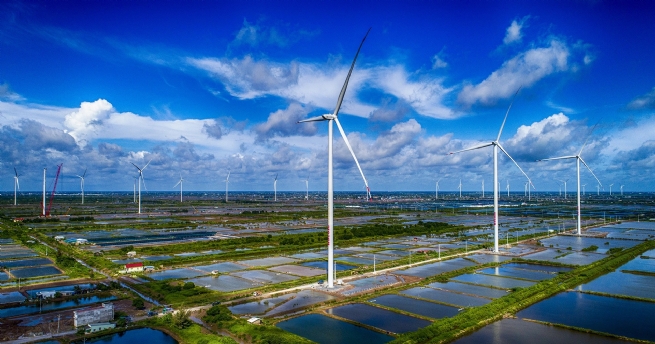
Vietnam has introduced many policies to drive green growth and support the green transition
In the energy sector, on March 1, 2024, the Prime Minister approved Decision 215/QD-TTg on the “National Energy Development Strategy to 2030 with a Vision to 2045,” which identifies energy development as a foundation for socio-economic growth, national energy security, and the shift to a green, efficient, and climate-resilient energy model.
Additionally, the State Bank of Vietnam has implemented green credit initiatives, encouraging financial institutions to integrate ESG criteria into risk assessment processes, aiming to build a sustainable green financial system.
Overall, Vietnam’s policies and strategies on green economy, sustainable development, and ESG are now relatively comprehensive, including national strategies, framework laws, guiding resolutions, and sector-specific regulations. However, implementation remains challenging, as many businesses still lack capacity or a complete understanding of ESG. Ongoing improvements to the legal framework, technical guidance, and incentive mechanisms will be essential to make the green economy and ESG key drivers of sustainable national growth.
By Anh Mai, Vietnam Business Forum


 Vietnamese





