

7:46:52 AM | 2/19/2026

The year 2025 closed with Vietnam’s total trade turnover of above US$930 billion, creating a positive foundation for growth. However, entering 2026, scope for broad expansion has narrowed, while pressure has moved toward deeper development under increasingly strict trade defense barriers and green standards. Standardization therefore has become a mandatory condition to continue participating in the global supply chain.
Imprint of high value-added sectors
In 2025, Vietnam’s trade value increased by 18.2%, equivalent to US$143 billion, of which exports grew by 17.0% compared with 2024, with a trade surplus of US$20.05 billion. These figures reflect a clear recovery of supply chains and domestic production capacity, while creating an urgent requirement to improve the quality of growth in the next period.
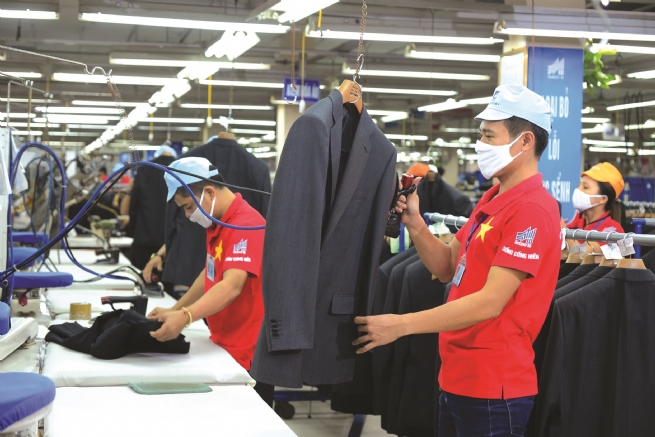
Vietnam’s textile and garment products are now present in 138 markets worldwide, with the U.S. remaining the key market
The group of electronics, computers, and components recorded strong growth exceeding the US$100 billion mark, reaching US$107.7 billion, up 48.4%. If mobile phones are included, the total export value of the technology group reached US$164.4 billion. This figure reflects the trend of global supply chain relocation and the increasingly important role of Vietnam in the high-tech production network. Behind that is high-quality FDI capital from major corporations such as Samsung, Foxconn, and Intel – companies that are considering Vietnam as a strategic production base instead of a low-cost processing point.
According to Do Thi Thuy Huong, Member of the Executive Committee of the Vietnam Electronic Industries Association (VEIA), from an economy mainly working for hire and processing, Vietnam is gradually shaping its role as a smart manufacturing center with factories worth billions of US$. This capacity helps maintain electronic export turnover above US$100 billion each year and brings Vietnam into the group of the top 10 electronic exporting countries in the world.
Along with industry, agriculture continued to show its role as a pillar of the economy. In 2025, export turnover of agricultural, forestry, and fishery products reached a record of US$70 billion. Coffee and vegetables and fruits together exceeded the US$8 billion mark, with value growth rates of 52.5% and 19.8% respectively. These figures show that Vietnamese agricultural products are gradually moving to higher value segments instead of relying only on output advantages.
Explaining this success, Nguyen Quang Hieu, Deputy Director of the Department of Crop Production and Plant Protection under the Ministry of Agriculture and Environment, said: “This result comes from efforts to reorganize production to open markets and comply with regulations. When enterprises have gained market share, brand, and credibility, we can fully trust in even better development.”
Mounting trade defense pressures
The largest challenge is the rising trend of trade protection. Up to now, Vietnamese export goods have faced 298 trade defense investigations. In 2025 alone, as many as 21 new cases were initiated, spreading from billion-dollar items such as solar batteries, shrimp, and steel to small products such as paper plates.
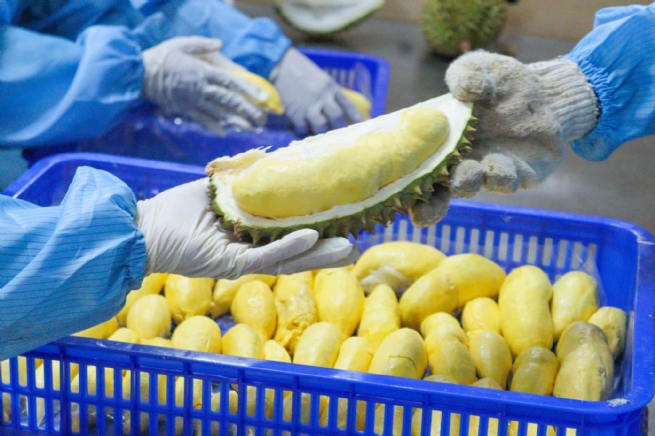
Vietnamese agricultural products are gradually moving to higher value segments instead of relying only on output advantages
Warning about this situation, Nguyen Thao Hien, Deputy Director General of the Foreign Market Development Department under the Ministry of Industry and Trade (MoIT), said the international trade environment is unstable with many new barriers. Units need to strengthen coordination to handle illegal transshipment and origin fraud, especially for agricultural products and food – a group under strict supervision.
In addition, a paradox still persists in the structure of import and export: exports are large but imports of materials are even larger. Although exports of electronics and computers reached more than US$107 billion, Vietnam had to import up to US$149.4 billion of components and materials for this group in 2025.
Dependence on external supply sources makes Vietnamese enterprises vulnerable to global supply chain fluctuations and at the same time face fierce competitive pressure from countries such as India and Mexico – places that are strongly attracting technology investment. HSBC in its latest report also forecast that Vietnam is not an exception to the risk of global trade decline, although it remains optimistic about GDP growth of 6.7% in 2026 thanks to exports of suitable products such as electronics in the AI era.
The textile and garment industry and the leather and footwear industry are facing unprecedented pressure from the Carbon Border Adjustment Mechanism (CBAM) and regulations on Extended Producer Responsibility (EPR) from Europe. Phan Thi Thanh Xuan, Vice President and Secretary General of the Vietnam Leather, Footwear and Handbag Association (Lefaso), warned that the EU requires products to be more durable and recyclable, and if Vietnamese enterprises cannot keep up, the risk of being removed from the supply chain is very clear.
For the seafood industry, from January 1, 2026, regulations of the U.S. Marine Mammal Protection Act (MMPA) officially take effect, creating an extremely large non-tariff barrier. If enterprises cannot prove exploitation processes “equivalent” to U.S. standards, the risk of being banned from import is present. In addition, the EC yellow card on IUU combined with periodic anti-dumping tax reviews (POR) for shrimp and pangasius create overlapping pressure on seafood enterprises. Forecast for the first quarter of 2026, seafood exports may slow down due to this chain impact.
To overcome this, the seafood industry has no other way but absolute transparency. Controlling exploitation size, such as new regulations on skipjack tuna, reorganizing farming areas, and promoting deep processing segments will be the “key” to open the narrow door to demanding markets this year.
Toward institutional reform and quality growth
The year 2026 is identified as a period for institutional completion and process standardization. From the beginning of the year, the MoIT planned to develop four important decrees related to the Law on Foreign Trade Management and the origin of goods. The new regulations will revise decentralization methods and authorize 22 out of 34 local Departments of Industry and Trade to issue Certificates of Origin (C/O), with the aim of reducing time and costs for enterprises.
Tran Thanh Hai, Deputy Director General of the Agency of Foreign Trade under the MoIT, said that total export turnover in 2026 is expected to increase by more than 8%. This is a challenging figure. Besides drafting documents, the agency will advise solutions to promote sustainable growth, such as coordinating to urge Mexico to add Vietnamese steel factories to the list of eligible exporters and reviewing textile commitments in free trade agreements (FTAs).
At local levels, movement is also taking place decisively. Hanoi capital set a target for 2026 export turnover to increase by 12%, contributing to Gross Regional Domestic Product (GRDP) growth of 11% or more. The strategy of Hanoi is to gradually reduce dependence on traditional markets and focus on high-tech products, deep processing, and green products.
In agriculture, Dang Phuc Nguyen, General Secretary of the Vietnam Fruit and Vegetable Association, proposed that the sector needs to promote deep processing. Measuring and reducing carbon footprints and sustainable certification will be the passport to enter high-price segments and high-end retail chains.
According to experts, exporting enterprises also need to improve governance capacity. Transparency of books and completion of traceability systems have now become mandatory requirements to proactively respond to the increasing number of trade defense lawsuits. High-risk product groups such as plywood, steel, and artificial stone are under special monitoring with strict supervision mechanisms to prevent origin fraud.
Huong Ly (Vietnam Business Forum)


 Vietnamese





