

10:42:58 AM | 4/29/2026

As the Hai Phong Free Trade Zone (FTZ) is expected to become a new growth pole in the North, the focus goes beyond policy design to how it is implemented in practice. Within this framework, DEEP C is emerging as an important operational link, helping turn infrastructure advantages into investment appeal as global supply chains undergo significant restructuring.
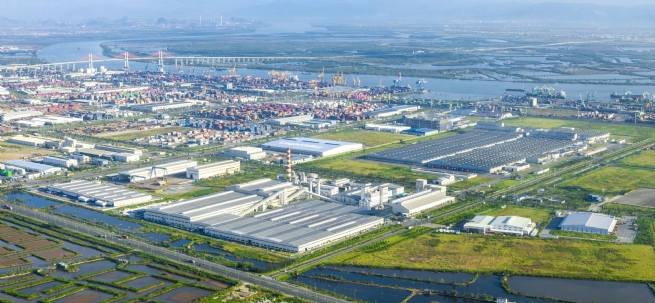
DEEP C has the opportunity to become a key implementation partner of the Hai Phong FTZ
Hai Phong FTZ: Opportunity in supply chain restructuring
The shift in global supply chains in recent years is changing how companies choose investment destinations. Rather than focusing only on cost, multinational corporations increasingly prioritize markets that offer stability, transparency, and the ability to sustain long-term production.
In this context, Hai Phong is emerging as a new growth hub in the North. Its advantages go beyond geographic location to a rapidly expanding infrastructure system, particularly deep-water ports, expressway networks, and the fast growth of large-scale industrial parks.
The development of the Hai Phong FTZ is seen as a strategic move to upgrade the investment environment, creating more open mechanisms in customs, logistics, and business incentives. This approach has been adopted by many countries to attract international manufacturing and trade flows.
However, investors view policy advantages as only a necessary condition. What ultimately matters is consistent and effective execution in practice. Factors such as fast customs clearance, multimodal logistics connectivity, and the level of digitalization and green operations are becoming key criteria.
Survey findings show that companies exploring opportunities in Hai Phong often focus on four core requirements: a stable investment environment; simple and transparent administrative procedures; efficient logistics systems; and infrastructure that meets green standards in line with increasingly strict ESG requirements.
These criteria are also reshaping competition among free trade zones worldwide. If these requirements are met, the Hai Phong FTZ could become not just a pilot model, but a platform for Vietnam to deepen its participation in global value chains, particularly in high-tech manufacturing and green industries.
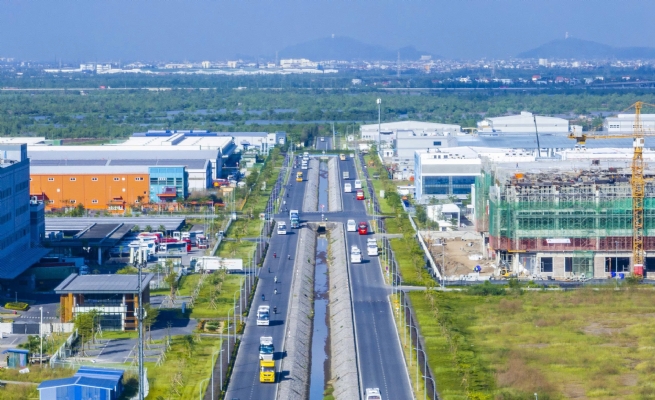
DEEP C is gradually shifting from a provider of industrial land to a provider of integrated solutions for investors
DEEP C: From infrastructure to FTZ operations
Within the development structure of the Hai Phong FTZ, one notable factor is the presence of DEEP C industrial zone cluster fully located within the free trade zone. This is not only a location advantage but also creates a new role for DEEP C in linking policy with real-world implementation.
With experience in developing infrastructure to international standards, DEEP C is gradually shifting from a provider of industrial land to a provider of integrated solutions for investors. Its technical infrastructure is developed in a coordinated manner, from power and water to industrial utilities, creating a stable foundation for production activities.
As environmental standards tighten, DEEP C is accelerating the development of green energy solutions to meet requirements on emissions and sustainability. This is seen as an important factor in attracting high-quality capital, particularly from European companies and multinational corporations facing pressure from mechanisms such as CBAM.
At the same time, building a “one-stop” service ecosystem for investors helps shorten project timelines, reduce operating costs, and limit risks during operations. When these elements are integrated, industrial parks are no longer just production sites but become part of a complete logistics and trade value chain.
However, to fully realize its potential, DEEP C believes the key factor still lies in the FTZ’s operating mechanism. This requires a clear and consistent regulatory framework, competitive and transparent incentive policies, and effective coordination among relevant authorities such as customs, seaports, and local government.
These conditions are not merely technical; they directly influence investment decisions. In a globally competitive environment, policy consistency and predictability are valued as highly as cost incentives.
With its existing foundation, DEEP C has the opportunity to become a key implementation partner of the Hai Phong FTZ, turning policy directions into tangible investment experiences. This sets it apart, as investors can assess real operational effectiveness rather than relying only on commitments on paper.
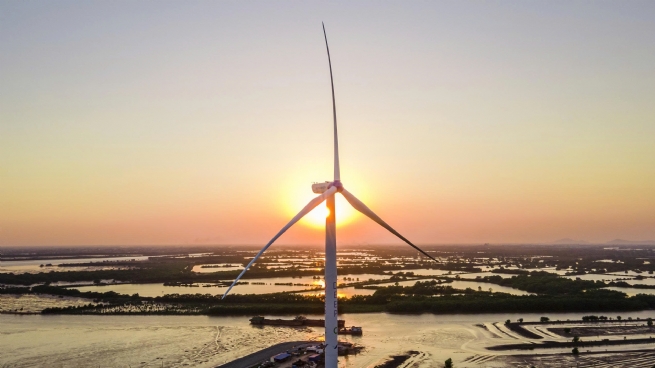
Wind turbine structure at the DEEP C Industrial Zone Cluster
Implementation phase outlook
The development of the Hai Phong FTZ is entering a critical phase as the focus shifts from design to execution. This will serve as a test for the entire model, from policy to operational capacity.
In this context, the role of infrastructure developers such as DEEP C becomes particularly important. Beyond providing technical platforms, they help build investor confidence through their ability to deliver in practice.
If institutional, infrastructure, and operational factors are effectively aligned, the Hai Phong FTZ could become a competitive destination in the region, attracting high-quality investment and deepening integration into global supply chains.
In the long term, Hai Phong’s advantage will lie not only in its geographic position or policy incentives, but in its ability to build a stable, transparent, and efficiently run investment ecosystem. Within that ecosystem, DEEP C is showing the potential to become an important link in turning the city’s development ambitions into reality.
By Le Hien, Vietnam Business Forum


 Vietnamese





