2:14:30 PM | 4/29/2026

“As the country enters a new phase of development, enterprises must become a pioneering force, stronger, more resilient, and more innovative. To achieve this, the prerequisite is that resources, from institutions and policies to capital, markets, and the business environment, must be unlocked in a coordinated and practical way.”
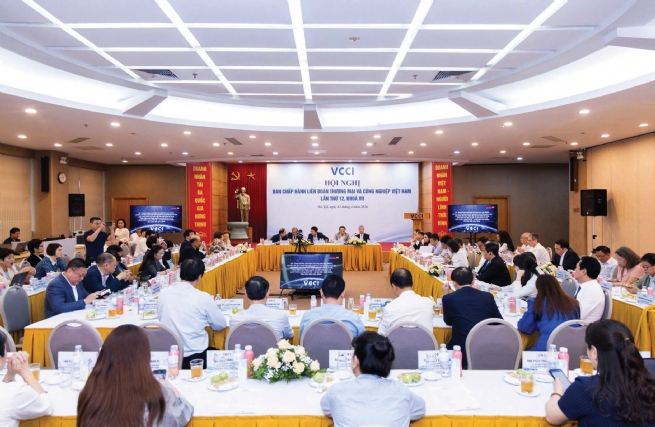
VCCI will continue implementing key Party resolutions, with a focus on private sector development, innovation, international integration, and improving the legal framework
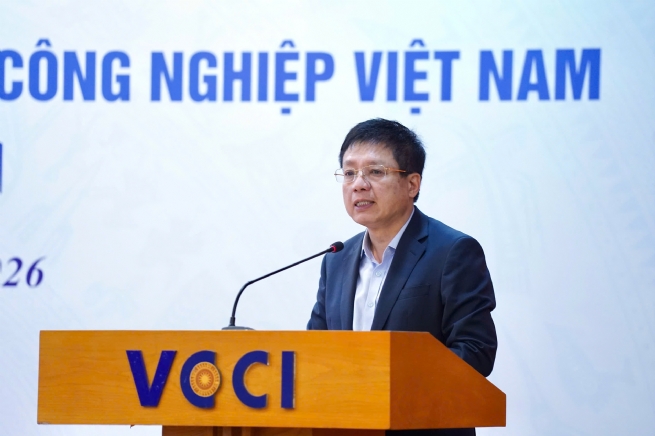
This was the view of Dr. Ho Sy Hung, President of the Vietnam Chamber of Commerce and Industry (VCCI), at the 12th Executive Committee Conference of the 7th tenure, recently held in Hanoi. The conference focused on key issues related to the development of the business community in the new context, while also reviewing personnel matters and adopting conference resolutions.
Speaking at the conference, VCCI President Ho Sy Hung said the global economy is facing uncertainty, shaped by strategic competition among major powers, rising trade protectionism, ongoing supply chain restructuring, climate change, and the rapid expansion of artificial intelligence. These factors place direct pressure on an open economy like Vietnam, while also creating new opportunities if enterprises can adapt and act in time.
“Challenges always contain opportunities, as international investment flows are shifting strongly and new-generation free trade agreements are opening up broad space for Vietnamese enterprises…,” Hung said.
According to him, in this context, political determination for high growth and sustainable development is being translated into a series of major resolutions by the Party and the State, particularly those on private sector development, science and technology, international integration, and institutional improvement. This provides an important foundation for Vietnamese enterprises to accelerate in the coming period.
A report at the conference showed that in 2025, Vietnam’s economy grew by 8.02%, with the size of the economy exceeding US$500 billion, total trade turnover surpassing US$930 billion, and a trade surplus of US$21.2 billion.
The business community showed clear signs of recovery, with more than 297,000 enterprises entering or re-entering the market, up 27.4% year-on-year. However, the number of enterprises exiting the market remained high, at more than 227,000, showing uneven resilience across the business sector.
|
Political determination for high growth and sustainable development has never been clearer. A double-digit growth target has been set as a central task and is being translated into a series of breakthrough resolutions. Resolution 68 on private sector development is seen as a consistent direction, confirming the sector’s role as a growth driver while calling for the removal of barriers and biases and the creation of a fair and transparent business environment.
Alongside this are resolutions on science and technology, innovation, digital transformation, international integration, and legal framework improvement, forming a coordinated policy system that opens up new development space for Vietnamese enterprises. The issue is not a lack of direction, but the need to unlock resources so that policies can be put into practice. When institutions are not fully streamlined, procedures remain complex, and access to capital, land, and information is limited, opportunities, even when present, are difficult to turn into growth. Excerpt from remarks by VCCI President Ho Sy Hung at the 12th VCCI Executive Committee Conference, 7th tenure, April 2, 2026, Hanoi |
In this context, VCCI continued to strengthen its role in policy development and in improving the investment and business environment. In 2025, VCCI contributed feedback on 446 draft legal documents and organized 52 conferences and workshops for policy consultation, with more than 5,300 participants.
Business support activities were expanded in scale. VCCI organized 821 training courses for more than 46,000 enterprise participants, focusing on corporate governance, digital transformation, and competitiveness improvement.
VCCI maintained growth momentum in trade promotion and international integration activities. During the year, VCCI received 213 foreign business delegations and organized 43 outbound missions for Vietnamese enterprises to explore cooperation opportunities and expand markets.
From an organizational perspective, VCCI continued to streamline its structure, reducing units from 34 to 24 and gradually improving operational effectiveness and efficiency.
For 2026, the final year of the 7th tenure and a preparation period for the 8th VCCI Congress, VCCI will continue implementing major Party resolutions, focusing on private sector development, innovation, international integration, and legal framework improvement.
Specific targets include attracting around 1,000 enterprises to adopt the Corporate Sustainability Index (CSI); increasing membership by 6%; implementing programs to enhance enterprise competitiveness; and organizing national-scale events.
In the institutional area, VCCI will continue improving the quality of policy feedback and review, participating in administrative procedure reform, and promoting a more transparent and business-friendly environment.
Business support activities will focus on digital transformation, sustainable development, workforce training, support for small and medium-sized enterprises, and strengthening market linkages both at home and abroad.
According to the Standing Committee’s report, from now until the end of the tenure, VCCI will focus on completing the remaining targets while preparing comprehensively for the 8th Congress, covering organizational structure, personnel, and operational methods
|
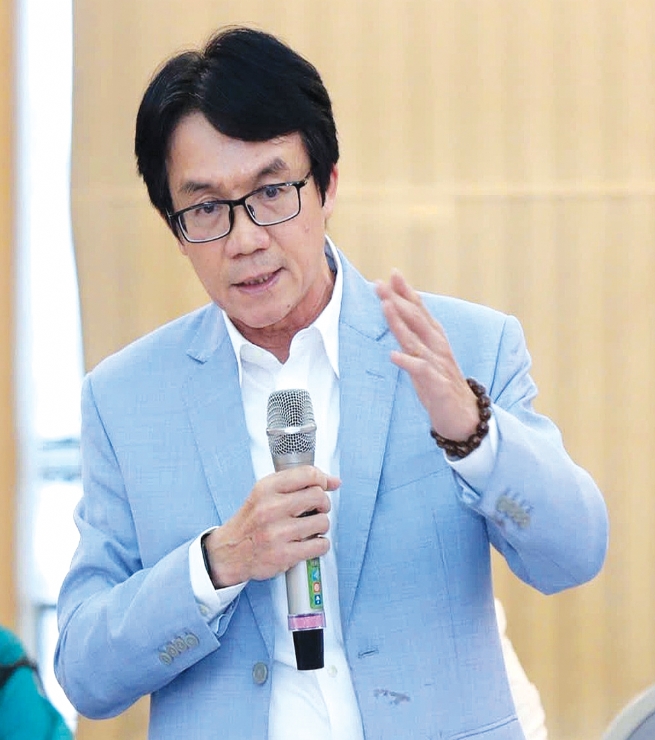
VCCI as a support base for Vietnamese enterprises to go global Nguyen Hoang, VCCI Executive Committee Member, Chairman of Hanoi Supporting Industries Business Association (Hansiba), Chairman of N&G Group Vietnam
Over 63 years of development, VCCI has affirmed its role as an important representative organization for Vietnamese enterprises and entrepreneurs. Beyond serving as a bridge between businesses and the Party and the State, VCCI has also taken part in policy feedback, making recommendations and proposing solutions to address both immediate difficulties and medium- and long-term issues, creating conditions for businesses to develop and contribute effectively to the economy. In the current context, as Vietnam enters a development phase marked by both opportunities and challenges, VCCI is expected to continue playing a key role in supporting the business community in promoting growth, improving competitiveness, and advancing international integration. Despite facing considerable difficulties in the recent term, VCCI has continued to stand with enterprises, helping to resolve obstacles and contributing to policy improvement as well as addressing administrative procedures that create barriers in business operations. Towards the 2026-2031 term, VCCI is expected to continue serving as a leading organization, not only as a representative body but also as a solid support base and a driving force guiding Vietnamese enterprises toward global expansion. With more than one million enterprises and continuing growth, VCCI will strengthen its role in connecting, supporting, and accompanying businesses in improving competitiveness, adapting flexibly to new conditions, and gradually entering international markets. Building on more than 60 years of development, VCCI needs to move to a new level to meet the expectations of Vietnamese enterprises and, in particular, the development requirements of Vietnam in the new era, including the State’s targeted double-digit growth. VCCI must modernize to support Vietnamese enterprises in affirming their position on the global stage, contributing to fast and sustainable development, higher income, and progress toward the country’s 100-year milestone. Energy security and raw materials are the foundation of sustainable production Tran Viet Anh, VCCI Executive Committee Member and Chairman of Nam Thai Son Group
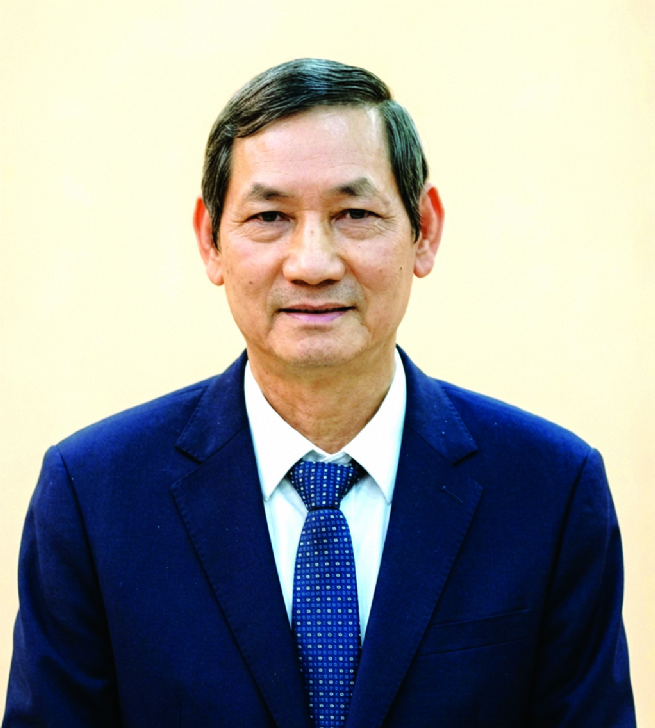
The current period is marked by growing pressure on energy, which is having a significant impact on business and production activities. Beyond rising costs, the more serious issue is the instability of supply, leaving many enterprises in a reactive position. In particular, the risk of raw material shortages is becoming clear in sectors such as plastics, fertilizers, and animal feed. Many business contracts have had to be canceled due to force majeure, simply because there are no goods to supply, or because input prices have risen so sharply that companies cannot fulfill their commitments. This affects not only individual firms but also the entire production and supply chain. In this context, VCCI should make strong recommendations to the Government to prevent shortages of input materials. This is a matter of survival for production. The Government needs to play a role in regulating the market, including necessary interventions at sensitive times, to stabilize supply, control input costs, and support enterprises in maintaining production. Over the long term, solutions are needed to ensure energy security, diversify sources of raw materials, and reduce reliance on external sources. If these issues are not addressed in a timely manner, the goal of double-digit growth will face serious challenges. Conversely, when supply is secured, businesses will be better positioned to recover and contribute more effectively to economic growth. Institutional bottlenecks must be addressed thoroughly Do Van Ve, VCCI Executive Committee Member and Chairman of the Hung Yen Business Association
To achieve double-digit economic growth, the priority is to fully remove institutional bottlenecks. If mechanisms, policies, and especially implementation are not handled thoroughly, it will be difficult to achieve breakthrough growth. This is a fundamental issue that requires consistent and coordinated action from the central to local levels. At the same time, it is necessary to ensure essential inputs for the economy such as electricity, land, and infrastructure, while strongly developing the private sector, which serves as the main driver of growth. In addition, labor productivity needs to be improved based on modern science and technology and the ongoing process of digital transformation. Another important issue is to effectively unlock capital flows for the economy, enabling the business community to access financial resources more easily. This will help reduce costs and strengthen resilience, creating conditions for enterprises to expand production and business activities in a challenging market environment. In terms of specific solutions, it is necessary to continue improving institutions in a consistent and transparent manner; carry out meaningful administrative reforms; focus on resolving land-related difficulties; and support businesses in accessing capital at reasonable costs. At the same time, it is important to promote innovation, digital transformation, and build mechanisms to receive and address business feedback in a transparent and effective way. If institutional bottlenecks are removed and the business environment is genuinely improved, Vietnamese enterprises can achieve strong breakthroughs and develop sustainably in the coming period. Entrepreneurs must lead innovation and create real value Ngo Ba Duc, Standing Vice Chairman and Secretary General of the Hai Phong Gemstones Jewelry and Art Craft Association
After nearly four decades of reforms, Vietnam’s business community has grown significantly in both scale and quality, yet the demands of a new development phase require a stronger shift from traditional business entrepreneurs to innovation-driven entrepreneurs. This is not only a change in market approach, but a shift in development thinking, with innovation, value creation, and sustainability as core pillars. Throughout its development, VCCI has played a central role in shaping the business environment, from providing policy feedback and improving the investment climate to connecting businesses with international markets. In the new phase, this role needs to be strengthened in a more practical way, particularly in supporting enterprises to improve governance capacity, digital transformation, and standardization to participate more deeply in global value chains. For the gem and jewelry sector, challenges come not only from the market but also from design capacity, production technology, and brand building. If businesses remain limited to processing or relying on traditional value, they will find it difficult to build long-term competitive advantages. Therefore, entrepreneurs in the sector need to take the initiative in investing in creativity, technology, and product origin transparency, thereby raising the industry’s value and position in international markets. Ultimately, innovation-driven entrepreneurs must not only generate profits but also create new value for the economy. When each enterprise becomes a center of innovation, the economy will gain stronger momentum for faster and more sustainable growth. |
Source: Vietnam Business Forum


 Vietnamese