9:24:46 AM | 7/16/2026

Years ago, Da Nang chose a development path that balanced economic growth with environmental protection, when the concepts of green growth and the circular economy were still relatively new in Vietnam. Today, that approach has evolved beyond an environmental goal into a broader development strategy, laying the foundation for an ecological, smart city, improving residents' quality of life, and enhancing the city's appeal to investors.
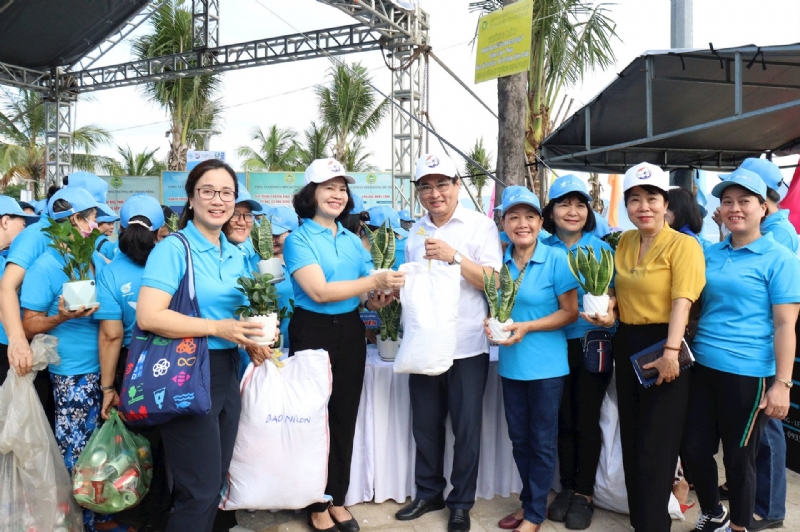
Representatives of local authorities and the United Nations Development Program (UNDP) in Vietnam participate in an international environmental protection project
Green investment advantage
As early as 2008, Da Nang launched its "Environmental City" project, becoming one of the first localities in Vietnam to pursue a green development model. Over nearly two decades, that vision has continued to evolve to meet new requirements for green growth, the circular economy, and climate change adaptation.
In the City Master Plan for 2021-2030, with a vision to 2050, Da Nang aims to become an ecological, modern, smart, and livable city. Environmental protection, efficient resource use, and emissions reduction are integrated into its socio-economic development strategy. The city is also updating its "Environmental City" project for the 2026-2030 period to meet the development needs of its expanded urban area.
A defining feature of Da Nang's approach is that it treats the environment not as a result of development, but as the foundation of urban competitiveness. Every development strategy, from industry, services, and infrastructure to investment attraction, is aligned with the goals of green growth, efficient resource use, and sustainable development.
This consistent approach has placed Da Nang among the country's top-performing localities in the Provincial Environmental Performance Index (PEPI) for several consecutive years, while earning recognition through awards for green and smart urban environmental management. More importantly, residents' quality of life has steadily improved, reinforcing the city's reputation as a livable and welcoming destination.
Beyond creating a high-quality living environment for residents, Da Nang's green development strategy is becoming a competitive advantage in attracting investment and supporting economic growth. As environmental standards become increasingly important to international investors, the city sees green transformation not only as a responsibility but also as a driver of long-term growth.
Accordingly, Da Nang prioritizes high-tech and clean industries, renewable energy, green logistics, green transportation, and smart infrastructure. It is also promoting the transition from a linear economic model to a circular economy to improve resource efficiency, reduce emissions, and increase manufacturing value.
One key focus is the development of eco-industrial parks. Da Nang is gradually transforming existing industrial parks to improve energy efficiency, reduce emissions, increase waste reuse, and promote resource sharing among businesses. This provides a strong foundation for building a modern, environmentally friendly industrial sector that meets the sustainable development standards of international markets.
Da Nang is accelerating renewable energy development, expanding clean energy sources, improving energy efficiency, and reducing greenhouse gas emissions. These efforts support the city's transition to a low-emission economy and its long-term goal of achieving Net Zero.
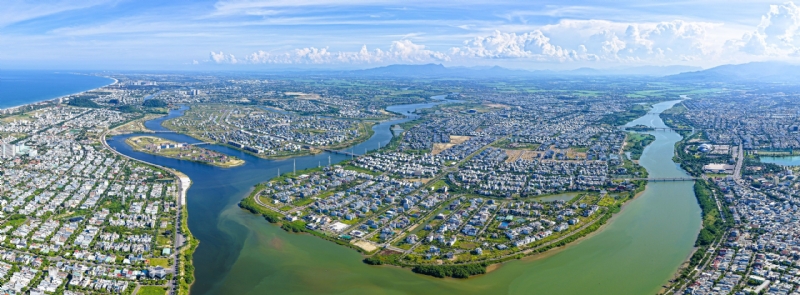
Toward an eco-city and better quality of life
The city's green development strategy is reflected across nearly every sector of Da Nang's socio-economic development, from urban management and tourism to spatial planning and natural resource conservation.
Da Nang is expanding green spaces, improving waste management, and controlling water and air pollution. It also promotes waste separation at source, the circular economy, and environmentally friendly communities. Programs such as "Clean City," "Blue Ocean," and "Green School," together with community-based green initiatives, have helped raise public awareness and encourage greener lifestyles.
Green tourism has been identified as a key growth driver. The city encourages businesses to adopt ESG standards, improve energy efficiency, reduce emissions, manage waste effectively, and strengthen sustainable governance. These efforts enhance the competitiveness of the tourism sector while responding to the growing demand for sustainable travel among international visitors.
Following its administrative boundary expansion, Da Nang now has more ecological areas, agricultural land, and natural landscapes. This creates favorable conditions for developing eco-urban areas, green agriculture, community-based tourism, and nature-based economic models, while supporting balanced development between urban and rural areas.
These strengths are also improving Da Nang's appeal to investors. As environmental standards, emissions targets, and sustainable development become more important in global supply chains, a green city with a good quality of life offers a strong advantage in attracting businesses and quality investment.
By steadily following its green development strategy, Da Nang is turning environmental sustainability into a competitive advantage and a new driver of growth. Along with its goal of becoming an ecological, smart, and livable city, it is building the foundation for a modern economy that balances growth, resource conservation, and improved living standards. This provides a solid basis for Da Nang to strengthen its role as one of Vietnam's green growth poles.
By Thien Thanh, Vietnam Business Forum