

3:23:08 PM | 4/2/2026

The development of a green economy, a circular economy, and digital transformation has become an inevitable trend for the business community. In the Northern midland and mountainous region, where efforts are underway to achieve rapid and sustainable growth while effectively using agricultural and forestry potential together with environmental protection under Resolution 11-NQ/TW, this requirement has become even more urgent.
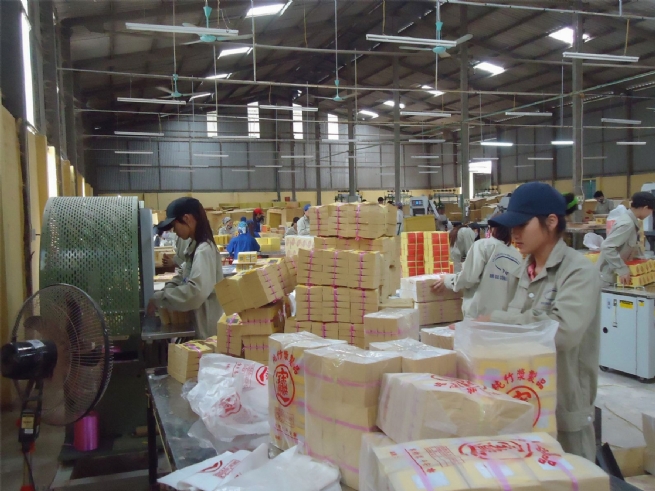
Product packaging at the company’s factory, where all processes are strictly controlled to meet export standards
In that context, Yen Bai Joint Stock Forest Agricultural Products and Foodstuff Company (CAP Yen Bai) has become a clear example of how a mountainous agricultural enterprise can reinvent itself. The company has proactively moved toward the highest standards of international markets through a pathway defined by “Greener Production, Digitalized Governance, and Official Export Channels.”
From market shock to comprehensive restructuring
According to Nguyen Huy Thong, Director of CAP Yen Bai, the period from 2024 to 2025 was an exceptionally difficult time for Vietnam’s agricultural sector. Combined pressures from global trade tensions, logistics volatility, and stricter technical standards, traceability requirements, and food safety controls imposed by importing markets, particularly China, exposed the clear limits of informal cross-border export models.
Facing this reality, CAP Yen Bai made a decisive move: shifting 100% of its exports to official channels. This was not simply a change in customs procedures, but a comprehensive restructuring of the production system to meet international standards, in line with the spirit of Directive 25-CT/TW of the Secretariat on promoting sustainable exports and strengthening participation in global value chains.
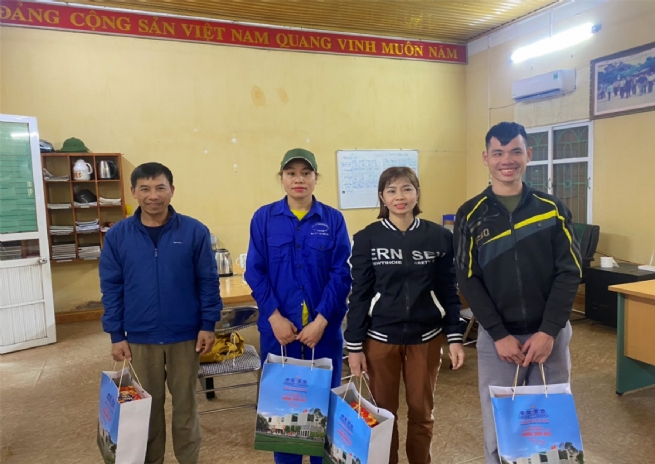
Social welfare is part of the company’s sustainable development strategy. In the photo: Workers in difficult circumstances receive meaningful Tet gifts
The company invested in an integrated ISO 9001 quality management system and reorganized its factory layout based on modern food production models, clearly separating each processing stage while strengthening hygiene control, sterilization, and biosafety. From a mindset focused on “agricultural processing,” CAP Yen Bai moved toward a philosophy of food production based on global standards, with quality and transparency as essential conditions for survival.
That difficult but correct choice helped the company overcome market turbulence. In the 2024-2025 fiscal year, CAP Yen Bai recorded revenue of VND656 billion and post-tax profit of VND50.4 billion, exceeding its plan by 26%. This result reflects the resilience and adaptability of a domestic enterprise following the right strategic path.
Circular economy - the green pillar of competitiveness
In implementing the spirit of Resolution 55-NQ/TW on sustainable energy development and the National Green Growth Strategy, CAP Yen Bai chose the circular economy as a long-term pillar, with the HDPE-covered Biogas reservoir system at its factories as a key component, particularly at the Van Yen cassava plant.
What began as a mandatory environmental requirement has been turned into a secondary resource stream. Gas recovered from the Biogas system replaces coal and cinnamon residue as fuel, reducing energy costs by as much as 83%, from VND500,000-600,000 to below VND100,000 per ton of product. At the same time, treated wastewater is safely reused, significantly lowering chemical costs and reducing environmental impact. Nguyen Huy Thong said: “The Biogas system is not simply a waste treatment facility, but a small-scale energy plant where we regenerate value from wastewater, protect the environment, and create room for the company’s sustainable growth.”
Beyond addressing internal environmental challenges, this model also creates a clear cost advantage, enabling CAP Yen Bai to compete directly with regional peers such as Thailand, Laos, and Cambodia, countries with long-standing strengths in starch and agricultural processing.
Accelerating digital transformation
Alongside its green transition, CAP Yen Bai has accelerated comprehensive digital transformation. From e-invoices and electronic customs clearance to the deployment of ERP systems across eight member units, all operational processes have been digitized, interconnected, and made transparent.
As a result, the company’s management capacity has improved significantly. Leadership can access complete production and sales data in real time, enabling faster and more accurate decisions while reducing delays and management risks. This foundation allows CAP Yen Bai to move deeper into global supply chains, where data transparency is a required condition.
During the restructuring process, CAP Yen Bai streamlined its workforce by 46%. Rather than a contraction, this shift reflects the inevitable result of automation and higher productivity. Remaining employees have received more structured training, with average income reaching VND12.6 million per person per month in 2025, an 80% increase compared with 2020.
The company also treats social welfare as an integral part of its sustainable development strategy. Each year, CAP Yen Bai allocates VND1.5-2 billion to community support activities and stands alongside employees during periods of natural disasters and hardship, in line with the principle of linking economic development with social progress and equity as defined by the Party and the Government.
Entering the 2026-2030 period, CAP Yen Bai targets revenue of VND650 billion, profit above VND50 billion, and a long-term ambition of reaching VND1 trillion in revenue.
To achieve this ambition, the company will continue investing in technology and optimizing costs by an additional 5-10%, while remaining firm on its two pillars: greening production and digitizing governance. Through these efforts, CAP Yen Bai seeks to strengthen its role as a modern agro-forestry processing hub at the gateway to the Northwest, contributing in practical ways to the emerging development space of Lao Cai province and its regional partnerships.
Trinh Long - Ha Thanh (Vietnam Business Forum)
 April 24–25, 2026
 Kinh Bac Cultural Center, Bac Ninh Province


 Vietnamese





