11:30:05 AM | 7/17/2026

After one year of implementing the two-tier local government model and expanding its development space, Gia Lai is gradually turning its potential and strengths into new growth drivers, with the goal of becoming a relatively developed province in Vietnam and a key growth pole in the Central Highlands-Central Coast region.
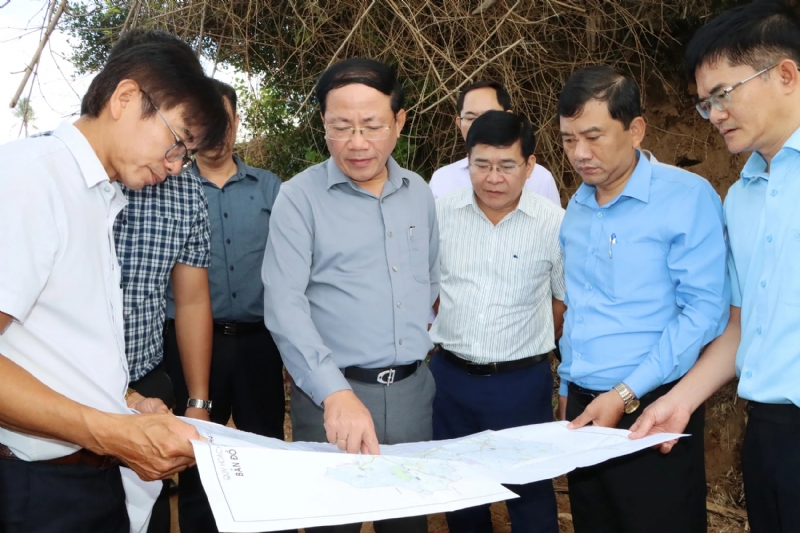
Gia Lai People's Committee Chairman Pham Anh Tuan (second from left) inspects projects and meets with local authorities to address challenges facing investors
Developing a multi-pillar economy
Gia Lai has a broad development space that combines the strengths of the highlands and the coast. The province offers strong potential in land resources, agriculture, forestry, and renewable energy from the Central Highlands, together with seaports, logistics, industry, trade, services, and tourism from the coastal region. This provides a foundation for an integrated value chain from raw material areas to processing, exports, and services. The East-West transport network, airports, economic zones, industrial parks, and industrial clusters further strengthen regional connectivity and the province's competitiveness.
Building on these strengths, Gia Lai is developing a multi-pillar economy, with processing and manufacturing, renewable energy, high-tech agriculture, services, tourism, and the marine economy serving as key growth drivers. The province is advancing digital transformation, green growth, the circular economy, the knowledge economy, and innovation as the foundation for sustainable development.
The Provincial Party Committee aims to develop Gia Lai into a center for processing and manufacturing, renewable energy, high-tech agriculture, services, tourism, semiconductors, and artificial intelligence (AI), with the goal of becoming a relatively developed province in Vietnam. To achieve this, the province is implementing five growth pillars and four strategic breakthroughs in a coordinated manner, prioritizing transport, logistics, energy, and information technology infrastructure; improving the investment and business environment through greater transparency and openness; and upgrading human resources, particularly for high-tech industries and high-quality services.
Chairman of the Gia Lai People's Committee Pham Anh Tuan said that with innovation, unity, and strong determination, Gia Lai will continue to maximize its strengths, overcome challenges, and achieve its goal of becoming a relatively developed province in Vietnam.
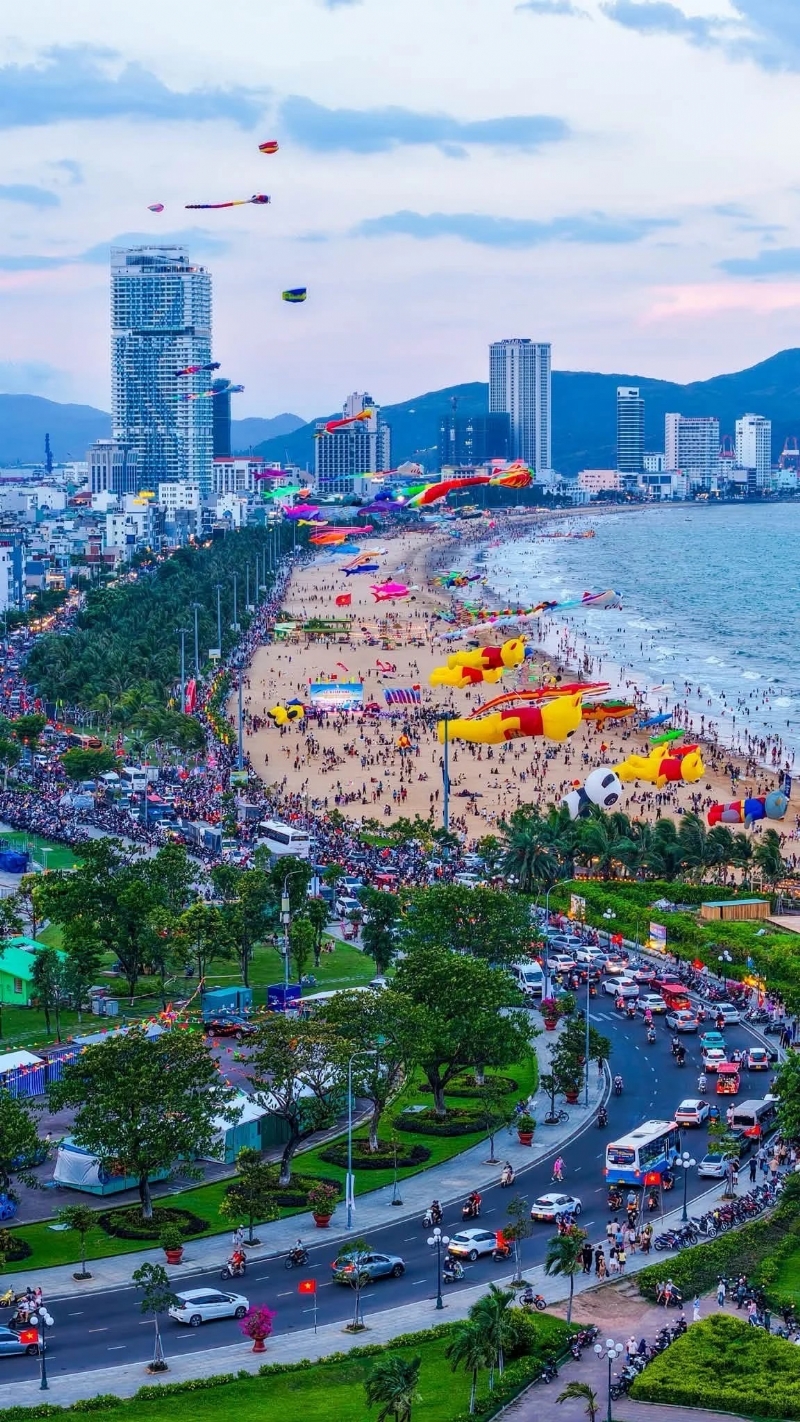
The Quy Nhon-Gia Lai Art Kite Festival 2026, a major cultural and tourism event, is a signature highlight of National Tourism Year 2026
Effective governance for stronger growth
A key achievement for Gia Lai is that, after one year of operating under the two-tier local government model, the new administrative system has functioned smoothly, ensuring continuity in public administration, promoting decentralization and delegated authority, and strengthening the autonomy of local governments.
The province has also shifted to a data-driven approach to governance. Since early 2026, socio-economic targets have been assigned to each department and locality. A two-tier socio-economic information system has been introduced to monitor task progress, public investment disbursement, and development indicators in real time, improving the effectiveness of governance and administration.
Thanks to decisive leadership, Gia Lai maintained positive socio-economic growth momentum in the first six months of 2026. Agriculture remains the backbone of the economy, with more than 216,000 hectares of annual crops, while over 5,000 hectares of low-yield crops have been converted to higher-value varieties. The province also has 226 production-consumption linkages and 400 export planting area codes.
In industry, infrastructure in economic zones and industrial clusters continues to improve. During the first six months, 60 industrial production projects began operations with total investment of more than VND22,280 billion (US$928 million), expanding production capacity and supporting further growth.
Trade, services, and tourism also posted positive results. During National Tourism Year - Gia Lai 2026, the province welcomed more than 8.74 million visitors, generating tourism revenue of about VND19,000 billion (US$792 million), up 18.5% and 19%, respectively, from the same period last year.
State budget revenue in the first six months exceeded VND15,626 billion (US$651 million), up 63.3% year on year, while public investment disbursement reached about VND4,002 billion (US$167 million), ranking first in the South Central Coast-Central Highlands region and 14th among the country's 34 provinces and cities.
Pham Anh Tuan, Chairman of the Gia Lai People's Committee, said that building on these achievements, Gia Lai will continue to develop a service-oriented, innovation-driven administration with people and businesses at its center.
The province is focused on removing bottlenecks in investment, land, and planning; accelerating key projects; and further improving the investment and business environment through greater transparency, convenience, and competitiveness.
"With its expanded development space, increasingly integrated infrastructure, and the determination of the entire political system, Gia Lai is steadily unlocking its resources, creating an attractive investment and business environment, and moving toward its goal of becoming a relatively developed province in Vietnam, while emerging as a new growth pole in the Central Highlands-Central Coast region," said Chairman of the Gia Lai People's Committee Pham Anh Tuan.
By Nguyen Ngoc, Vietnam Business Forum