3:45:26 PM | 8/3/2026

An investment promotion conference can produce impressive figures for the number of projects, registered capital, and cooperation agreements. The more meaningful measure, however, is how quickly those projects move into implementation. This also reflects the Government's repeated call for reform that goes beyond simplifying administrative procedures to improving implementation quality and shortening the time from investment approval to project execution.
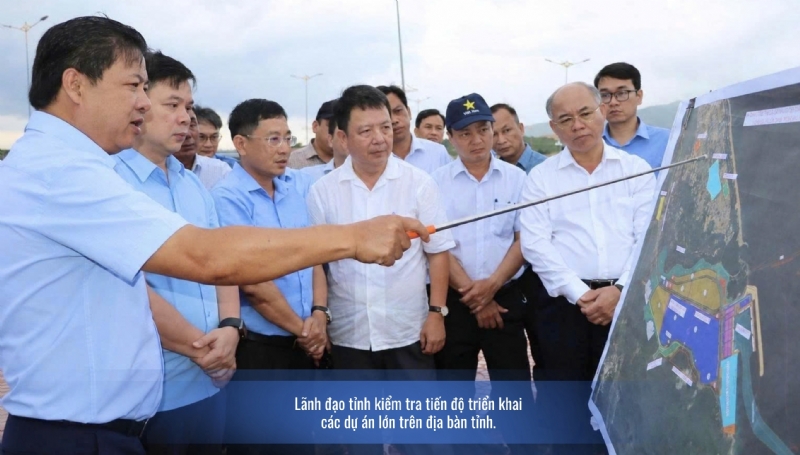
Provincial leaders inspect the progress of investment projects across the province
Immediately after the 2026 Dak Lak Provincial Planning Announcement and Investment Promotion Conference, alongside issuing an implementation plan for approved projects and establishing a task force to monitor and support investors, the Dak Lak Provincial People's Committee issued Decision 2164/QD-UBND, dated July 9, 2026, approving internal and interagency procedures under the "green lane" mechanism for investor designation, combined investment policy approval and investor designation, and amendments to investor designation decisions for social housing projects.
This follows Decision 1720/QD-UBND on piloting the "green lane" mechanism and further implements the Government's regulations on the one-stop shop and integrated one-stop shop model for administrative procedures.
Social housing projects were deliberately chosen as the first sector to apply the "green lane" mechanism. These projects require close coordination among agencies responsible for investment, planning, land administration, construction, and other regulatory functions. Once procedures are standardized for this complex set of administrative processes, the model can serve as a foundation for expansion into other investment sectors.
Turning commitments into implementation
In recent years, the Government has consistently directed ministries, agencies, and local authorities to improve the investment climate in practical ways, placing citizens and businesses at the center of public services. Dak Lak's approach differs from that of many localities, which focus mainly on shortening the processing time for individual administrative procedures. Instead, the province has chosen to reform the entire process.
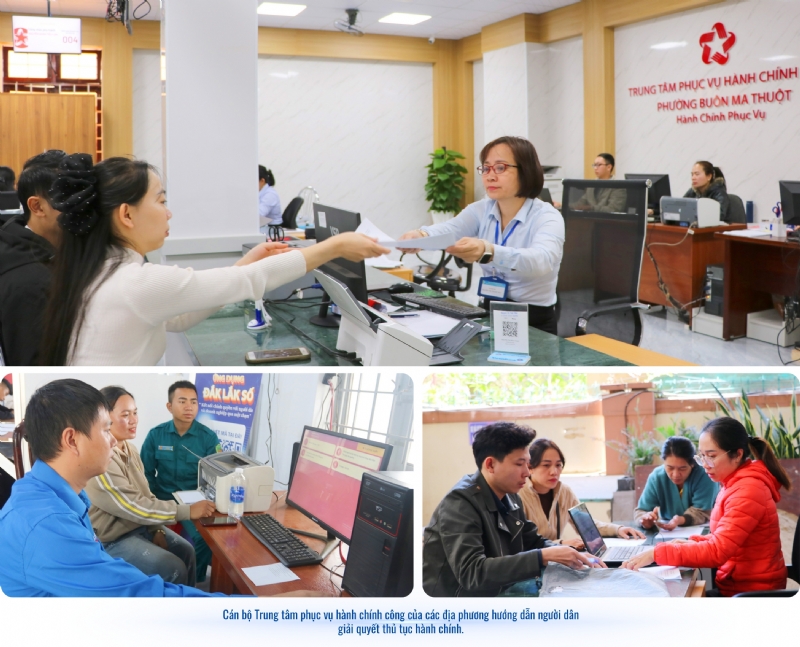
Staff at local public administration service centers assist citizens with administrative procedures
If administrative procedures are individual steps in the investment process, the workflow is what connects them. Rather than shortening the time required for each step, Dak Lak has redesigned the entire document processing workflow under the "green lane" mechanism to reduce the overall time needed to complete the process.
The significance of the "green lane" goes beyond giving priority to document processing. It reorganizes how government agencies work together so that investment commitments made after the conference can be turned into actual projects more quickly.
The core value of Decision 2164/QD-UBND lies not only in the decision itself, but also in the accompanying appendices that standardize internal and interagency procedures.
For social housing projects, the entire document processing workflow has been standardized, covering submission, assignment, interagency consultation, appraisal, consolidation, approval, and issuance of final results. Each stage clearly identifies the lead agency, coordinating agencies, expected outputs, document flow, and implementation timeline.
The decision also assigns the Department of Construction to lead the development of electronic workflows on the Administrative Procedure Information System in coordination with relevant agencies, ensuring that document submission and results are handled through the one-stop shop and integrated one-stop shop mechanism regardless of administrative boundaries.
From a public governance perspective, this marks a shift from managing individual administrative procedures to managing the entire investment process. For businesses, it not only shortens processing time but also makes project implementation schedules more predictable. For regulators, it provides a framework for monitoring implementation, identifying bottlenecks promptly, and strengthening accountability across agencies.
The choice of social housing projects as the first area to apply the integrated procedures also has broader significance. If the "green lane" mechanism proves effective in this sector, the model can be expanded to industrial, urban development, logistics, infrastructure, and other priority investment projects.
Building a business support ecosystem
Decision 2164/QD-UBND is not an isolated policy. Before issuing it, Dak Lak had gradually developed the "green lane" mechanism, refined administrative workflows, successfully organized the 2026 Provincial Planning Announcement and Investment Promotion Conference, issued a project implementation plan, and established a task force to monitor and support projects after the conference.
Viewed as a whole, the province is building a comprehensive system that spans planning, investment promotion, standardized administrative procedures, and continued support for investors throughout project implementation.
From this perspective, Dak Lak's "green lane" mechanism is intended not only to speed up administrative procedures for social housing projects but also to test a new governance model based on integrated workflows, clear accountability, and effective interagency coordination. The objective is to shorten the time between investment decisions and project implementation while strengthening investor confidence and long-term partnerships with the business community.
Song Uyen (Vietnam Business Forum)