

9:12:56 AM | 3/17/2026

Amid rapidly evolving, complex, and unpredictable global developments, particularly as the United States continues to introduce new tariff-related measures and military conflict in the Middle East expands, disrupting global maritime and air transport and affecting supply chains and fuel prices, Vietnam’s economy has faced multidimensional pressures on exports, production costs, and macroeconomic stability.

Stable growth, proactive risk management
According to official data, in the first two months of 2026, macroeconomic conditions remained stable, inflation was kept under control, and major economic balances were maintained. The average Consumer Price Index (CPI) for the two-month period rose an estimated 3%; the monetary market and exchange rates remained broadly stable. The industrial production index increased an estimated 10% over the same period. Agricultural production continued to grow steadily. Total import-export turnover reached an estimated US$156 billion, up 22.2% (exports rose 18.3%, imports 26.3%); the trade deficit stood at US$2.98 billion (mainly driven by imports of production materials totaling US$74.7 billion, accounting for 94.1% of total imports).
Total retail sales of goods and consumer service revenue rose an estimated 8.0%. Vietnam welcomed 4.7 million international visitors, up 18%. Development investment continued to deliver positive results; public investment disbursement in the first two months reached an estimated 5.6% of the annual plan, an absolute increase of VND10.9 trillion (US$436 million); newly registered foreign direct investment (FDI) rose 61.5%; implemented FDI reached US$3.2 billion, up 8.8%. The number of enterprises entering the market increased sharply. In the two-month period, 64,500 enterprises were newly established or resumed operations, up 29.4% year-on-year.
Alongside these achievements, Vietnam continued to face difficulties, including significant pressure on macroeconomic management, inflation, exchange rates, and interest rates; sharp fluctuations in gold prices; and substantial capital requirements to support growth of 10% or more. At the same time, business activity in several sectors remained constrained, while smuggling, trade fraud, counterfeit goods, and intellectual property violations grew increasingly complex.
In particular, escalating tensions in the Middle East created serious instability, generating a high-risk environment for transportation, international trade, and global supply chains, with direct implications for Vietnam’s economy.
According to the Ministry of Industry and Trade (MoIT), consumer goods prices, fuel costs, and global oil prices are projected to trend upward in the coming period, exerting indirect and multidimensional adverse effects on Vietnam’s production and import-export activities in general, as well as trade with the Middle East in particular. For logistics services, higher fuel costs will continue to push up maritime and air freight rates, while affecting cargo routes serving Gulf countries.
In response, the Agency of Foreign Trade under the MoIT asked export-import and logistics associations to closely monitor developments and maintain regular communication with relevant authorities to provide timely updates to their members. This would enable businesses to proactively plan production, organize import-export activities, and arrange cargo transportation to prevent congestion and reduce adverse impacts arising from tensions involving Israel, the United States, and Iran, while strengthening flexibility and resilience amid disruptions in the international business environment affecting Vietnamese enterprises in the future.
At the same time, businesses were advised to diversify supply sources and explore alternative markets with similar demand to reduce risks if exports to Israel, Iran, and the Middle East face prolonged difficulties, while developing long-term contingency plans for similar disruptions.
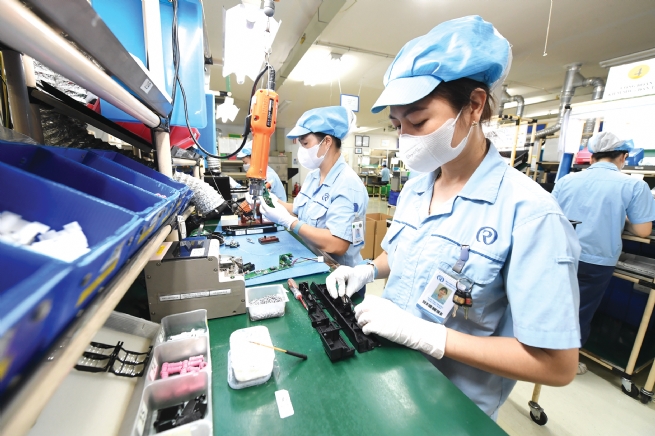
In the first two months of 2026, Vietnam’s processed industrial exports reached US$68.55 billion, accounting for 89.8% of total export value
Ensuring major economic balances
On the macroeconomic front, at the Government’s regular meeting for February 2026, Prime Minister Pham Minh Chinh directed ministries, agencies, and localities to fully implement the Resolution of the 14th National Party Congress, particularly the Action Program and nine thematic resolutions of the Politburo. The overarching objective is to maintain macroeconomic stability, control inflation, secure major economic balances, and drive growth of 10% or higher.
Prime Minister Pham Minh Chinh emphasized that in the coming period, alongside preparations for the election of deputies to the 16th National Assembly and People’s Councils for the 2026-2031 term, and preparations for the Second Plenum of the Central Committee and the First Session of the 16th National Assembly, ministries, agencies, and localities must focus on maintaining macroeconomic stability, controlling inflation, promoting growth, safeguarding major economic balances, promptly assessing the impact of the Middle East conflict on Vietnam, and developing timely and effective response scenarios and solutions. Close coordination must continue, with proactive, flexible, timely, and effective monetary policy implemented alongside reasonably expansionary and targeted fiscal policy.
Regarding monetary policy, credit growth ceilings are to be publicly announced and adjusted flexibly and promptly in line with actual conditions; interest rates, exchange rates, and credit are to be managed flexibly and in a coordinated manner; and measures strengthened to direct credit into production and business activities, priority sectors, and growth drivers.
Regarding fiscal policy, solutions are to be studied for issuing Government bonds, project bonds, and local government bonds; efforts intensified to develop capital markets in an efficient and sustainable manner, particularly the stock market and corporate bond market; and international financial centers are to become operational promptly to attract high-quality investors.
At the same time, traditional growth drivers are to be renewed and new drivers strongly promoted. The allocation and disbursement of public investment capital are to be accelerated from the beginning of the year, particularly for key and nationally significant projects; in 2026, disbursement is targeted at 100% of the capital assigned by the Prime Minister; the international financial center in Vietnam is to operate effectively; construction of the National Single-Window Investment Portal is to be completed urgently; and a digital asset exchange is to be launched. Trade promotion is to be strengthened and export markets diversified; negotiations for new free trade agreements expedited. A “Vietnam Consumer Goods Week” is to be launched, with total retail sales of goods and services targeted to grow 13-15%.
In addition, according to the Prime Minister, Resolution 57 must be strongly implemented to advance the digital economy and digital society; artificial intelligence applications expanded; databases and data centers further developed; nationwide 5G coverage completed; green and circular transition promoted with low carbon emissions; institutional and legal frameworks improved; administrative reform accelerated; obstacles to production and business addressed; and resources mobilized and used effectively.
Amid global uncertainty, the positive results achieved at the beginning of the year provide an important foundation but do not yet create a sufficient buffer against unpredictable volatility. Flexible governance, close coordination between monetary and fiscal policies, and proactive risk-response planning will be key to maintaining macroeconomic stability, strengthening market confidence, and achieving Vietnam’s 2026 growth objectives.
By Anh Mai, Vietnam Business Forum


 Vietnamese





