

9:48:16 AM | 3/17/2026

Digital transformation combined with green transformation not only helps Vietnamese enterprises meet market requirements, but also supports the rise of a new generation of dual-transformation companies that are more modern, more transparent, and more sustainable.
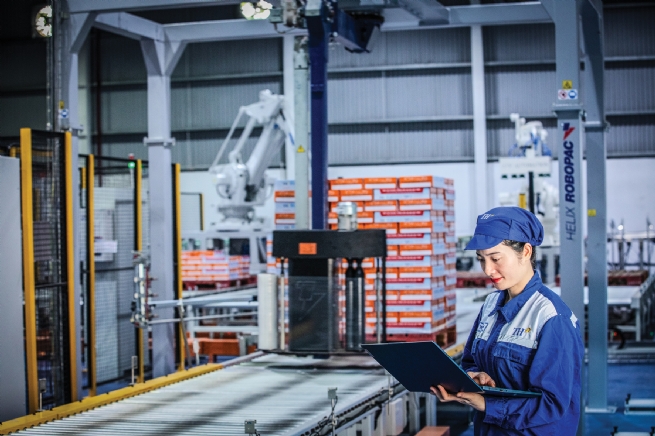
TH Group invests heavily in sustainable high-tech agriculture
Dual transformation is becoming the new rule of the global marketplace, creating growing pressure on Vietnamese enterprises to change if they want to remain in export markets and supply chains.
In 2026, a series of European green economy laws, including the Corporate Sustainability Due Diligence Directive, the Carbon Border Adjustment Mechanism, and the Digital Product Passport, have moved from policy direction to enforcement. At the same time, green capital disbursement conditions set by international financial institutions are making green transformation a mandatory requirement. As a result, the entire supply chain, from foreign direct investment (FDI) enterprises and exporters to domestic small and medium-sized enterprises (SMEs), is being drawn into a new framework in which emissions data, energy transparency, and ESG (environmental – social – governance) accountability have become basic conditions for survival.
In Vietnam, this pressure aligns with national commitments on green growth and Net Zero, creating a dual wave that directly affects businesses. Exporters, firms involved in global supply chains, and energy-intensive sectors such as steel, cement, fertilizer, power, logistics, and agro-forestry-fisheries are facing the earliest and strongest pressure to adapt. For these sectors, dual transformation is no longer simply a cost issue but a requirement to maintain market access, secure funding, and protect their position in value chains.
In practice, large conglomerates and FDI enterprises are leading this shift, followed by SMEs which, although still adjusting, have begun to invest and pay closer attention. Micro-enterprises, cooperatives, and household businesses remain mostly at the awareness stage.
Many Vietnamese companies are actively pursuing digital transformation and sustainable development in their production and business operations to improve competitiveness. Vingroup has developed a technology ecosystem with digital governance and data solutions; Rang Dong Light Source and Vacuum Flask JSC has introduced energy-saving products and improved management efficiency; TH Group has invested in sustainable high-tech agriculture; and export-oriented textile and garment companies such as Garment 10 Corporation have stepped up the use of modern management software in manufacturing. Although their scale and approaches differ, digitizing operations, optimizing energy use, and improving resource efficiency are becoming common priorities among domestic enterprises.
A clear example of the dual transformation trend in Vietnam is the strategic partnership between FPT and Vingroup to promote green transformation based on digital technology. This goes beyond a commercial agreement and reflects the long-term vision of large corporations combining sustainable development goals with core technological strengths. Within Vingroup’s ecosystem, VinFast plays a central role through its strategy to develop smart electric vehicles and green mobility solutions. The focus on software, automotive technology, and IT infrastructure provided by FPT shows that green transformation is being carried out alongside comprehensive and systematic digitalization.
FDI enterprises in Vietnam are creating growing spillover pressure on the country’s dual transformation process. They bring not only capital but also higher standards in technology, ESG, and sustainable development. Major corporations such as Samsung, Honda, LEGO Group, Qualcomm, Intel, and HEINEKEN are incorporating digital and green transformation as parallel pillars in their investment and operations in Vietnam.
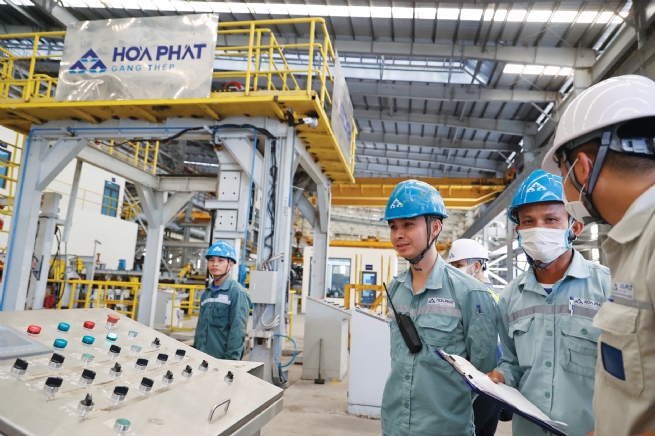
Dual transformation involves not only technology but also changes in operating models and corporate culture
From increasing the use of renewable energy and applying circular economy models to digitizing production, supply chain management, and product traceability, green and digital standards are gradually becoming common practice within the FDI sector. This, in turn, pushes domestic enterprises to upgrade their capabilities and take part more deeply in global value chains.
Although the dual transformation trend is clear, implementation in Vietnam still faces significant barriers. The widest gap is between large enterprises and small and micro businesses. High initial investment costs and uncertainty about short-term returns are additional challenges. Many companies continue to see green transformation as a financial burden rather than a strategic investment that can reduce risk, expand markets, and open access to new funding. Human resources and governance capacity also remain constraints. Dual transformation is not only a technology issue but a broad shift in operating models and corporate culture. Without clear leadership and strong commitment, technology alone is unlikely to deliver real results.
In this context, financial incentives, green credit, and public-private partnerships have become increasingly important. Many experts believe dual transformation is reshaping global supply chains and creating opportunities for those who act early and decisively. With strong renewable energy potential, fast growth in the digital economy, and a dynamic workforce, Vietnam is in a good position to use dual transformation to strengthen its role in global value chains.
From another perspective, Le Nguyen Duy Oanh, Deputy Director of the Ho Chi Minh City Center for Supporting Industries Development (CSID), said the main challenge for Vietnamese enterprises today is not only investment cost but the lack of a clear action framework for transformation. Businesses therefore need to actively study and gradually adopt new technologies, especially green and renewable energy, while building a workforce ready for dual transformation. These steps will help create a capable transformation ecosystem, allowing enterprises not only to adapt but also to measure clear economic benefits.
By Anh Mai, Vietnam Business Forum


 Vietnamese





