

8:03:35 AM | 3/24/2026

Airstrikes involving the United States, Israel, and Iran in early March 2026 have pushed the Middle East into a period of unpredictable instability, sending shockwaves through global trade. With shipping routes through the Strait of Hormuz nearly at a standstill, Vietnam faces potential disruptions to its key export supply chains.
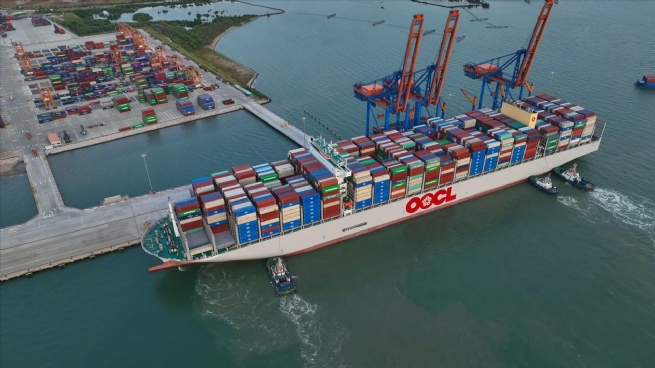
Container freight rates are forecast to rise sharply in the coming time
Rising logistics cost pressures
Geopolitical tensions in the world’s oil hub are creating negative effects on Vietnam’s production and trade activities. As the Strait of Hormuz connecting the Persian Gulf with the Indian Ocean becomes blocked, shipping lines have had to reroute vessels around the Cape of Good Hope. This change not only extends transit times by an additional 7-14 days but also raises fuel expenses and war-risk surcharges, pushing logistics costs sharply higher.
The immediate result is rising prices for consumer goods and production inputs, placing dual pressure on inflation and the Consumer Price Index (CPI). In logistics services, the closure of airspace in several Middle Eastern countries has also strained air cargo capacity, driving freight rates higher. This forces Vietnamese exporters to confront a difficult choice: accept lower profit margins to absorb higher transport costs or risk losing orders because of delivery delays. In addition, there is a shortage of container equipment, particularly refrigerated containers, which already have slower turnover and strict technical requirements.
Petroleum and seafood exports face difficulties
Within this broader context, the energy sector is seeing the most direct and immediate effects. Data from 2025 show that Vietnam spent nearly US$17 billion importing crude oil, refined petroleum products, and LPG. The Nghi Son refinery in particular depends heavily on crude oil supplies from Kuwait transported through the Strait of Hormuz. Although supply remains stable for now thanks to reserve inventories, pressure will increase if the conflict continues into the second quarter of 2026.
According to a representative of Binh Son Refining and Petrochemical Joint Stock Company (BSR), the Dung Quat refinery currently uses about 30-35% imported crude oil. If the conflict lasts more than one month, global oil prices could rise, while transport surcharges and the possibility that some countries may restrict exports to prioritize domestic demand could directly affect the refinery’s operating plans.
In response, BSR has launched an early import plan to raise crude oil reserves to 120% of operating capacity through the end of April. Even so, risks related to cash flow and long-term access to alternative supply sources remain challenges that require coordination with regulatory agencies.
For the seafood sector, the Middle East is a promising market, with export turnover reaching US$401 million in 2025. Key products such as pangasius (US$175.9 million) and shrimp (US$54.5 million) had been recording double-digit growth before the conflict began. Seafood shipments require strict temperature control and precise delivery schedules; delays carry a high risk that entire consignments may spoil.
Le Hang, Deputy Secretary General of the Vietnam Association of Seafood Exporters and Producers (VASEP), said emergency surcharges ranging from US$1,500 to US$4,000 per container are directly raising production costs. When major insurers canceled war-risk coverage for Iranian waters starting March 5, many shipping routes were almost paralyzed. Companies now face not only higher expenses but also the risk of cargo spoilage if power connections for refrigerated containers at transshipment ports such as Jebel Ali become overloaded.
Switching from air transport for fresh products to sea freight for frozen goods is also difficult, as shipping lines such as Maersk and MSC have tightened acceptance of refrigerated containers on Gulf routes. This presents a real test of supply chain management for Vietnamese export companies.
Urgent solutions to weather the storm
Given the severity of the situation, the Agency of Foreign Trade under the Ministry of Industry and Trade (MoIT) issued Document 229/XNK-TLH outlining an “escape roadmap” for Vietnamese import-export businesses through five core solution groups. These are considered urgent measures to protect the country’s trade flows.
First, restructuring markets and supply sources. The MoIT advises companies to quickly seek alternative markets with similar demand to replace exports to Israel, Iran, and the Gulf if disruptions continue.
Second, strengthening legal and insurance safeguards. During contract negotiations, companies should prioritize logistics, transportation, and insurance provisions. Shipping contracts should include clauses covering force majeure, compensation, and cost-sharing if goods encounter risks.
Third, establishing a continuous information mechanism. Companies should work closely with ministries and agencies to update import-export data and geopolitical developments. This coordination allows the government to rely on real-world data when adjusting support policies related to logistics infrastructure, port costs, or preferential credit programs.
Fourth, companies should prepare contingency plans for possible supply chain disruptions.
Fifth, the MoIT has instructed its affiliated units and overseas trade offices to strengthen connections to help companies secure new orders in regions less affected by the conflict, allowing domestic production to maintain its pace.
Nguyen Thuy Hien, Deputy Director of the Domestic Markets Department under the MoIT, said the department is developing scenarios to submit to the government. These include options involving the use of the price stabilization fund, adjustments to taxes and fees, and coordinated efforts to shorten customs clearance procedures while ensuring foreign currency availability and credit access for importing companies during periods of volatility.
By Huong Ly, Vietnam Business Forum


 Vietnamese





