9:27:10 AM | 8/3/2026

For Da Nang, the development of vocational education and training (VET) is aimed not only at meeting immediate employment needs but also serves as a strategic solution to attract investment, promote innovation, and build the city into a socio-economic center for the region.
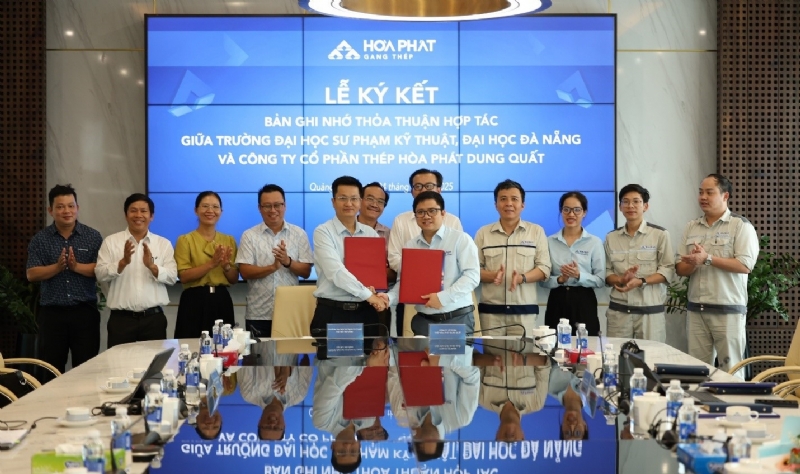
Hoa Phat Dung Quat Steel and the University of Technology and Education partner to strengthen training and workforce development
Strengthening school-enterprise linkages
Over the years, Da Nang has focused on comprehensively innovating its vocational education and training (VET) system toward modernity, aligning training with the practical needs of businesses and the labor market. This is also a key task in achieving development goals in high-tech industries, semiconductor manufacturing, artificial intelligence, logistics, information technology, and other high value-added sectors.
Currently, Da Nang’s VET network is relatively well developed, including colleges, intermediate schools, and high-quality training facilities that provide training in hundreds of occupations across fields such as industry, services, mechanics, electrical and electronics, tourism, information technology, and healthcare. Enrollment continues to grow each year, training quality is gradually improving, and the employment rate of graduates remains consistently high.
A key feature of Da Nang’s VET system is the shift from training based on school capacity to training based on the needs of businesses and the labor market. Training institutions proactively review curricula, update new technologies, increase practical training hours, and involve enterprises throughout the training process.
The “bringing lecture halls to enterprises” model is becoming an effective approach. Enterprises not only accept students for internships but also help design training programs, send experts to teach, provide practical equipment, and recruit students directly after graduation. Customized training is also organized for several occupations, helping learners adapt quickly to real production conditions while addressing the shortage of technical workers for enterprises.
The link between schools and enterprises continues to expand with the participation of large corporations in manufacturing, electronics, information technology, services, and tourism. This has helped form a training-practice-recruitment chain, contributing to improved human resource quality and narrowing the gap between training and labor market needs.
Alongside curriculum innovation, the city focuses on investing in facilities, modernizing practical equipment, and improving the quality of the teaching staff. Key occupations are developed according to national, regional, and international standards, while cooperation with foreign organizations and enterprises is strengthened to access new technologies and advanced training methods.
Da Nang also pays special attention to expanding access to VET for learners. Streamlining pathways after lower secondary school is being implemented consistently, helping to change social perceptions of vocational education. Support policies on tuition fees, scholarships, study loans, career counseling, and flexible education pathways are in place, creating favorable conditions for learners to choose paths suited to their abilities and employment needs.
For the active workforce, retraining, skill upgrading, and regular vocational training programs are also prioritized to meet the demands of technological transformation and improve labor productivity. This is gradually building a workforce capable of adapting quickly to market changes in the context of digital transformation and international integration.
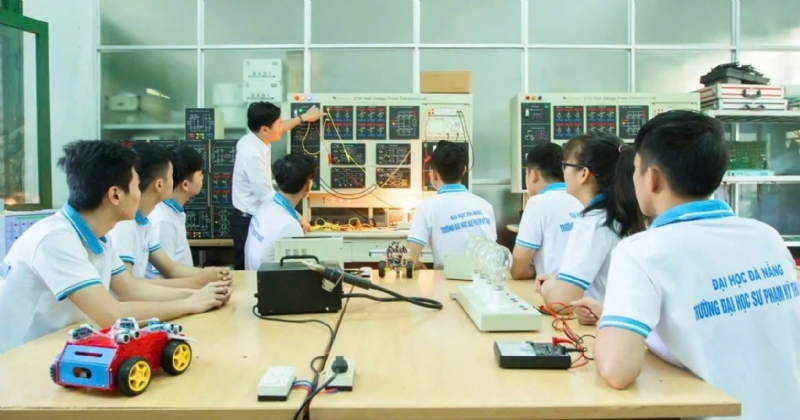
Investment advantages from high-quality human resources
In addition to traditional vocational training, Da Nang focuses on developing human resources for high-tech sectors. In implementing Resolution 136/2024/QH15 of the National Assembly on specific mechanisms and policies for the city’s development, intensive training programs in semiconductor manufacturing, artificial intelligence, data science, automation, and digital transformation are being carried out, helping meet the workforce needs of emerging industries.
VET institutions are also strengthening cooperation with universities, research institutes, and technology enterprises to develop training programs aligned with international standards, gradually forming a high-quality human resource training ecosystem in the city. This is an important factor in improving Da Nang’s competitiveness in attracting high-tech investment projects.
Along with this, the city actively promotes international cooperation in vocational education and training through joint programs with businesses and educational organizations from Japan, South Korea, Germany, Australia, and other developed countries. Activities such as expert exchanges, curriculum transfer, teacher training, and skills recognition help improve training quality and expand employment opportunities for learners both domestically and internationally.
For years, Da Nang has integrated the development of vocational education and training into its sustainable development strategy. New occupations related to the green economy, circular economy, renewable energy, green logistics, and digital transformation are being introduced into training programs to prepare human resources for future growth sectors.
With a focus on close alignment between schools and the labor market and priority given to high-tech human resource development, Da Nang is gradually building a modern, integrated, and effective VET system. This will serve as an important foundation for attracting high quality investment, developing the digital economy, and realizing the goal of becoming an innovation and high-tech center in the new era.
By Ngoc Tung, Vietnam Business Forum