


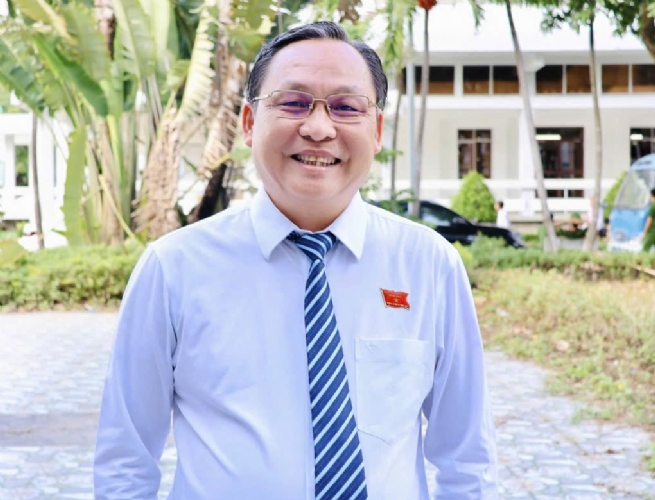
The Can Tho Export Processing and Industrial Zones Authority (CEPIZA) serves as the focal agency for industrial development, carrying out its state management responsibilities while acting as a reliable link between the government and the business community. Through more targeted investment promotion efforts and upgrades to technical infrastructure, the CEPIZA has contributed to economic growth, strengthening Can Tho’s role as an industrial center of the Mekong Delta region. On this topic, our reporter interviewed Le Cong Ly, Director of the Can Tho Export Processing and Industrial Zones Authority.
 |
Could you share your key achievements in state management and industrial zone development in 2025, particularly in investment promotion and attraction?
Since July 2025, Can Tho City has been established through the merger of three localities - Can Tho, Hau Giang, and Soc Trang - under Resolution 202/2025/QH15. Following the merger and in accordance with the approved master plan, the city has 40 industrial zones. Can Tho has had strong advantages in attracting investment due to its central location linking provinces and cities in the region, an increasingly developed infrastructure system including Can Tho International Airport, port facilities along the Hau River, and key expressways such as Can Tho-Ca Mau, Chau Doc-Can Tho-Soc Trang, and Ha Tien-Rach Gia-Bac Lieu. Newly planned and expanded industrial zones have been prepared to receive FDI inflows, particularly from high-tech and clean industry investors.
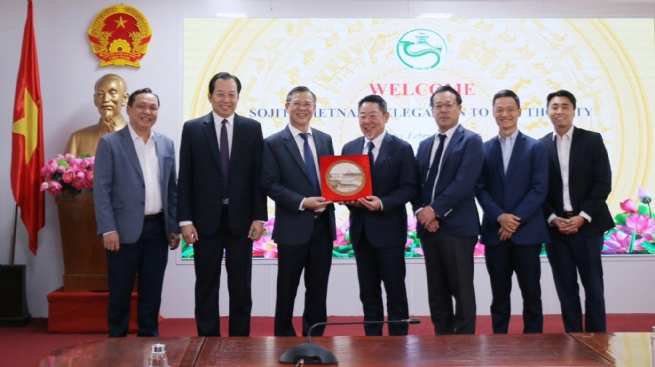
From the perspective of state management and industrial zone development, in 2025 we made significant efforts and achieved solid results, especially in investment promotion and attraction. We renewed our promotion approach with a clear focus, concentrating on sectors aligned with the city’s development orientation, including agro-forestry-fishery processing, high-tech industry, logistics, and supporting industries, while strengthening ties with strategic domestic and international investors. We developed and implemented an investment promotion plan for industrial zones and closely coordinated with relevant departments and agencies in external relations and investment mobilization activities. In 2025, we met and worked with 12 domestic and foreign investors exploring investment opportunities, including investors from China, Japan, and South Korea who participated in the Vietnam-Japan Local Cooperation Forum. As a result, six new projects were licensed with total registered investment capital of US$801.914 million, and one project (Westfood Hau Giang Company) was supported to begin operations.
Alongside infrastructure planning and development, how have you prioritized supporting enterprises in accelerating digital transformation and reducing the time required for investment procedures?
In parallel with infrastructure planning and development of industrial zones, we have consistently treated enterprise support - particularly in digital transformation and administrative reform - as an ongoing priority. We have stepped up the use of information technology and gradually digitized procedures related to investment, construction, labor, and the environment, while expanding online public services. This has shortened processing times, lowered costs, and improved transparency for investors. We have maintained close coordination with relevant departments and effectively applied the “one-stop, on-site” model, providing timely guidance and support to enterprises from the investment preparation stage through project implementation. For approved projects, we have closely monitored progress and worked with investors on site clearance, infrastructure completion, and legal procedures, helping projects become operational as soon as possible.
By placing enterprises at the center of service delivery and measuring performance by results, we have strengthened investor confidence, supported projects in staying on schedule, and created conditions to attract additional high-quality projects to industrial zones across the city.
In 2026, to continue effectively implementing state management and industrial zone development tasks, what key missions and core solutions have you set?
Entering 2026, we have identified our main mission as expanding industrial space while improving the quality of state management and services for enterprises. On that basis, we have focused on proposing the establishment of three additional industrial zones, preparing and implementing functional zoning plans, and completing documentation for the Tran De Economic Zone Project to support investment attraction in the coming period. At the same time, priority has been given to promoting and assisting investors in implementing and bringing at least six projects into operation, contributing approximately VND5,240 billion (US$209.6 million) to the state budget and supporting industrial production growth, with the goal of helping the city achieve double-digit growth in 2026.
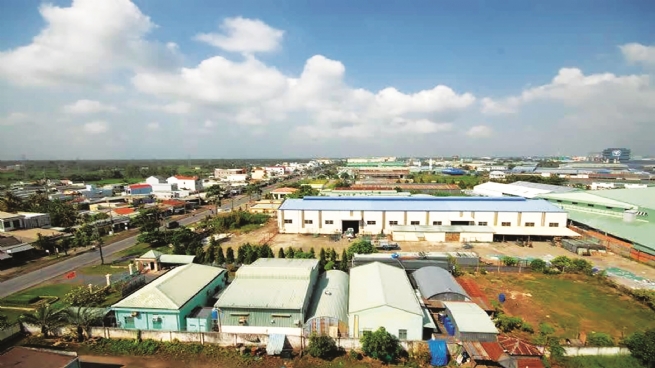
Can Tho City prioritizes attracting more high-quality projects to industrial zones across the city
In addition, we have continued to strengthen state management in investment, construction, environment, labor, and security within industrial zones, while proactively addressing challenges faced by enterprises, particularly in site clearance, project progress, technical infrastructure, and fire prevention and fighting. Environmental protection has been reinforced through closer supervision and by encouraging enterprises to adopt clean technologies, moving toward green industrial zone models and sustainable development.
To improve the Provincial Competitiveness Index (PCI), what message would you like to share with enterprises and investors?
In recent years, the investment and business environment in Can Tho City has seen clear and meaningful improvements through foundational reforms. The city has gradually strengthened its position as an attractive destination in the Mekong Delta, with solid growth potential in the years ahead.
Improving the PCI is not simply about rankings, but about a commitment to building a practical, transparent, and efficient investment environment centered on serving enterprises. We have followed the principle that all reforms must be based on the actual needs of investors and businesses.
In recent years, we have focused on simplifying and shortening administrative procedures, advancing digital transformation in application processing, strengthening accountability and professional conduct among officials, and maintaining regular dialogue to promptly address concerns raised by enterprises. We view enterprise satisfaction and success as the measure of performance for state management agencies.
Can Tho City government as a whole, and the CEPIZA in particular, are committed to listening openly, acting responsibly, and providing consistent and practical support to enterprises from the investment preparation stage through long-term production and business operations. We encourage enterprises to continue choosing Can Tho as their investment destination and to actively share concerns and recommendations so that policies can be adjusted and the investment environment further improved. Close and transparent cooperation aimed at sustainable development between the government and enterprises will provide the basis for Can Tho to improve its PCI results in a steady and substantive manner in the coming period.
Thank you very much!
Cong Luan (Vietnam Business Forum)


 Vietnamese
