Following the merger, Phu Tho has 58 industrial parks in its master plan, giving the province significant room for industrial development. However, amid increasingly fierce competition for investment, this planning advantage will only become meaningful when it is backed by clean land, synchronized infrastructure and an open investment environment. Removing site clearance bottlenecks is therefore key to strengthening the province’s competitiveness and attracting a new wave of investment.
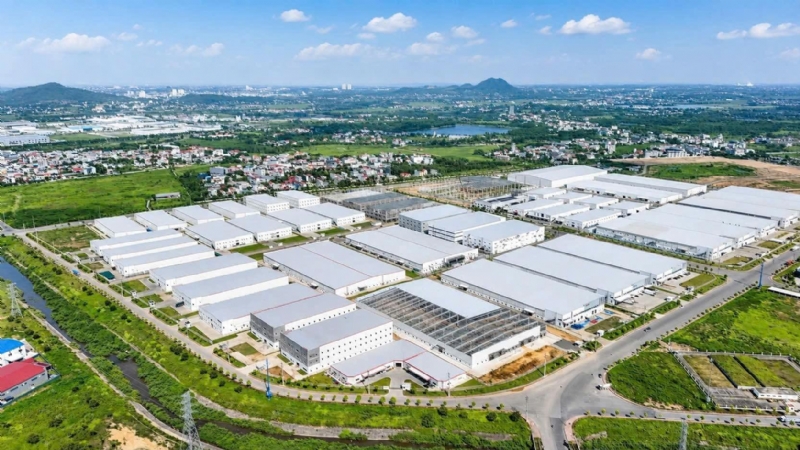
CNCTech develops infrastructure and industrial solutions at Ba Thien 1 Industrial Park in Phu Tho Province
From planning to competitive advantage
For many years, localities have competed for investment mainly through incentives and planning. However, as FDI flows shift more quickly, businesses are placing greater importance on quick access to production sites, completed infrastructure and streamlined procedures. As a result, “clean land” has become an important measure of local competitiveness.
For Phu Tho, this challenge is more pressing as the province now has 58 planned industrial parks following the merger, creating new space for processing and manufacturing, supporting industries and high technology. But for this planning advantage to translate into growth, long-standing bottlenecks in site clearance and infrastructure development must be addressed.
Current figures show that Phu Tho remains an attractive destination for industrial investment. According to the Phu Tho Industrial Zones Authority, the province has attracted 326 domestic investment projects with total capital of more than VND65.267 trillion (US$2.51 billion) and 523 FDI projects with total capital exceeding US$10.86 billion. Industrial parks such as Thang Long Vinh Phuc, Ba Thien II, Binh Xuyen, Khai Quang, Phu Ha and Trung Ha are largely full, attracting many companies in electronics, engineering and supporting industries.
This shows that Phu Tho has strong potential for industrial development. Its connections with the Capital Region (Hanoi and neighboring provinces), improving transport infrastructure and large-scale planning provide a good foundation for the province to attract investment as businesses relocate.
However, this advantage faces a major obstacle. As of July 2026, nearly 3,000 hectares in established industrial parks had yet to complete compensation and site clearance. As a result, many infrastructure projects cannot proceed on schedule, businesses lack land to build factories, and the province loses an advantage in attracting new investors.
From a business perspective, the biggest cost is not only land rental but also waiting time. Each month of project delays means higher capital costs, postponed production plans and the risk of losing secondary projects to other localities. The situation at Song Lo II Industrial Park is a clear example. The project broke ground in 2023 with plans for a modern, environmentally friendly development, but nearly 13 hectares have yet to complete site clearance. Difficulties in developing resettlement areas, technical infrastructure and sources of fill materials have also slowed progress. Similar obstacles have emerged at Thai Hoa - Lien Son - Lien Hoa and Tam Duong II industrial parks, where compensation issues and the determination of resettlement land prices continue to affect site handover.
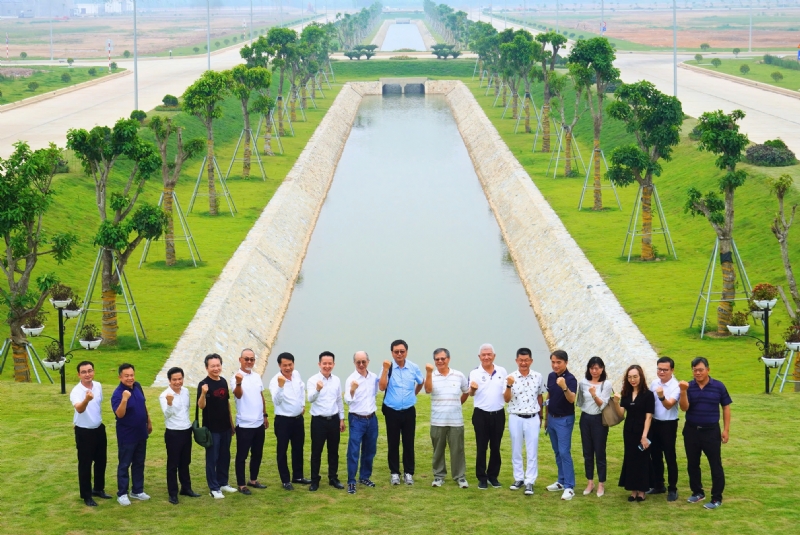
Nam Binh Xuyen Green Park welcomes a delegation of Taiwanese businesses
Businesses need more than commitments
What is particularly notable is that infrastructure developers themselves see site clearance as a key factor in investment efficiency. A representative of Vinh Phuc Infrastructure Development JSC, the developer of Song Lo II Industrial Park, said that for a project with total investment of more than VND1.7 trillion (US$65.38 million), the company’s main concern is when it can receive clean land. A site clearance delay of just a few months can force the company to adjust its investment plan, incur additional financial costs and reduce opportunities to attract secondary projects. This is no longer an issue affecting just one project.
According to the provincial Industrial Zones Authority, compensation and site clearance are currently the biggest bottlenecks in industrial park infrastructure development. Delays in site handover force many projects to seek extensions, raise land and factory rental rates, reduce the competitiveness of industrial parks and directly affect the province’s investment environment.
As many localities expand their industrial land reserves, the key difference is no longer the planned area but the ability to hand over sites to businesses when needed. This is why many experts say that “clean land” has become the most important competitive infrastructure for attracting investment.
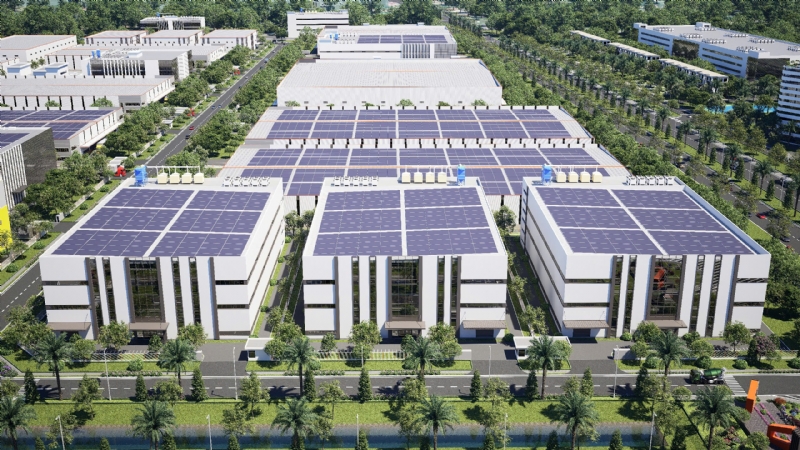
Phu Tho focuses on developing industrial park infrastructure to attract investors
Removing bottlenecks, strengthening competitiveness
Recognizing these difficulties, Phu Tho is shifting its focus from expanding its planning to improving implementation.
Under its development orientation, the former Vinh Phuc area will prioritize electronics, high-tech and semiconductor projects; the former Phu Tho area will develop supporting industries; while the former Hoa Binh area will pursue eco-industrial parks linked to sustainable development. This approach shows that the province is not only expanding its scale but also seeking to improve the quality of investment.
To achieve this goal, the Provincial People’s Committee has asked departments, agencies and local authorities to fully resolve outstanding issues related to compensation, site clearance and resettlement, while proactively reviewing and addressing difficulties arising during industrial park infrastructure development.
The province is pursuing administrative reform, investing in transport and logistics infrastructure, strengthening connections with the Lao Cai - Hanoi - Hai Phong railway, implementing the 2026-2030 New-Generation FDI Attraction Scheme, developing a high-quality workforce and providing social housing for workers.
In early July 2026, Provincial People’s Committee Chairman Tran Duy Dong personally inspected progress at several key industrial parks, asking local authorities to strengthen communication and encourage residents to support compensation plans, while finding solutions to delayed site handovers to ensure clean land is available for projects. Developers were also asked to mobilize resources to complete essential infrastructure and speed up construction.
The provincial Industrial Zones Authority is also accelerating planning and preparing land reserves for the next phase of development. Since the beginning of the year, the agency has submitted eight detailed zoning plans for approval, advised on investment policy approvals for Doan Hung, Phu Ninh and Trung Ha 2 industrial parks, and received applications for nine other industrial park infrastructure development projects.
With 58 industrial parks following the merger, Phu Tho has an opportunity to develop a new industrial growth center in the northern midland and mountainous region. However, achieving this goal will depend largely on removing site clearance bottlenecks, accelerating infrastructure investment and creating clean land reserves. These factors will continue to shape the province’s investment environment and its ability to attract new capital in the period ahead.
By Le Hien, Vietnam Business Forum