Hanoi is upgrading its new rural areas through green production, a clean environment and more convenient services, aiming to create modern countryside while preserving livelihoods and distinctive local characteristics.
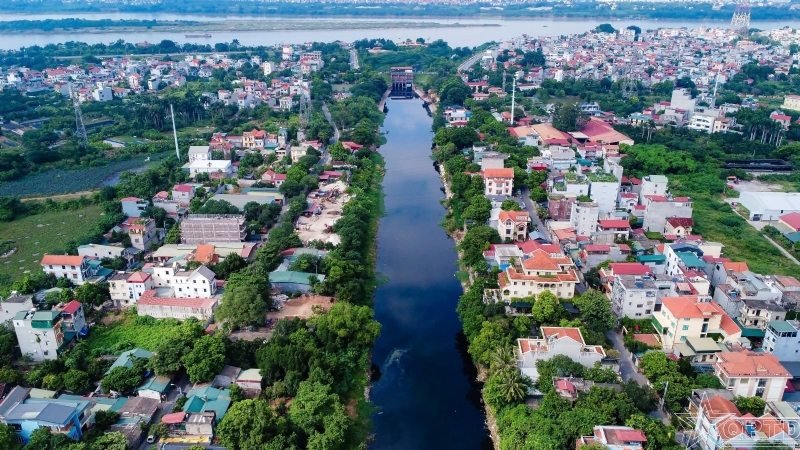
Green from the fields to residential areas
After years of opening roads and renovating schools, health stations and irrigation works, Hanoi’s suburban areas now have more favorable conditions for production development and improving living standards. The new phase requires not only additional infrastructure but also higher-quality environmental conditions, services and efficiency in the use of facilities.
Results in 2025 and the first six months of 2026 show that the capital’s agriculture continued to grow despite shrinking agricultural land, erratic weather and high input costs. The drivers include quality seeds, concentrated production areas, VietGAP processes, organic production and market linkages.
In Dân Hòa Commune, the Spring crop in 2026 continued to use mainly high-quality rice varieties; the crop calendar, irrigation and pest control were proactively organized. In Kiều Phú Commune, Đồng Tâm Livestock Services Cooperative maintains safe production and supplies food to schools, collective kitchens, restaurants and clean-food stores. This reality shows that sustainable production must be linked to stable outlets.
According to Tạ Văn Tường, Deputy Director of the Hanoi Department of Agriculture and Environment, the city will continue to shift toward crops and livestock suited to each area; expand concentrated production, high-tech agriculture, organic farming and VietGAP; while strengthening market linkages, traceability and connections with services and tourism.
Green requirements must begin right at the production stage. Fertilizers, pesticides and water sources need to be controlled; livestock waste must be treated; rice straw and crop by-products need to be collected and reused. When by-products are turned into organic fertilizer, animal feed or new raw materials, farmers can reduce costs while limiting pollution.
Green spaces need to be present in every residential area: clean village roads with shade trees; cleared ponds, lakes and canals; appropriately located waste collection points; and well-maintained markets, cultural centers and sports facilities. This work requires the regular participation of local authorities, service providers and residents.
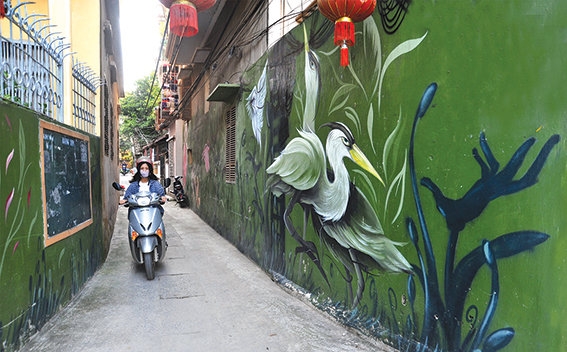
Modern while preserving the character of the countryside
Following the reorganization of administrative units, Hanoi has 75 communes implementing the program for 2026-2030. Peri-urban communes face pressure from rapid urbanization, while many areas far from the city center still rely on agriculture. The criteria for modernity must therefore suit each area, and modernization should not be equated with concrete construction.
For peri-urban communes, the first requirement is to narrow the gap in services with the inner city. Residents need a stable clean water supply, waste collection on schedule, safe transportation, and convenient access to schools and healthcare. Digital infrastructure, cameras in necessary areas, energy-efficient lighting and community facilities with network connectivity must directly serve daily life, production and business.
In areas where agricultural characteristics remain strong, modernity is reflected in effective irrigation, roads serving production, storage facilities, preliminary processing facilities, market information and traceability. Vegetable-growing areas, fruit-growing areas and livestock zones can only enter large distribution chains when processes are controlled, supplies are stable and product documentation is clear. Technology must address practical needs rather than stop at equipment installation.
The new set of criteria is expected to impose higher requirements on the environment, digital transformation and quality of life. Hanoi aims to have 80% of its communes meet the standards by 2030, with 20% meeting modern standards. Results need to be felt by residents through safe roads, protected water sources, a clean environment and convenient public services.
Source separation is difficult to sustain if separated waste is subsequently collected together or transportation is unreliable. Wastewater treatment also cannot rely solely on centralized facilities; it requires collection networks suited to residential areas, operating arrangements and long-term maintenance funding. Every stage must be organized in a coordinated manner.
Modernization needs to respect the structure and identity of villages and communes. Communal houses, pagodas, village wells, village ponds, rows of trees, traditional crafts and community lifestyles create the distinctiveness of each locality. Landscape improvements must avoid uniform designs or the loss of existing spaces. Preserving the village character in a clean and civilized environment also creates conditions for developing agricultural tourism, experiential tourism and local cultural products.
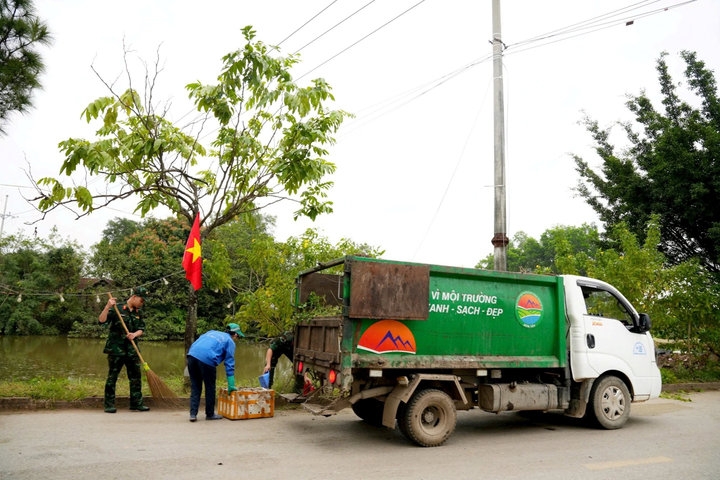
More resources needed from businesses and the community
The new phase creates demand for investment in waste and wastewater treatment, clean energy, lighting, agricultural produce preservation, e-commerce and tourism services. Businesses can participate if local authorities publicly disclose demand, project scale, land funds, investor selection methods and capital recovery mechanisms.
Hanoi has a large number of OCOP products and many agricultural product linkages. The challenge is no longer primarily to increase quantity, but to maintain quality, innovate packaging, reduce materials that are difficult to recycle, ensure raw material supplies and expand markets. Distribution, processing, logistics and tourism businesses can help cooperatives complete stages that individual producers find difficult to handle themselves.
The Hanoi market has an extensive system of supermarkets, food stores, schools, hospitals, collective kitchens, hotels and tourism services. When product standards, volumes, delivery schedules and responsibilities are clearly defined, agricultural products from suburban areas can enter stable contracts instead of relying on trade fairs. Online channels are also effective only when quality and delivery are guaranteed.
Within this linkage, commune-level authorities provide information on planning, production areas and procedural support; cooperatives organize farmers and control production processes; businesses bring in technology, services and markets. Residents both benefit from and directly contribute to preserving the environment and landscape where they live.
Green and modern new rural areas should not be assessed by the number of newly built facilities, but by their effectiveness in use. Roads must serve residents and production; cultural centers must have regular activities; waste collection systems must operate reliably; and digital services must help residents handle their affairs conveniently. When public resources, businesses and communities are connected, Hanoi’s rural areas can become civilized and livable while still maintaining livelihoods and their distinctive identities.
| This page is produced in coordination with the Hanoi Coordination Office for New-Style Rural Development |
By Dinh Bao, Vietnam Business Forum