On August 18, in Hanoi, the Vietnam National Authority of Tourism organized a scientific workshop to develop the Scheme “Developing tourism linked to the production and consumption of OCOP products, contributing to the preservation and promotion of cultural values and indigenous knowledge in rural areas of Vietnam.”
Deputy Director General of the Vietnam National Authority of Tourism Ha Van Sieu chaired the workshop, which brought together experts, researchers, educational institutions, tourism businesses, management agencies and OCOP entities from across the country.
As part of the National Target Programs, the Scheme aims to unlock new resources and promote the development of OCOP products through tourism, while creating momentum for the development of traditional craft villages and the rural economy.
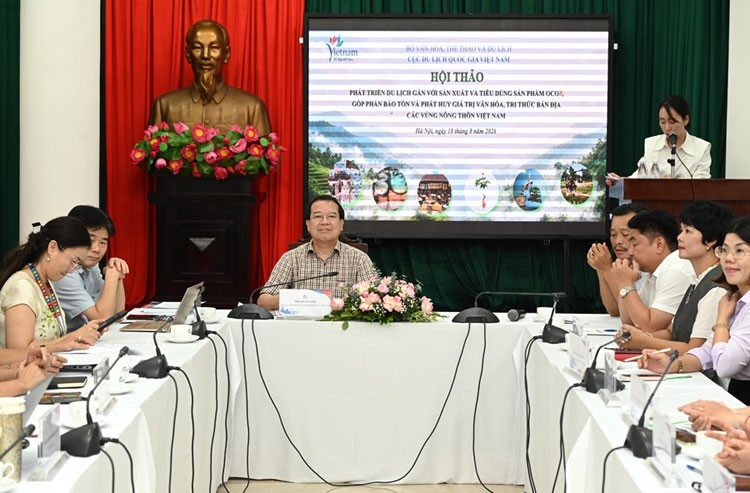
Deputy Director General of the Vietnam National Authority of Tourism Ha Van Sieu chairs the workshop. Photo: TITC
In his opening remarks, Deputy Director General Ha Van Sieu emphasized that developing rural tourism in association with the exploitation of OCOP products and the preservation of cultural values is not only a sustainable development trend but also an important task to concretize the Party’s orientations and the State’s policies. This approach brings “dual benefits” to rural areas: enhancing the value of OCOP products and promoting economic restructuring, while contributing to the restoration, preservation and promotion of cultural values and indigenous knowledge. At the same time, it responds to the growing trend toward green and sustainable tourism and supports the goal of building new-style rural areas.
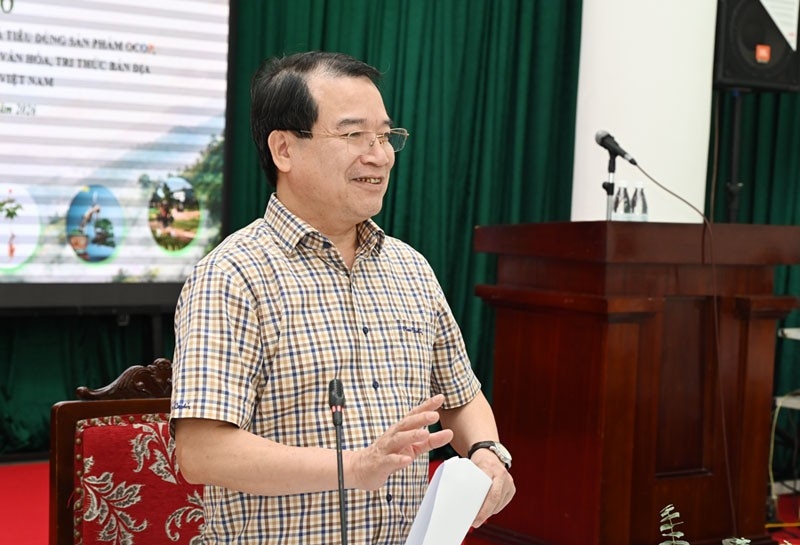
Deputy Director General Ha Van Sieu speaks at the workshop. Photo: TITC
According to Deputy Director General Ha Van Sieu, the effective implementation of the Scheme requires the participation of all stakeholders. Businesses play a key role in investment, organizing production and bringing products to market; experts support the improvement of development approaches; while artisans and communities are the custodians, creators and storytellers of cultural values and product narratives. Meanwhile, management agencies and local authorities are responsible for creating a favorable policy environment and enabling conditions, while sponsors and development partners can accompany and support specific projects. The Scheme should become a practical tool for promoting policies, programs and projects, as well as mobilizing resources for local tourism development.
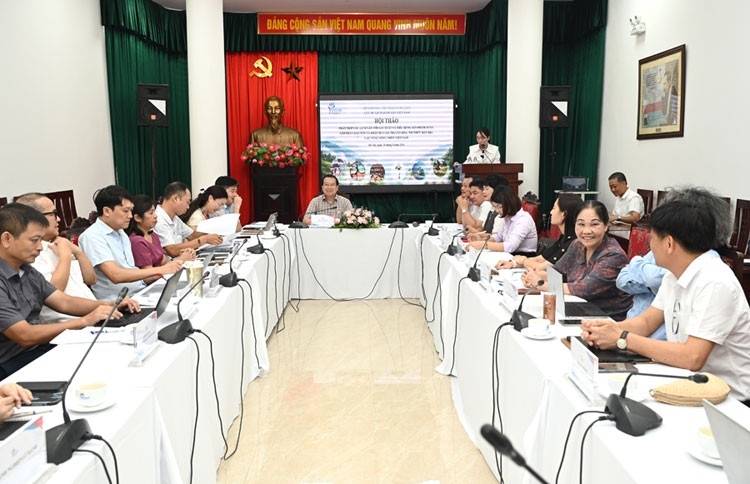
Overview of the workshop. Photo: TITC
Linking Tourism - OCOP - Culture
At the workshop, representatives of the Vietnam National Authority of Tourism presented the key contents of the Scheme, focusing on development trends; Party orientations and State policies; the multi-value linkages among tourism, OCOP and culture; an overview of six groups of OCOP products; and the preferences of key tourist markets. The Scheme also proposes tailored solutions for each group of OCOP products, along with comprehensive solutions to promote sustainable linkages among Tourism – OCOP – Culture. It identifies key pillars, an implementation roadmap and specific responsibilities for ministries, sectors and localities.
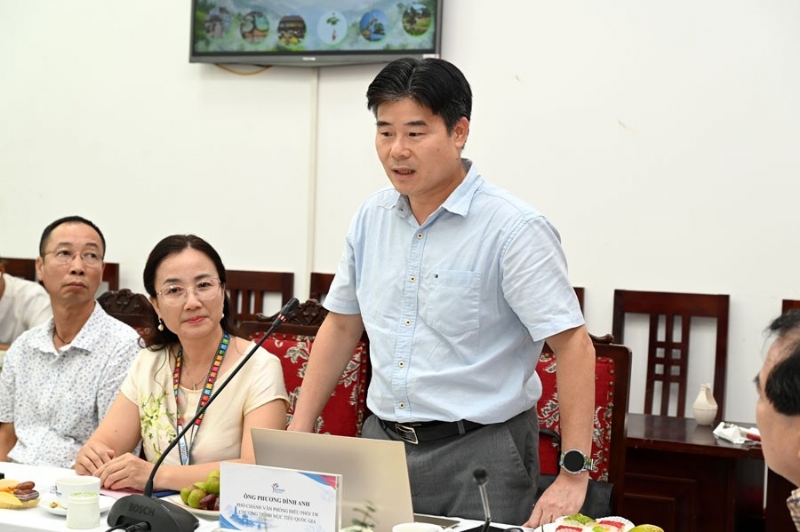
Phuong Dinh Anh, Deputy Chief of the Central Coordination Office for the National Target Programs under the Ministry of Agriculture and Environment, speaks at the workshop. Photo: TITC
A representative of the Central Coordination Office for the National Target Programs provided an overview of the OCOP Program and the role of OCOP entities in orienting production and consumption in connection with tourism development. Representatives of local tourism authorities also discussed the current situation and development orientations for tourism associated with the production and consumption of OCOP products, thereby contributing to the preservation and promotion of cultural values and indigenous knowledge.
Drawing on practical experience, representatives of OCOP entities, traditional craft villages and cooperatives shared their experience in leveraging tourism value through several exemplary models, including Bat Trang Ceramic Village (Hanoi), Nam Cao Silk Weaving Cooperative (Hung Yen), and Ecohost’s OCOP tourism products (Ninh Binh).
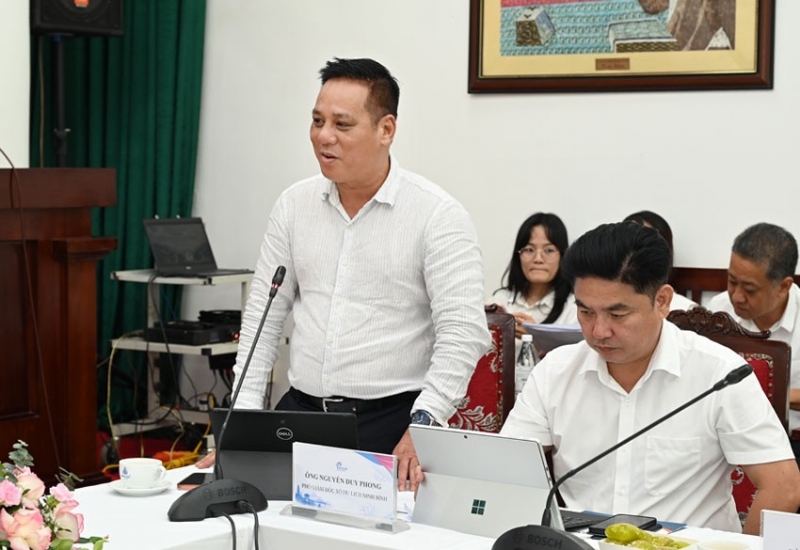
Van Ba Son, Deputy Director of the Da Nang Department of Culture, Sports and Tourism, speaks at the workshop. Photo: TITC
Turning OCOP products into distinctive cultural experiences
Discussions at the workshop focused on solutions to make the Scheme practical, feasible and capable of delivering tangible benefits to local communities. A key point emphasized was that OCOP products need compelling stories, evoke emotions and provide meaningful experiences for visitors. Localities and OCOP entities need to develop and systematize indigenous stories while strengthening coordination with cultural practitioners and organizations to create products that not only have material value but can also tell the stories of the land, its people and local culture.
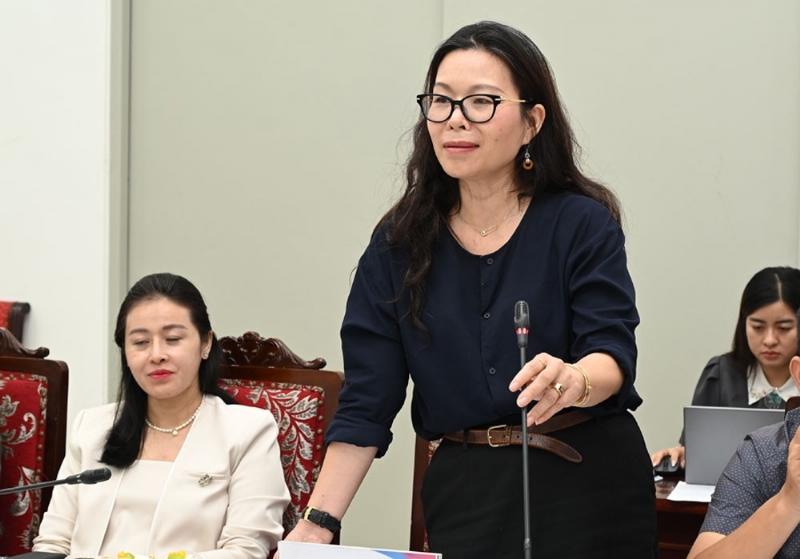
Assoc. Prof. Dr. Bui Thanh Thuy, Head of the Faculty of Tourism at Hanoi University of Culture, speaks at the workshop. Photo: TITC
Assoc. Prof. Dr. Pham Hong Long of the University of Social Sciences and Humanities under Vietnam National University, Hanoi, said that OCOP tourism development should be placed within a complete service supply chain covering food and beverage, accommodation, transportation, entertainment and shopping. Visitors should not simply be taken to OCOP destinations for sightseeing; they should also have opportunities to participate directly in the process of creating products, enjoy and learn about them, connect with local communities and purchase products to take home. In particular, digitalization should be accelerated and product quality improved to better meet visitors’ needs.
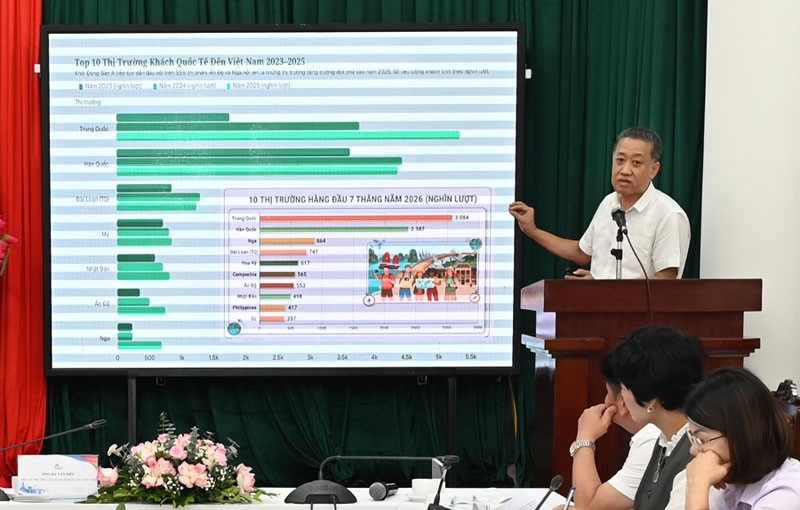
Hoang Hoa Quan, Deputy Head of the Travel Division under the Vietnam National Authority of Tourism, presents the Scheme. Photo: TITC
Assoc. Prof. Dr. Bui Thanh Thuy of Hanoi University of Culture emphasized the need to strengthen linkages among communities, artisans, businesses, restaurants and cultural industry organizations. Accordingly, OCOP products should maintain authenticity and respect nature, with communities and artisans at the center, cultural preservation as the foundation and creativity as the driving force, while meeting requirements for safety, quality and sustainable development.
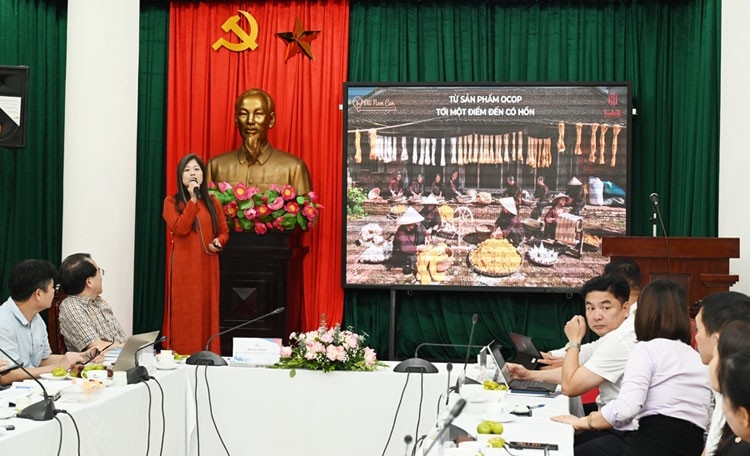
Luong Thanh Hanh, Chairwoman of the Nam Cao Silk Weaving Cooperative, shares practical experience. Photo: TITC
Drawing on Da Nang’s practical experience, Van Ba Son, Deputy Director of the Da Nang Department of Culture, Sports and Tourism, said local stories should be transformed into resources for tourism development. Storytellers need to know how to convey cultural values and folk knowledge through attractive products, while linking products with the market and integrating OCOP products into the tourism service system. In this process, the guidance and orientation of local authorities and management agencies play an important role.
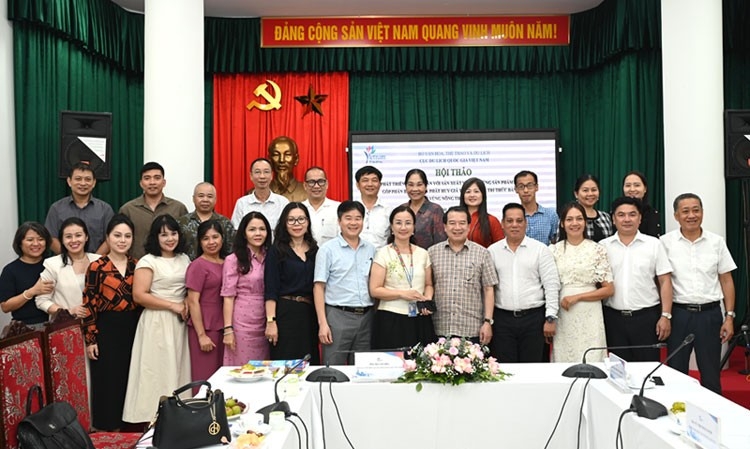
Delegates pose for a group photo at the workshop. Photo: TITC
Concluding the workshop, Deputy Director General Ha Van Sieu said that the Vietnam National Authority of Tourism would fully take into account the contributions made at the event and continue to study, supplement and revise the Scheme for completion before submitting it to the leadership of the Ministry of Culture, Sports and Tourism for consideration and promulgation.
| This page is produced in coordination with the Hanoi Coordination Office for New-Style Rural Development |
Source: Vietnam Business Forum