Hanoi’s craft villages, heritage sites, festivals, and traditional knowledge are opening new opportunities for rural development. When heritage supports local livelihoods, engages communities, and adapts to digital and green transformations, it becomes a powerful resource for sustainable growth.
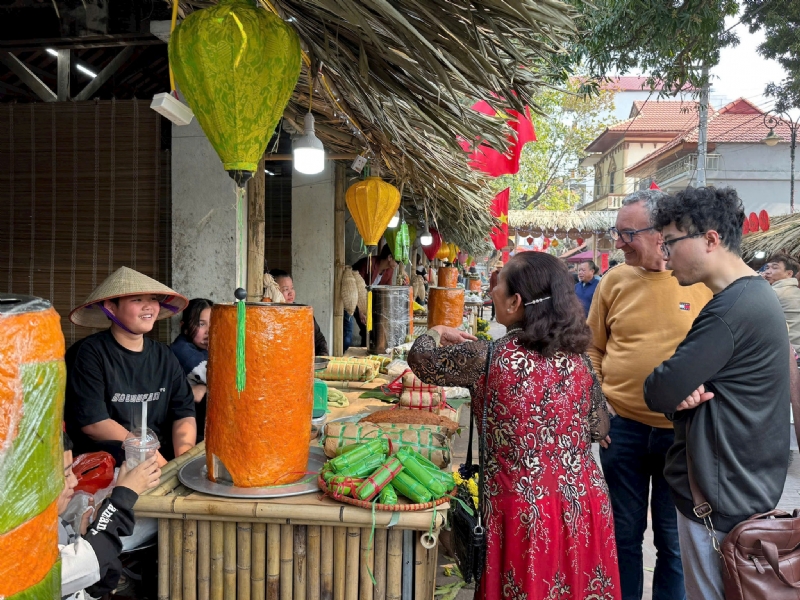
Hanoi’s heritage sites and traditional cultural practices create new opportunities for rural livelihoods and creative development
Hanoi’s new rural development is entering a new phase. Before the two-tier local government system took effect, all communes had met the required standards, including 229 advanced communes and 109 model communes. All districts had also met the standards, including six achieving advanced status. Hanoi completed its new rural development program one year ahead of schedule.
The new phase requires not only comprehensive infrastructure, stable incomes, and an improved environment, but also the preservation of landscapes, village structures, traditional occupations, and the cultural life of each community, particularly amid urbanization and the reorganization of administrative units.
Distinctive Rural Development Resources
According to Dr. Pham Lan Anh, Head of the Heritage Management Department under the Hanoi Department of Culture, Sports and Tourism, the city currently has about 1,350 craft villages and villages with traditional occupations, nearly 6,500 historical and cultural sites, and 1,206 traditional festivals. This provides a foundation for Hanoi, a UNESCO Creative City of Design, to approach new rural development from a cultural and creative perspective.
The department has proposed the “Creative Rural Areas within the Creative City” model. According to Dr. Pham Lan Anh, the model has five pillars: using heritage to create livelihoods; engaging communities, artisans, and young people as key actors; developing creative spaces linked to cultural institutions, craft villages, and schools; promoting digital heritage, digital maps, and digital storytelling; and developing the creative economy to create products, experiences, brands, and jobs.
Heritage sites, handicrafts, cuisine, and festivals are not only assets to preserve but also resources for developing products and services. Their use must respect their original values, cultural spaces, and the interests of the communities that practice and preserve them.
Heritage Supports Livelihoods
Van Dinh has been selected to pilot the creative rural model. The commune currently has 108 historical and cultural sites, 25 intangible cultural heritage elements, and a range of distinctive agricultural and culinary products.
Pham Thuy Hoa, Vice Chairwoman of the Van Dinh Commune People’s Committee, said Van Dinh grass-fed duck is not only a culinary brand but also reflects local knowledge, livestock-raising practices, and processing techniques. Thanh Vat pomelo, Nghi Loc grilled fish, Nguyen Xa lotus tea, and Ngoc Dong J02 rice also contribute to the local cultural, agricultural, and culinary ecosystem.
According to Pham Thuy Hoa, this potential has yet to be fully leveraged. Van Dinh will develop spaces, routes, and experiential products; use technology to digitize and promote heritage; and work with universities, research institutes, and businesses to train human resources, transfer knowledge, design products, and access markets.
At Duong Lam ancient village, the Doai Complex shows that heritage can generate economic value without large-scale construction investment. After 16 years of operation, the model has developed spaces centered on traditional architecture, cuisine, art, community education, and livelihoods for more than 30 local workers.
Architect Khuat Van Thang, owner of the Doai Complex, said communities must be the creative actors. Residents are given priority as tour guides, storytellers of their homeland, and providers of products and services. The complex has adopted a circular economy approach and developed one- to three-day experiential programs combining wet-rice agriculture, cuisine, and traditional architecture.
Experience in Van Dinh and Duong Lam shows that heritage needs to be organized into value chains. Residents and artisans provide knowledge and products; businesses support design, management, and markets; training institutions contribute research and technology; and local authorities handle planning, connections, and impact management.
Preserving Heritage Amid Rural Modernization
Following the reorganization of administrative units, a commune may encompass many different villages, festivals, handicrafts, and customs. The goal is not to “standardize” culture but to identify, map, and develop plans to promote the distinct values of each community while creating a shared identity for the locality.
Rural infrastructure must be planned with respect for village structures, landscapes, heritage sites, and community spaces. Renovating roads, ponds and lakes, village gates, and cultural centers needs to address transport, safety, the environment, and architectural preservation at the same time.
For 2026-2030, the draft Hanoi New Rural Commune Criteria comprises 10 criteria with 47 indicators, adding requirements for digital transformation, green transformation, the circular economy, and environmental protection. The city aims for 80% of communes to meet new rural standards and 20% to meet modern new rural standards by 2030.
Requirements for waste sorting, wastewater treatment, smart villages, online public services, and One Commune One Product (OCOP) items need to be linked to the protection of heritage spaces. Digital transformation supports the development of databases and heritage maps, preservation of artisans’ knowledge, and digital storytelling for products. Green transformation helps reduce pollution in craft villages and improve landscapes and living environments.
Developing new rural areas on a heritage foundation is not about adding a cultural component to the program, but about changing how rural resources are viewed. Heritage needs to be integrated into planning, linked to livelihoods, and supported by mechanisms that enable communities to participate in decision-making, management, monitoring, and benefits.
If implemented in a coordinated manner, Hanoi can form a network of creative rural communities, with each locality developing based on its own strengths and connecting with the capital’s creative ecosystem. New rural areas would then have modern infrastructure while retaining their identity, creating jobs, and improving quality of life.
|
This special section is presented in collaboration with the Hanoi Coordination Office for National Target Programs |
Bỳ Bao Ngoc, Vietnam Business Forum