By reorganizing production, applying science and technology, developing specialized production areas, and strengthening farmers’ role, Ung Thien commune is turning its new rural development goals into a model of ecological, modern agriculture and environmental protection.
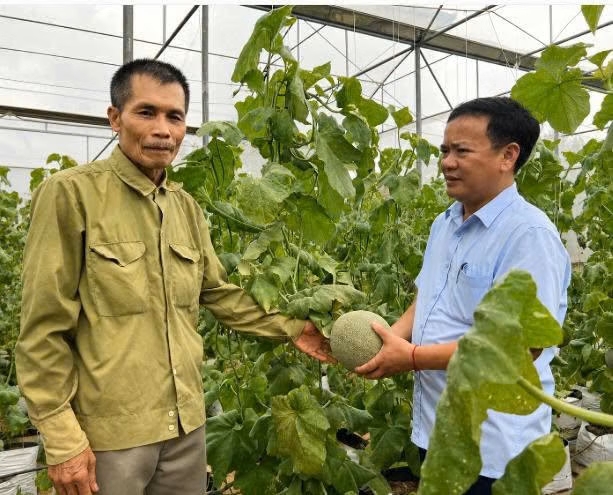
High-tech greenhouse model cultivating organic Japanese Ichiba melons in Ung Thien Commune, Hanoi
Clear goals and roadmap
Implementing Action Program 14-CTr/TU dated June 26, 2026, of the Hanoi Party Committee on agricultural, farmer, and rural development through 2030, with a vision to 2045, Ung Thien is completing an implementation plan suited to local conditions. This will provide a basis for clearly defining tasks, timelines, and resources for new rural development in the coming period.
Vu Le Son, Standing Deputy Secretary of the Ung Thien Party Committee, said Ung Thien aims to develop agriculture toward an ecological, modern, and multi-value model; build a professional farming workforce able to access science and technology; and develop modern rural areas linked to digital transformation and environmental protection. The commune aims to complete its general plan and detailed plan for the central area in 2026 and achieve new rural standards by 2029.
By 2030, the commune’s economic structure is expected to shift to trade and services at 40.7%, industry and construction at 39.3%, and agriculture at 20%. Agricultural production value is expected to grow by an average of 3.5% annually, reaching at least VND432 million (US$16,615) per hectare of cultivated land per year, while average per capita income is expected to reach at least VND130 million (US$5,000) per year.
These targets aim to improve land-use efficiency and increase residents’ incomes during new rural development. However, the program is not focused solely on production. Planning, infrastructure, the environment, culture, education, healthcare, and digital transformation need to be addressed in a coordinated manner, with the results ultimately reflected in residents’ quality of life.
Developing concentrated production areas
Agricultural restructuring has been identified by Ung Thien as a key task. The main direction is to expand concentrated production areas, high-quality rice-growing areas, and aquaculture zones; develop ecological and circular agriculture and apply high technology; and build production-processing-consumption linkages for J02 rice, fruits and vegetables, and livestock products.
Under this approach, cooperatives organize services, provide technical support, and connect farming households. Concentrated production helps ensure consistent input quality, stable output, and better market access. The commune aims to develop two to three new One Commune One Product (OCOP) items each year, each rated three stars or higher, while improving product traceability, promotion, and online sales.
Models for high-quality rice, greenhouse-grown melons, and commercial chicken farming have already been developed in the area. Eggs produced by Vu Van Ho’s farming operation have received three-star OCOP certification, while the Ichiba Japan melon model operated by Nguyen Huu Hong’s farming operation uses net houses and follows an organic-oriented approach. These models need to be further evaluated and refined before being replicated.
In late July 2026, the Ung Thien General Services Center surveyed several representative agricultural production establishments, focusing on OCOP and organic-oriented products. The survey helped the agency assess each model’s production process, support needs, and development potential.
During the 2026 summer crop, Quang Phu Cau Agricultural Services Cooperative continued to use unmanned aerial vehicles to sow rice. Together with rice transplanters, the new equipment helps reduce labor needs and shorten production time. Its use needs to be organized by production area, with technical guidance and specific assessments of effectiveness.
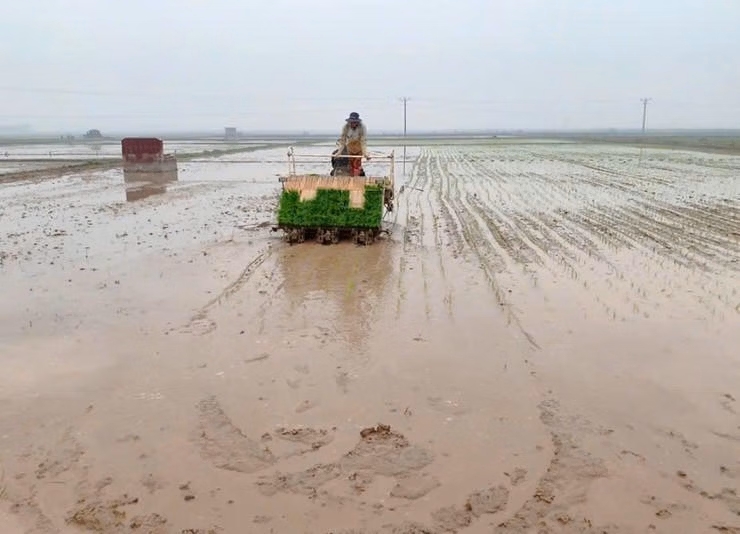
Labor and planting time are reduced through the use of mechanical rice transplanters
Strengthening farmers’ role as key stakeholders
On August 13, 2026, the commune farmers’ association launched the club of outstanding farmers with 30 exemplary members. The club provides a platform for sharing experience and supporting members with technology, seeds, capital, markets, and production organization. At the event, local agricultural and OCOP products were introduced through livestreams on digital platforms.
To sell products effectively in the digital environment, products must meet quality requirements, provide clear information, have traceable origins, and maintain a stable supply. Digital transformation therefore needs to go hand in hand with standardized processes and building product credibility.
Alongside production development, Ung Thien must address environmental requirements in rural areas. The locality has 12 traditional craft villages, which create jobs but also put pressure on waste, wastewater, land, and fire prevention and control. Craft village development needs to be accompanied by technological improvements and strict compliance with environmental regulations.
The goal of achieving new rural standards by 2029 needs to be pursued substantively, with clear responsibilities and progress reviews for each criterion. Green agriculture, new technologies, and OCOP products are important components, but the effectiveness of the National Target Program on New Rural Development will also be measured by the living environment, essential infrastructure, public services, and residents’ livelihoods. This will help Ung Thien sustain its results after receiving recognition.
|
This special section is presented in collaboration with the Hanoi Coordination Office for National Target Programs |
By Minh Ngoc, Vietnam Business Forum