In recent years, the “One Commune One Product” (OCOP) Program has played an important role in promoting rural economic development in Hanoi. Against this backdrop, the pear guava produced by Di Trach Cooperative is a notable example, gradually establishing its quality and position in the market. Thanks to its persistence in pursuing clean agricultural production, the pear guava produced by Di Trach Agricultural Services Cooperative (Hoai Duc Commune) was awarded four-star OCOP certification in 2021 and was recertified in 2024.
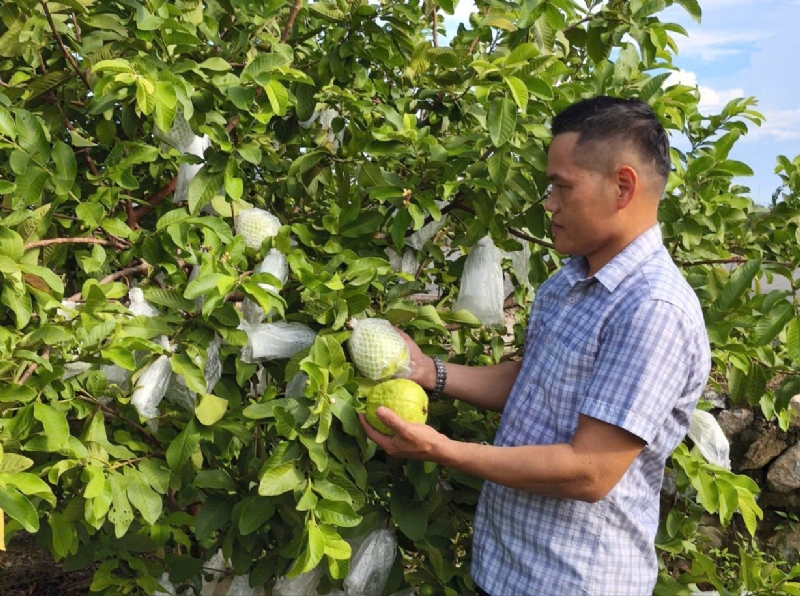
Di Trach pear guava has earned four-star OCOP certification, helping farmers in Hoai Duc Commune increase their incomes.
Di Trach area (now part of Hoai Duc Commune, Hanoi) has a population of more than 10,000 and a natural area of approximately 287 hectares. With soil conditions well suited to fruit cultivation, the locality has in recent years converted more than 73 hectares of agricultural land to grow high-value crops, with pear guava being one of its main crops.
A wave of rapid urbanization is sweeping through the area, while agricultural land in Hoai Duc Commune is becoming increasingly scarce. In response to this challenge, Di Trach Agricultural Services Cooperative has proactively encouraged its members and farmers to restructure their crops and optimize land use.
Once an area where rice farming was the main agricultural activity, today 100% of households in the Di Trach area of Hoai Duc Commune have switched to growing high-value fruit crops such as guava, apples, papaya, longan and sapodilla. Guava is the main crop, covering a total area of 30ha. Many households grow guava on plots ranging from 2ha to 5ha, including Pham Van Hung, Nguyen Hanh Dai, Nguyen Huu Quang and Tran Chi Trong in Dau 2 Village, and Vu Thi Hai in Vuc Village.
| As a fertile land, Di Trach Commune, Hoai Duc District (Hanoi), has long been known for its fresh, high-quality fruits, especially pear guava. Not only does the fruit have a distinctive delicious flavor, but Di Trach pear guava also has thick flesh, a crisp texture and few seeds, making it highly popular in the market. |
Nguyen Huu Quang, Director of Di Trach Agricultural Services Cooperative, said that within the specialized farming area, the cooperative focuses on growing 15ha of Taiwanese pear guava, a variety that is easy to cultivate and relatively resistant to pests and diseases. The guava trees are grown in accordance with VietGAP standards, using high technology and advanced techniques to ensure food safety. Di Trach pear guava has won over consumers with its attractive appearance, featuring smooth, vibrant green skin and crisp white flesh surrounding a cluster of small seeds. When eaten, the guava has a delicate aroma and a refreshing sweetness with a distinctive crisp texture. Beyond being delicious, pear guava also offers a range of health benefits, including boosting the immune system and supporting digestion.
To achieve superior fruit quality, the Board of Directors and management of Di Trach Agricultural Services Cooperative continuously improve cultivation methods, from care techniques and the safe application of plant protection products to a closed-loop harvesting process. The cooperative's adoption of advanced management standards stems from its guiding principle of “For community health,” ensuring that every guava reaching the market meets the highest safety standards.
Tran Chi Trong, a resident of Dau 2 Village, said: “My family has grown pear guava on more than 2ha since 2008. Every 10 years, we have to replace the trees to ensure fruit quality and yields. To keep the trees healthy, we apply both basal and top dressing fertilizers, prune branches and shape the canopy to encourage rapid growth, flowering and high-quality fruit production. When we want the trees to produce off-season fruit and avoid a situation where a bumper crop leads to falling prices, around March and April each year we cut off the vigorous shoots and focus the tree's energy on fruiting on horizontal branches. Notably, once the fruit has formed and reached a diameter of around 2cm, it needs to be wrapped in foam and plastic to maintain its attractive appearance, protect it from insects and pests, and prevent damage to ripe fruit during harvesting and transportation.”
In 2021, the cooperative registered to participate in the One Commune One Product (OCOP) Program, and Di Trach pear guava was recognized by the Hanoi People's Committee as meeting four-star OCOP standards. In 2023, Di Trach pear guava received the “Vietnam Golden Agricultural Brand” certification from the Vietnam General Association of Agriculture and Rural Development, and in 2024, Di Trach Agricultural Services Cooperative was honored among the “Top 100 Reputable National Brands.” With consistent quality and a strong reputation in the market, the four-star OCOP Di Trach pear guava product was recertified in 2024.
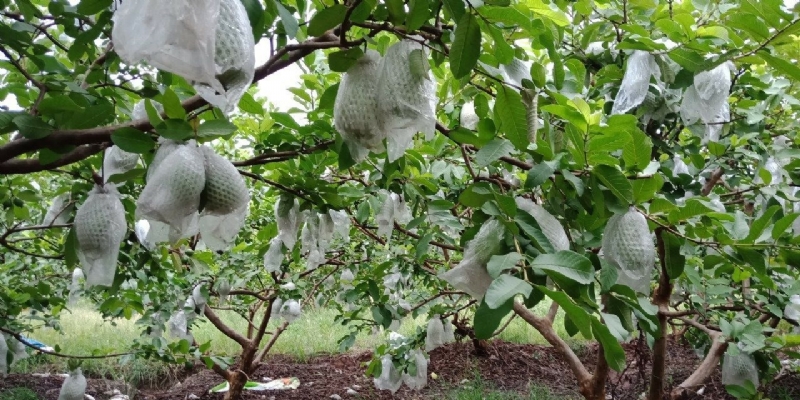
The Di Trach pear guava harvest season runs from May to September each year
Today, mature pear guava orchards operated by the cooperative achieve yields of 15-20 tons per hectare. The products are available at numerous supermarket systems and clean food store chains in Hanoi and neighboring provinces, with stable prices of VND25,000-30,000 per kilogram, providing a sustainable source of income for local residents.
|
Since 2019, Hanoi has evaluated and classified 3,317 OCOP products, accounting for 21.3% of the total number of OCOP products nationwide. These include six products meeting five-star standards, 22 potential five-star products, 1,571 four-star products and 1,718 three-star products. Hanoi has considerable potential and advantages for effectively implementing the One Commune One Product (OCOP) Program. The city currently has nearly 1,600 farms, 172 production and product distribution linkage chains, and more than 1,300 agricultural cooperatives in operation. In addition, Hanoi is home to more than 1,350 traditional craft villages, accounting for 40% of the country's total. Notably, more than 14,000 agricultural products in Hanoi have been assigned QR codes for traceability. The city also has 164 high-tech agricultural models, helping improve the quality, safety and transparency of agricultural products from the capital. |
| This page is produced in coordination with the Hanoi Coordination Office for New-Style Rural Development |
Source: Vietnam Business Forum