From a traditional craft passed down through generations, Phu Thuong sticky rice (Phu Thuong Ward) is gradually adapting to changes in the market. Alongside preserving its distinctive flavor, techniques and craft-making secrets, residents of Phu Thuong are seeking new ways to bring their products closer to consumers through digital platforms.
From Traditional Craft to Stories in the Digital Environment
In Phu Thuong, the craft of making sticky rice has become part of local life and culture, passed down through generations through experience, skill and the dedication of those engaged in the craft.
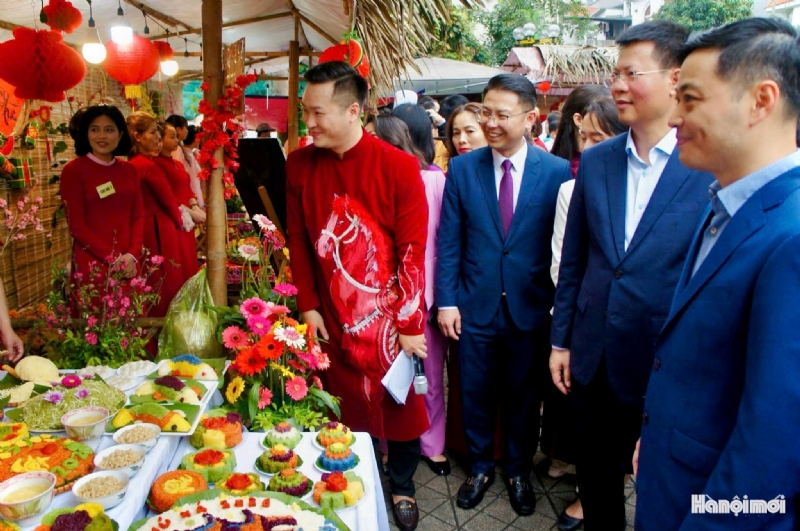
Phu Thuong Ward leaders visit stalls at the sticky rice festival, where the village’s signature products are showcased
Ngo Thi Thu Hương is the owner of a sticky rice household business in Phu Thuong and has been involved in the craft for many years. According to her, making a delicious batch of sticky rice requires meticulous attention at every stage, from selecting ingredients and soaking the rice to the steaming technique. From familiar glutinous rice grains, Phu Thuong residents create a variety of sticky rice dishes, such as gac sticky rice, crushed mung bean sticky rice, xoi xeo, coconut sticky rice and others, which feature in daily life as well as on holidays, during the Lunar New Year, weddings and village festivals.
For long-time practitioners like Hương, preserving the distinctive flavor also means preserving the craft, as every batch of sticky rice embodies knowledge and experience passed down through generations. The craft of making sticky rice therefore not only provides livelihoods but also contributes to Phu Thuong’s distinctive cultural identity.
However, amid rapid changes in the market, preserving the craft is only the first step. How to bring the products to more customers and make the story of the craft village more widely known is a challenge, and digital transformation is opening up a new avenue.
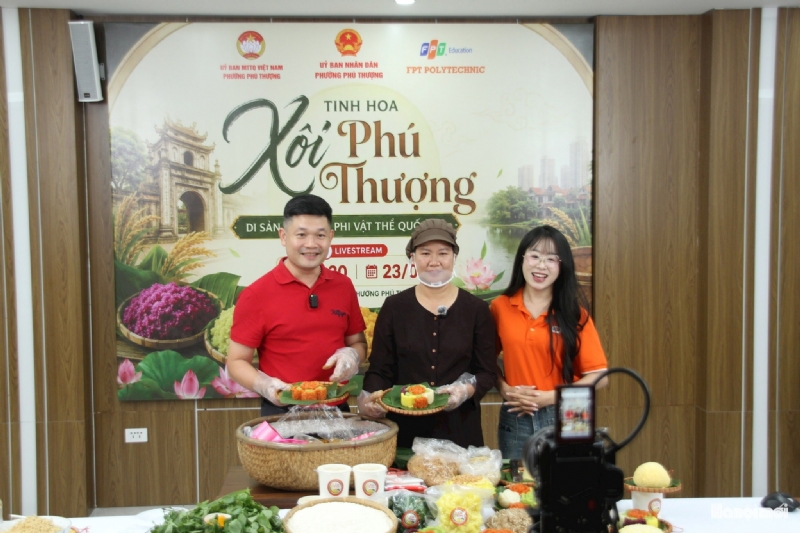
Phu Thuong sticky rice is gradually being promoted and introduced more widely through digital platforms
Consumers are increasingly inclined to search for information, view product introductions, interact and place orders on digital platforms. For Phu Thuong sticky rice, social media, videos, livestreams and online sales platforms can help the products reach beyond their traditional market.
The recent livestream session “Essence of Phu Thuong Sticky Rice – Traditional Flavors, OCOP Products,” organized by the Phu Thuong Ward People’s Committee, represents a concrete step in this direction. Through the program, sticky rice products were introduced directly to viewers, creating opportunities for producers and businesses to promote their products, interact with customers and connect with the market.
Notably, for a product as deeply rooted in culture as Phu Thuong sticky rice, livestreaming is not merely a sales method but also a new way of telling the craft village’s story. From the sticky rice makers, ingredients and production process to the finished products, values that were once familiar only within the craft village can now be introduced more widely.
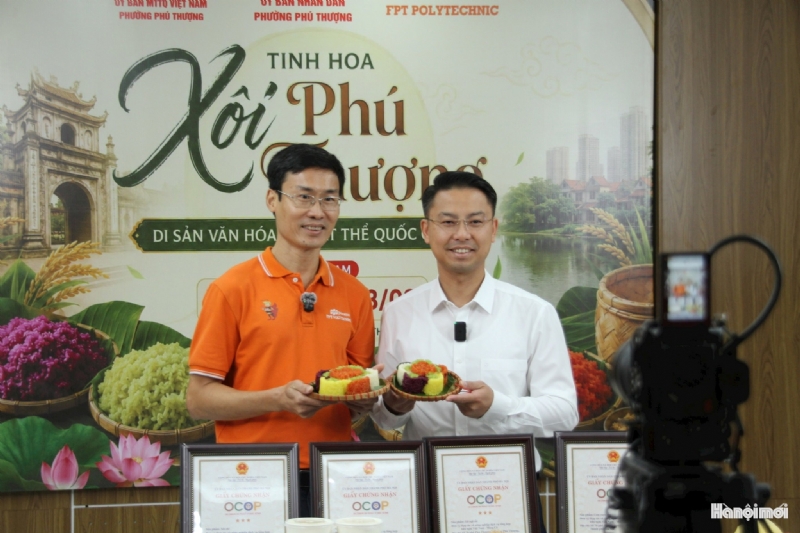
Bui The Cuong, Vice Chairman of the Phu Thuong Ward People’s Committee (right), at a livestream session promoting Phu Thuong sticky ricey
Bui The Cuong, Vice Chairman of the Phu Thuong Ward People’s Committee, said that bringing the locality’s signature products onto digital platforms is an approach suited to current development requirements. Digital transformation enables production and business households to expand their promotional methods and reach consumers, thereby increasing the value and competitiveness of their products.
According to Bui The Cuong, what is important is that digital transformation must be pursued over the long term, enabling craft practitioners to gradually take the initiative in applying technology to promotion, market connections and product sales, rather than carrying it out only through individual programs.
Preserving the Craft’s Soul, Opening Up New Development Opportunities
For artisans who have been closely involved with the craft for many years, digital transformation may represent a new approach, but the need to adapt to the market is something they clearly recognize.
Nguyen Thi Loan, Chairwoman of the Phu Thuong Traditional Sticky Rice Craft Village Association, said that for the craft to survive, it is first and foremost necessary to preserve its quality and distinctive flavor. At the same time, craft practitioners must also change the way they introduce their products and bring them to customers.
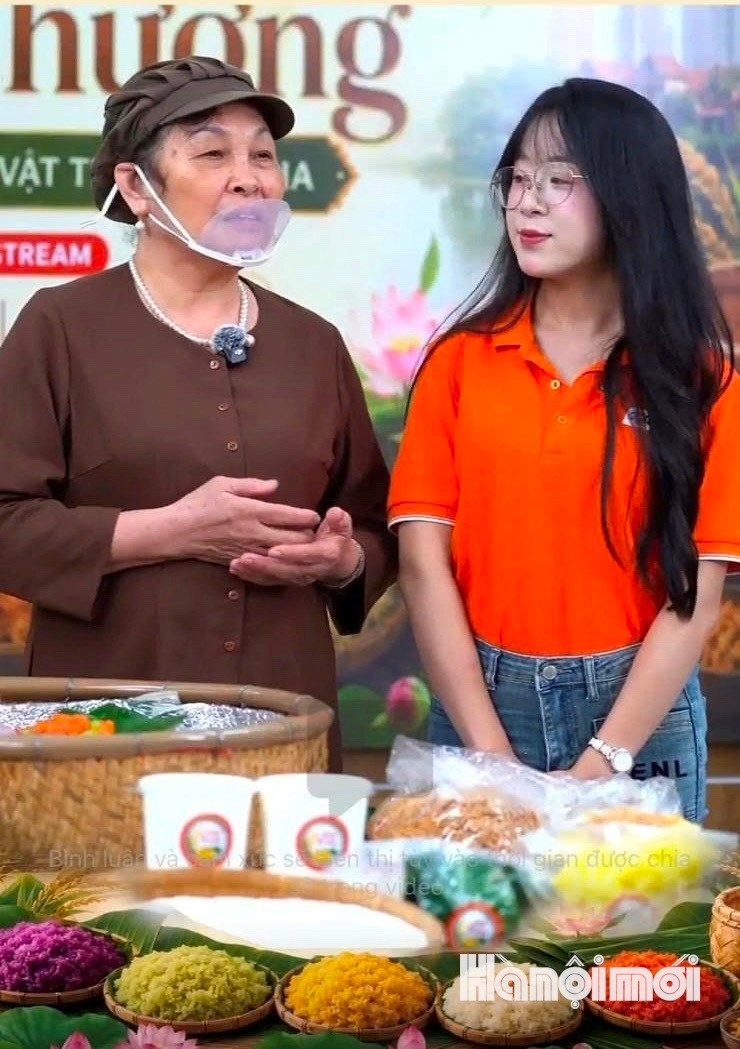
Nguyen Thi Loan, Chairwoman of the Phu Thuong Traditional Sticky Rice Craft Village Association, shares the story of preserving the craft at a livestream session promoting Phu Thuong sticky rice
According to Nguyen Thi Loan, alongside product quality, product presentation, packaging, storage, delivery and the way products are introduced on social media are becoming increasingly important. Combining traditional values with modern approaches to reaching consumers will give Phu Thuong sticky rice more opportunities to reach new customers.
A traditional product does not necessarily have to change its essence to adapt to the times; what needs to change is how it is introduced, how customers are reached, and how production and business activities are organized.
Accordingly, the development of Phu Thuong sticky rice should not stop at selling products but also require the standardization of quality, the development of brand identity, and improvements in packaging, storage and transportation. When information about the product, its origin and quality is presented clearly and consistently, Phu Thuong sticky rice will have more opportunities to reach markets farther afield.
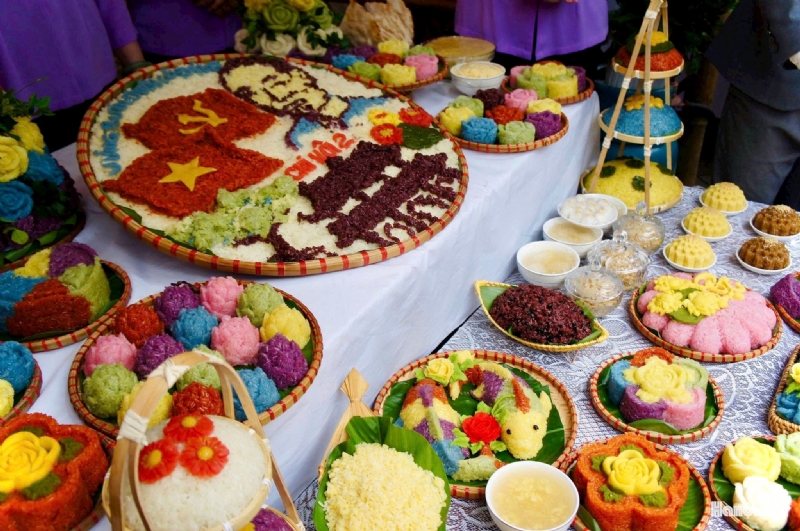
Phu Thuong sticky rice comes in a variety of colors and flavors, bearing the distinctive imprint of the traditional craft village
The next step is to develop regular digital content. Stories about artisans, ingredients, sticky rice-making techniques and the history of the craft village can all become promotional content, helping consumers not only learn about the product but also better understand the cultural value behind it.
Another direction being pursued by Phu Thuong Ward is to connect sticky rice with tourism and craft-village experiences. Visitors can sample sticky rice, learn about the production process, meet craft practitioners and purchase products as gifts. In this way, Phu Thuong sticky rice can expand from being a culinary product into part of the local cultural experience.
For these approaches to deliver lasting results, craft practitioners need to play a central role in digital transformation. Alongside support in bringing products onto digital platforms, production and business households need to be equipped with skills in content creation, online sales, customer service and order management. This will enable technology to truly become a tool for expanding markets and increasing the value of traditional products.
| This page is produced in coordination with the Hanoi Coordination Office for New-Style Rural Development |
Source: Vietnam Business Forum