With 3,531 products assessed and rated, Hanoi has the largest One Commune One Product (OCOP) program in the country. After a period of rapid expansion, however, the focus is shifting from adding more star-rated products to ensuring that existing products maintain consistent quality, compete effectively in the market, and provide sustainable livelihoods in rural areas.
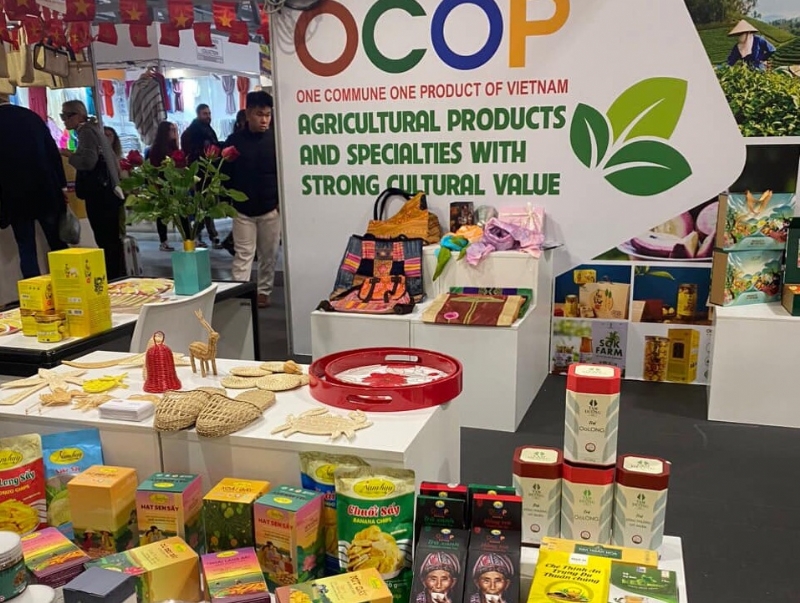
Hanoi OCOP specialties displayed at an exhibition
From Growth in Numbers to Higher Quality
Hanoi’s OCOP landscape covers a wide range of products, from agricultural produce and processed foods to beverages, herbal remedies, handicrafts, and craft village products. Of the 3,531 products, the city has 18 five-star products, 22 potential five-star products, 1,584 four-star products, and 1,907 three-star products.
This scale also presents a greater governance challenge. A portfolio of thousands of products has real value only if quality is maintained after recognition, traceability information remains clear, and producers have sufficient capacity to fulfill orders consistently. If OCOP ends with paperwork, new packaging, or short-term promotional campaigns, turning star ratings into revenue becomes difficult. Therefore, shifting from quantitative growth to higher quality is a practical necessity, not a temporary slogan.
In 2026, Hanoi aims to evaluate around 300 products rated 3 stars or higher and select at least 20 potential 5-star products for central consideration. This target still leaves room for new products, but the management message is clear: products must be standardized across the value chain, have a clear brand story, reach the market, and demonstrate the ability to scale. Quantity matters only when it is matched by competitiveness.
Transparent Evaluation, Rigorous Post-Inspection
A notable shift is the city’s continued effort to refine its evaluation mechanism for the new phase. Under Decision 3488/QD-UBND, the Hanoi OCOP Product Evaluation and Classification Council for the 2026–2030 period operates with inter-agency participation and conducts at least two evaluation rounds each year. This approach keeps the process on a regular schedule while requiring specialized agencies to share responsibility for product quality, safety, intellectual property, environmental impact, and commercial viability.
Ngo Van Ngon, Deputy Standing Chief of the Hanoi Coordination Office for National Target Programs, said that following the reorganization of the local two-tier governance system, management, guidance, and grassroots support for entities have been implemented in a coordinated manner. Three-star and four-star products are subject to city-level evaluation and recognition, while five-star products remain under central review.
Post-inspection should be treated as an essential continuation of the evaluation process. Management agencies must monitor trademark use, raw material sources, safety indicators, packaging specifications, and batch-to-batch consistency, while promptly addressing products that no longer meet requirements. For producers, quality disclosure must go hand in hand with internal processes, production records, and feedback mechanisms. Only when star ratings remain verifiable throughout the product lifecycle can consumer trust be maintained.
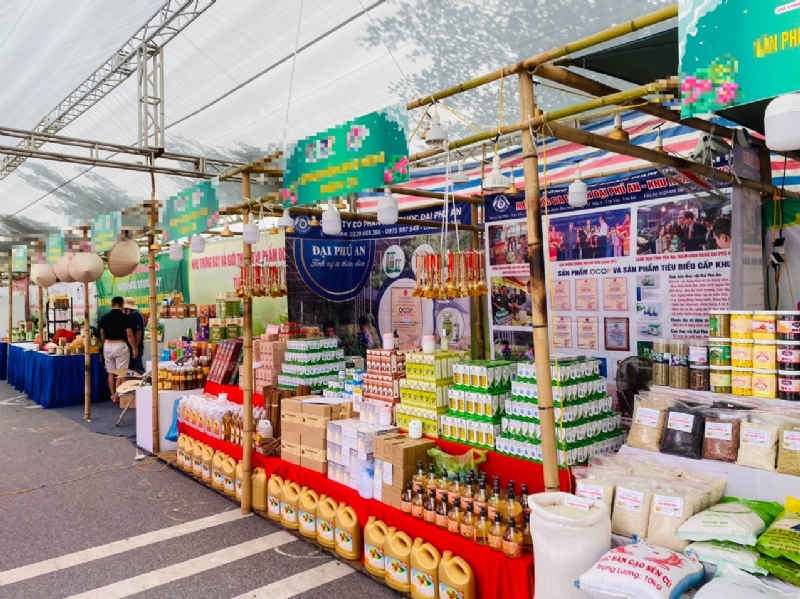
Hanoi’s OCOP program covers a wide range of products while improving quality, competitiveness, and rural livelihoods
OCOP Must Strengthen Long-Term Production Capacity
According to Nguyen Dinh Hoa, Deputy Director of the Hanoi Department of Agriculture and Environment, OCOP plays a particularly important role in rural economic development by tapping local potential, raising incomes, and supporting agricultural restructuring linked to craft villages, services, and rural tourism.
In practice, OCOP quality does not depend solely on testing laboratories. It begins with raw material areas, seed selection, farming practices, or craftsmanship; is maintained through preliminary handling, processing, and storage; and is reflected in branding, traceability, and post-sale service. A single weak link can undermine the value of the entire chain. Therefore, the most effective support is not helping entities complete dossiers, but helping cooperatives, enterprises, and producing households build operational capacity that can be maintained day after day.
For food products, the main challenges are standardizing raw materials, ensuring safety, and extending shelf life while preserving their distinctive characteristics. For handicrafts, the challenges include maintaining consistency, developing designs suited to modern uses, and handling large orders without losing the artisanal touch. Each entity therefore needs a tailored roadmap, but all must answer three core questions: Is quality consistent? Are costs under control? Can production meet order commitments?
A key risk is treating the rating as the end goal. OCOP was originally designed to develop products based on local community strengths, but in practice, some entities focus more on the evaluation stage than on the post-recognition phase. When certification expires, packaging is changed arbitrarily, or quality becomes inconsistent, both the entity’s brand and the program’s overall credibility suffer. Re-assessment and re-evaluation must therefore be carried out as rigorously as the initial recognition.
After a period of expansion, Hanoi OCOP is entering a more challenging but decisive phase: turning its numerical advantage into recognizable and trusted quality standards. When quality becomes part of daily operations, the OCOP star can truly serve as a commitment to the market and a sustainable driver of Hanoi’s rural economy.
|
This special section is presented in collaboration with the Hanoi Coordination Office for National Target Programs |
By Do Ngoc, Vietnam Business Forum