Introducing cashless payments at traditional markets and along business streets in Kim Anh Commune, Hanoi is not only changing daily transaction habits but also helping build a more transparent commercial environment and enhancing residents' digital capabilities, thereby contributing to local new rural development goals.
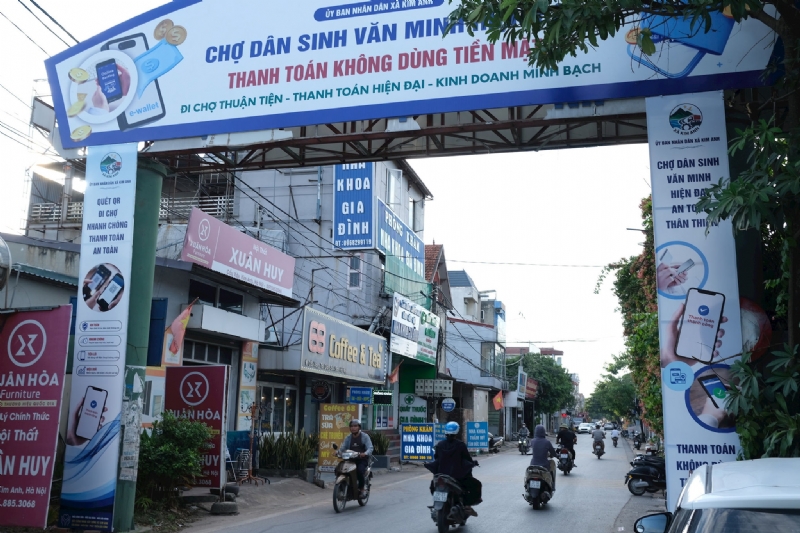
Cashless market model in Kim Anh Commune, Hanoi
Bringing Digital Payments to Rural Life
Along Quan My Street in My Ninh Village, QR codes are now displayed at many stores and business locations. When buying goods, residents can simply scan the codes or transfer funds using their phones, eliminating the need to carry small amounts of cash or wait for sellers to return change. A payment method long common in urban areas is gradually becoming part of everyday buying and selling in rural areas.
This shift is also happening among small household businesses. According to Nguyen Hong Dinh, Head of My Ninh Village, local residents work mostly in agriculture and previously had limited access to technology. Through outreach and direct assistance, most business households have started adopting bank transfers. Residents find that electronic transactions are not only convenient, but they also reduce the need to carry large amounts of cash and make it easier to track amounts received and paid.
However, cash cannot yet disappear entirely from traditional markets. Some elderly residents still find smartphones difficult to use, while cash remains the preferred choice for those selling vegetables, eggs, or low-value items. This reality means digital transformation must follow a suitable roadmap, ensuring it does not create extra hurdles for people with limited access to devices or digital skills.
From September through December 2026, Kim Anh Commune is running a campaign to establish cashless traditional markets and business locations along designated streets. Three routes have been chosen: Street 14, Thai Lai Street, and Quan My Street. The local administration aims to offer information, guidance, and direct support so that all business households at traditional markets can adopt electronic payments.
Alongside the designated streets, Kim Anh is expanding its "Digital Market - Civilized Market with Cashless Payments" model at the Thang Tri and Thanh Van traditional markets. Identification signage has been installed in the designated areas, and local vendors are surveyed and classified according to whether they currently use electronic payments so tailored assistance can be delivered.
Banks, telecom providers, community digital technology teams, and mass organizations are all involved. Business households needing help receive hands-on instruction to open accounts, sign up for mobile banking, generate QR codes, and conduct transactions. This direct approach delivers guidance right to individual market stalls instead of relying solely on general outreach sessions.
Digital Markets for Higher-Quality Rural Development
The rollout of digital markets in Kim Anh coincides with Hanoi entering a fresh phase in improving the quality of new rural development. The city's criteria for new rural communes spanning 2026–2030 establish broader requirements covering planning, infrastructure, economic development, digital transformation, the environment, and social welfare.
Under this updated approach, new rural development is no longer measured solely by roads, schools, or cultural facilities. Access to digital services, the quality of commercial activities, and residents' ability to adapt have also become indicators of development. Every business household that can effectively use digital technology forms a link in the local digital economy.
Hanoi is now developing a roadmap for a more integrated and modern market system. This digital market framework is set to expand, introducing tools like cashless payments, vendor management software, product traceability, and online storefronts for local vendors.
However, setting up a QR code is merely a starting point. A traditional market becomes truly civilized only when business activities are properly organized, goods have clear origins, prices are clearly displayed, and food safety standards are met. Shopping areas must remain clean and accessible, meet fire prevention and firefighting requirements, and avoid blocking traffic.
Technology should serve to support these standards. Beyond handling transactions, digital data can support vendor management, receive feedback, verify product origins, and provide information to consumers. Applied comprehensively, digital markets offer far more than convenience—they can improve transparency, service quality, and management efficiency.
Transaction security remains an essential requirement. Residents must learn to spot fraudulent links, protect passwords, verify recipient details, and never share authentication codes. Vendors must also check their QR codes regularly to prevent them from being replaced or covered with fraudulent codes.
For elderly residents and small business owners, support must extend beyond the campaign period. Community digital technology teams can offer ongoing on-site guidance, address difficulties, and keep residents informed about emerging fraud tactics.
The model’s overall success should be evaluated through meaningful outcomes rather than just tallying the number of accounts opened or QR codes created. Key metrics to monitor include the percentage of households conducting regular digital transactions, vendor satisfaction rates, the number of individuals trained in digital security skills, and the ability to sustain the model once the initial campaign concludes.
|
This special section is presented in collaboration with the Hanoi Coordination Office for National Target Programs |
By Ngoc Dan, Vietnam Business Forum