Hanoi is shifting the focus of its One Commune One Product (OCOP) program from expanding product quantity to enhancing quality, cultural value, and market access. For local businesses and cooperatives, an OCOP rating is just the starting point; long-term competitiveness relies on meeting strict standards, ensuring steady supply, building strong brands, and fulfilling distribution network requirements.
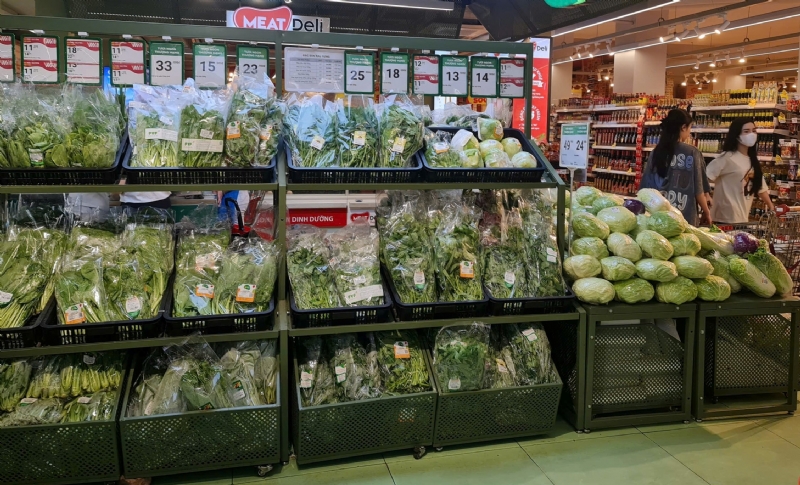
Hanoi’s OCOP products gain access to retail distribution networks
Linking Products to Culture and Craft Villages
Hanoi has more than 3,600 OCOP products, including 65 five-star products, accounting for more than 50% of the country’s total five-star products. This scale reflects the rich resources of agriculture, craft villages, cuisine and local knowledge, while also raising expectations for economic performance after products receive certification.
Hanoi People’s Committee Plan 163/KH-UBND for implementing the OCOP Program in 2026 sets a target of around 300 products achieving three stars or higher, with at least 20 potential five-star products proposed for national-level evaluation and rating. However, the focus is not only on ratings. Hanoi is promoting products linked to cultural identity, traditional craft villages, raw material areas, deep processing, organic agriculture, circular agriculture, tourism and cultural gifts.
Changes in consumer behavior are creating new opportunities for OCOP products. Buyers are increasingly interested in raw material sources, production processes, environmental impacts and businesses’ responsibilities to their communities. As consumers have more choices, product origin and trust have become factors that directly influence purchasing decisions.
This provides a basis for Hanoi to develop “product stories” connected to its heritage, craft villages and people. Stories about materials, techniques and communities can differentiate products, but they are only convincing when supported by consistent quality, transparent information and experiences that match producers’ commitments.
Vo Tri Thanh, Director of the Institute for Brand and Competitiveness Strategy, said many of the city’s products are high-quality and have strong cultural value but face difficulties entering major distribution systems or being exported to the EU, United States and Japan because they do not yet fully meet technical standards and traceability requirements. This shows that the main challenge for OCOP is not a lack of distinctive products, but the ability to turn those qualities into verifiable standards.
Therefore, support for OCOP producers needs to focus more on raw material areas, testing, intellectual property, traceability, packaging design and quality management. Product stories must be based on data on raw materials, traditional trades, production processes and environmental impacts. When information is standardized, cultural value can be properly recognized and reflected in product prices.
Building Stronger Market Ecosystem
Getting OCOP products into supermarkets is not simply about adding another point of sale. Modern retail systems require producers to meet requirements for quality, volume, delivery deadlines, legal documentation, listing procedures and payment simultaneously. Many small-scale and seasonal producers are not yet prepared to meet these requirements.
Hanoi currently has 115 OCOP product introduction and sales points, while also organizing trade fairs, product promotion weeks, livestreams and trade promotion delegations in international markets. To generate sustainable revenue, promotional activities need to be linked to each producer’s sales strategy and production capacity.
Nguyen Anh Duong, Deputy Director of the Hanoi Department of Industry and Trade, said Hanoi will continue developing OCOP product introduction and sales points and establish creative design and promotion centers linked to tourism. Vo Nguyen Phong, Director of the Hanoi Department of Industry and Trade, also said the city will link OCOP product promotion and trade with tourism, accelerate e-commerce and support products with export potential.
Vu Anh Khoa, Chairman of the Board of Directors of Saigon Co.op, said OCOP products are often made on a small scale, making it difficult to ensure sufficient volumes, while many producers still lack complete traceability documentation. According to him, entering supermarkets requires producers to meet requirements for listing procedures, quality and payment; shortcomings in these areas make it harder for OCOP products to stand out from similar products on the market.
For these efforts to deliver substantive results, policies need to classify producers according to their level of readiness. Products serving local markets need to strengthen quality and brand recognition; products entering retail chains should prioritize documentation, output and logistics; products with export potential need international standards, trademark protection and distribution partners. This approach helps avoid broad-based support.
With more than 3,600 products, Hanoi’s advantage is no longer simply the number of products but its ability to strengthen the OCOP ecosystem. When quality standards, cultural value, design, trade and tourism are connected, OCOP rating can translate into competitiveness, creating stable markets for businesses, cooperatives and producers.
|
This special section is presented in collaboration with the Hanoi Coordination Office for National Target Programs |
By Ngoc Dan, Vietnam Business Forum